What to wear at the Temple of the Tooth, and why
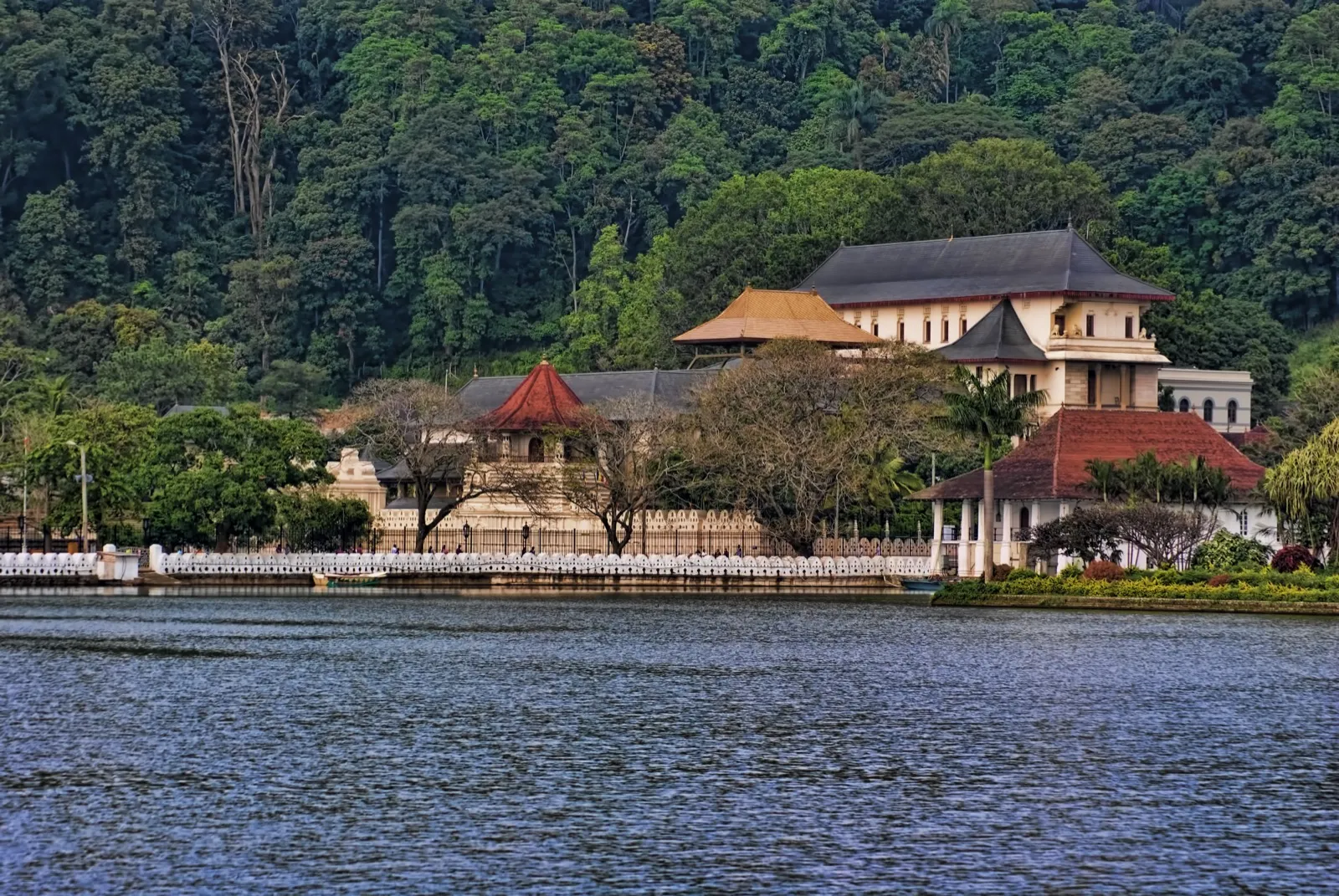
At the Temple of the Tooth in Kandy, wear clothes that cover your shoulders and your legs. The temple does not allow shorts, sleeveless tops or revealing clothes, and the rule is the same for men and women. Take off your hat, and leave your shoes at the reception booth before you enter (temple guidelines, as checked October 2026).
Watch the one-minute version
The same answer as a one-minute Short. It plays from YouTube only when you press play.
That is the whole rule. The rest of this guide explains what it means in practice, what happens at the gate, and why the temple asks it of you.
What is the Temple of the Tooth?
The Temple of the Sacred Tooth Relic, Sri Dalada Maligawa, is in Kandy. It holds a relic that Buddhists venerate as a tooth of the Buddha. It is part of the "Sacred City of Kandy", which UNESCO listed as a World Heritage Site in 1988.
According to tradition, Princess Hemamala and Prince Dantha brought the relic from Kalinga in India in the early 4th century CE. An old Buddhist chronicle, the Dathavamsa, says the princess hid it in her hair.
For centuries, Sri Lankan kings kept the relic close to their palace. People saw its guardianship as a sign of the right to rule. That history is why the relic still matters far beyond religion.
This is the key to the dress code. You are not visiting a museum that happens to be old. You are entering a working place of worship, while people around you are praying.
What is the Temple of the Tooth dress code?
The temple's own guidelines are short (as checked October 2026):
- No shorts.
- No sleeveless tops.
- No revealing clothes.
- The same rule for men and women.
The temple does not list every item of clothing, so the safest choice is simple: wear clothes that cover your shoulders and your legs.
What should you wear?
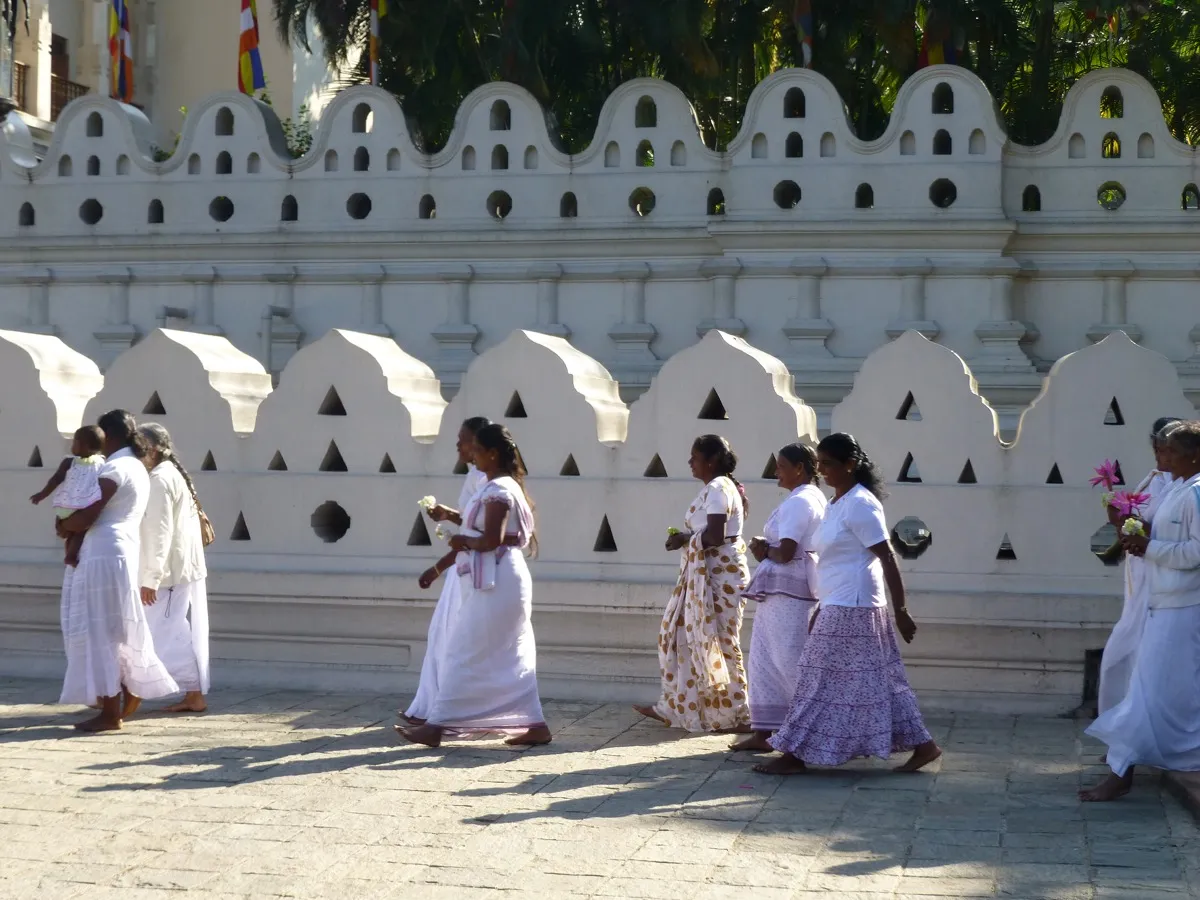
- For your top: a T-shirt or shirt with sleeves. A blouse with short sleeves is fine if it covers the shoulder.
- For your legs: long trousers, a long skirt, or a long dress.
- A light scarf or sarong in your bag. A sarong is a long piece of cloth wrapped around the waist. It solves most problems in seconds, and it is useful at every temple on your route.
What should you not wear?
- Shorts of any length.
- Vests, tank tops and strapless tops.
- Anything see-through or very low-cut.
Do your knees have to be covered?
The temple's guidelines say no shorts, and that includes shorts of any length. They do not mention knees directly. The simplest way to follow the rule is to wear trousers, a skirt or a dress that covers your legs, including your knees.
Can you wear leggings?
The guidelines do not mention leggings. They do say no revealing clothes. If you plan to wear leggings, bring a long skirt or a sarong to wear over them, so you are not turned away.
Do you have to wear white?
No. The temple's rules do not require white clothing.
Is a sarong free at the entrance?
The temple says suitable clothing is available at the entrances (as checked October 2026). It does not say whether there is a charge. Until early 2026 its website said "free of charge", but that phrase has since been removed. Do not plan around it. Bring your own cover.
Do you have to take off your shoes and hat?
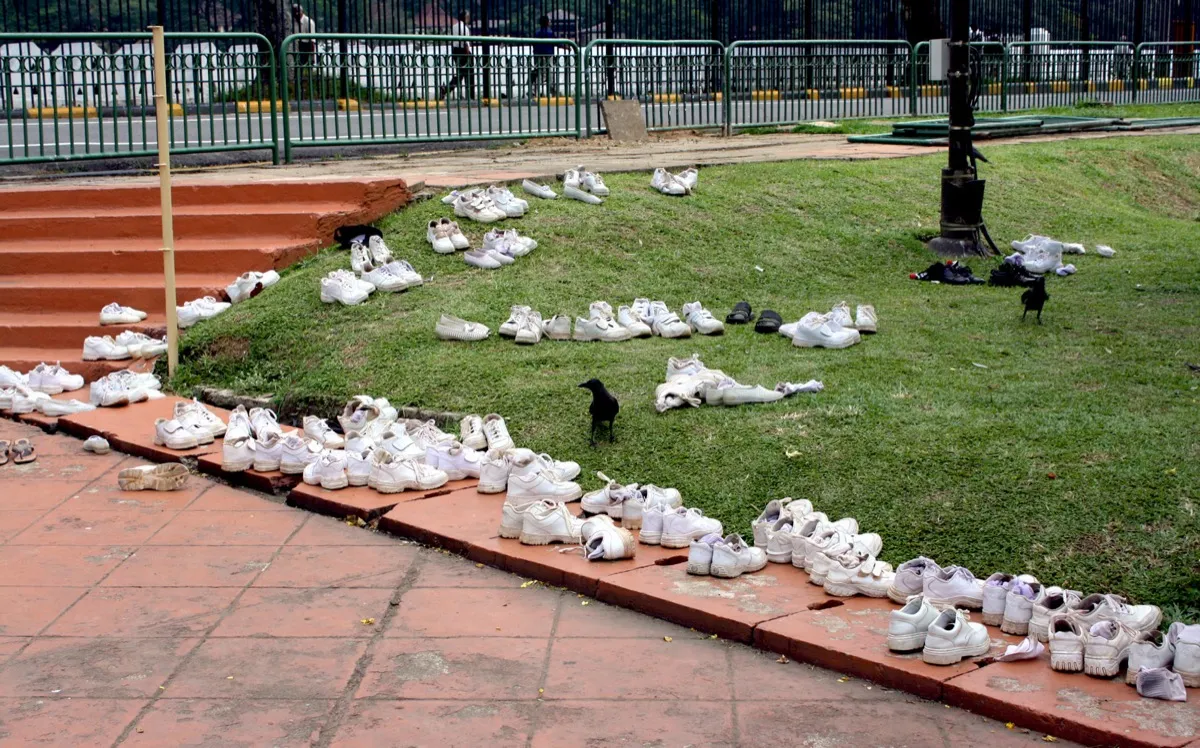
Shoes. Before you enter, hand in your shoes at the reception booth and keep the token you are given. There is a separate booth for foreign visitors (temple guidelines, as checked October 2026). You walk the temple barefoot.
Hats. Take off your hat or cap before you enter. This applies at every Buddhist temple in Sri Lanka, not only here.
Bags. Leave large bags and anything you do not need at the reception booth with your shoes. Pets are not allowed inside the temple grounds.
Plastic. You do not need to bring an offering. If you bring flowers, do not carry them in plastic bags. The temple asks visitors not to bring polythene or plastic.
How much is the ticket, and when are the services?
These details change. All of them were checked on the temple's own website in October 2026.
- Ticket price for foreign visitors: 3,000 Sri Lankan rupees. Visitors from SAARC countries, Thailand and Myanmar pay 2,500 rupees.
- What the ticket covers: the temple, the Dalada Museum, the World Buddhist Museum, the Tusker Museum and the Royal Elephant Stable.
- Where to buy it: only from the ticket machines inside the temple. The temple says tickets or fees from anyone else are not valid.
- Opening hours: every day, 5.30 a.m. to 8.00 p.m.
- Daily services: 5.30 to 7.00 a.m., 9.30 to 11.00 a.m., and 6.30 to 8.00 p.m.
Older guides list a lower price. The temple raised the foreign ticket from 2,000 to 3,000 rupees in 2026. Check the temple's website before you go.
What are the security checks at the entrance?
Everyone is screened at the entrance, and bags and offerings go through scanners. Security is strict for a reason. On 25 January 1998, a suicide truck bomb exploded in front of the temple. The government blamed the Tamil Tigers (LTTE). The building was damaged, but officials said the relic was not harmed.
Allow a few extra minutes for the checks, especially before a service.
Can you see the tooth relic?
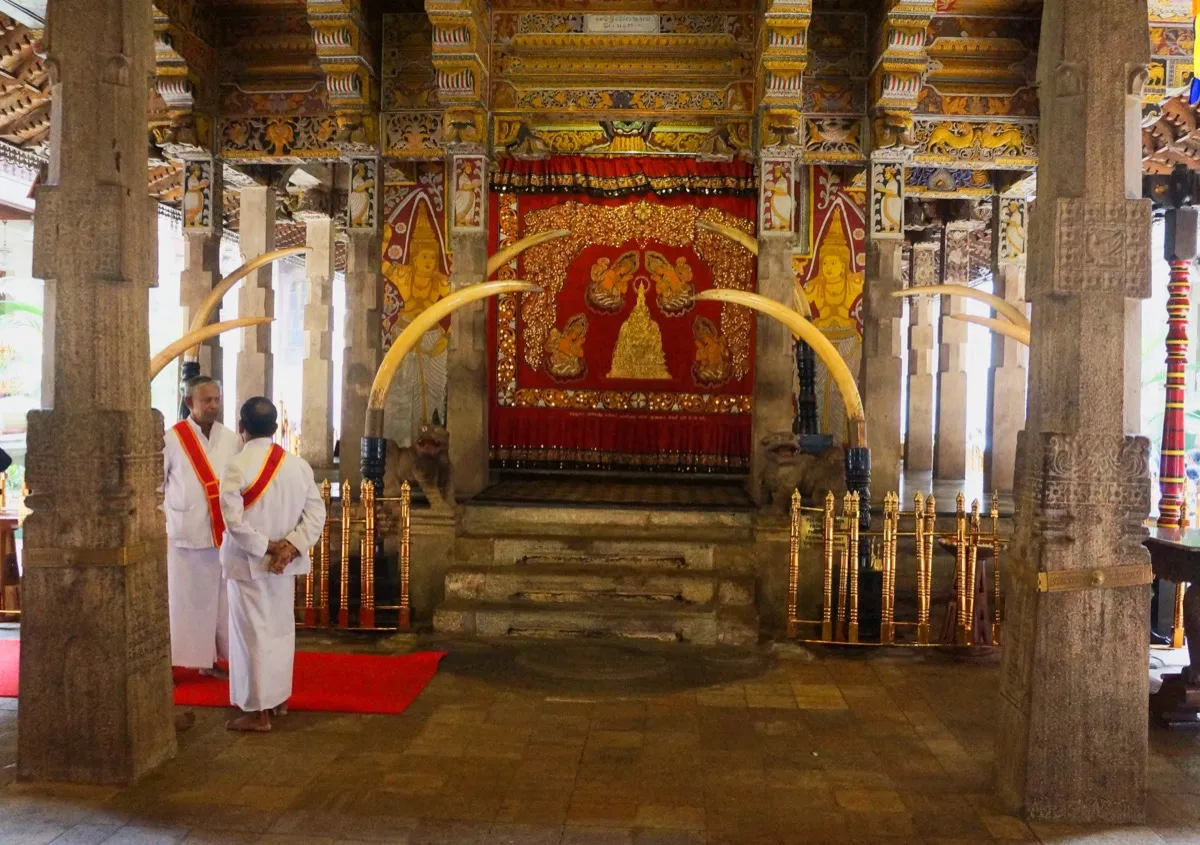
During the three daily services, the doors of the inner chamber are opened. This is the best time to visit if you want to understand what the temple is for.
You will not see the tooth itself. It is kept inside a set of caskets and is shown in public only on rare occasions. The most recent public showing was from 18 to 27 April 2025, the first in 16 years. What you see during a service is the casket, and the devotion of the people around it.
Can you take photos inside the Temple of the Tooth?
Never pose for a photo with your back to a Buddha statue. In Sri Lanka this is seen as disrespectful, and disrespecting Buddhist images can lead to arrest.
Sri Lanka Tourism also asks visitors not to pose for photos in front of or beside Buddha statues or murals, and not to use flash, because flash can damage old paintings. Inside the temple, follow the signs and the staff on where photos are allowed.
A simple test: if the photo is about you, it probably does not belong here. A photo of the building, taken where the staff allow it, is a better record of the visit.
What changes on Poya days and during the Perahera?
Poya days. Every full moon day, called Poya, is a Buddhist public holiday in Sri Lanka. Shops may not sell alcohol on Poya days anywhere on the island (Excise Department, 2026 list). A 1971 law also bans slaughtering animals for sale and selling meat on Poya days. If you are in Kandy on a Poya day, plan meals and drinks in advance. The public holiday can fall a day before or after the full moon, so check the government holiday list rather than a moon calendar.
The Esala Perahera. The Kandy Esala Perahera is a ten-night procession held each year in July or August. The dates follow the Buddhist lunar calendar. In 2026 it ran from 18 to 28 August. Check the temple's website for next year's dates. The dress code applies during the festival as on any other day.
What most visitors miss at the Temple of the Tooth
- The museums are already paid for. The ticket includes three museums and the Royal Elephant Stable. Many visitors see the shrine and leave.
- The service is the visit. Arriving between services means a quieter building but less meaning. Time your visit for 9.30 a.m. or 6.30 p.m. if you can.
- The rule is about the place, not about you. Nobody expects a visitor to know every custom. Covering up, removing your shoes and keeping quiet tells the people around you that you understand where you are.
- The same habits work everywhere. The dress code here is a stricter version of what every Buddhist temple asks. Our guide to temple etiquette in Sri Lanka explains the reasons behind each rule.
Before you go to the Temple of the Tooth
- Clothes that cover your shoulders and legs. No shorts, no sleeveless tops.
- A light scarf or sarong in your bag.
- Hat off at the gate.
- Shoes to the reception booth; keep the token.
- Large bags left at the booth.
- Ticket bought only from the machines inside: 3,000 rupees for foreign visitors (as checked October 2026).
- A service time chosen: 5.30 a.m., 9.30 a.m. or 6.30 p.m.
- No posing with your back to, or beside, a Buddha statue. No flash.
- On a Poya day, meals and drinks planned ahead.
Questions people ask
What should I wear to the Temple of the Tooth?
Clothes that cover your shoulders and your legs. The temple does not allow shorts, sleeveless tops or revealing clothes, and the rule is the same for men and women (temple guidelines, as checked October 2026).
Can men wear shorts at the Temple of the Tooth?
No. The rule is the same for men and women: no shorts.
Do I need to take my shoes off?
Yes. Hand in your shoes at the reception booth before you enter and keep the token. There is a separate booth for foreign visitors.
How much is the Temple of the Tooth ticket for foreigners?
3,000 Sri Lankan rupees, as checked October 2026. Visitors from SAARC countries, Thailand and Myanmar pay 2,500 rupees. Buy it only from the ticket machines inside the temple.
Can I see the tooth?
No. The tooth is kept inside a set of caskets and is shown in public only on rare occasions. During the daily services you see the casket.
Coming soon: Sri Lanka Before You Land, our pre-trip ebook, explains the customs behind every temple on your route. A free guide, Your First Week in Sri Lanka, will cover the first days on the ground.
Sources (16)
Every fact in this guide was checked against these sources on 3 October 2026. Official and primary sources come first. How we research.
- Sri Dalada Maligawa news, 29 Aug 2026: conclusion of the 2026 Esala Perahera · sridaladamaligawa.lk
- Sri Dalada Maligawa official 'Daily Service' (Theva) page · sridaladamaligawa.lk
- Sri Dalada Maligawa official FAQ, 'Entrance Guidelines' · sridaladamaligawa.lk
- Sri Dalada Maligawa official history page (modified 2025-06-05) · sridaladamaligawa.lk
- Sri Dalada Maligawa, The Kandy Esala Perahera (official 2026 schedule; modified 2026-08-27) · sridaladamaligawa.lk
- Sri Lanka Tourism Promotion Bureau, Travel Tips (official) · srilanka.travel
- UNESCO World Heritage Centre, Sacred City of Kandy · whc.unesco.org
- The Dathavansa, Pali text and English translation by Mutu Coomara Swamy, 1874 · archive.org
- Holidays Act No. 29 of 1971, s.14 (CommonLII consolidated text, via Wayback) · web.archive.org
- Same FAQ, Wayback capture 10 March 2026 (older fees) · web.archive.org
- Same FAQ, Wayback capture 7 Sept 2025 ('free of charge' wording) · web.archive.org
- UK FCDO travel advice, Sri Lanka, 'Laws and cultural differences' (updated 2026-09-21) · gov.uk
- Encyclopaedia Britannica, Dalada Maligava · britannica.com
- Daily Mirror (Sri Lanka), 16 Feb 2026: Excise Department announces 19 dry days for 2026 · dailymirror.lk
- Newswire.lk, 21 Apr 2025: 'Siri Dalada Vandanawa' veneration time extended · newswire.lk
- CNN, '8 killed in Sri Lankan blast at temple', 25 Jan 1998 (Wayback) · web.archive.org
Related guides
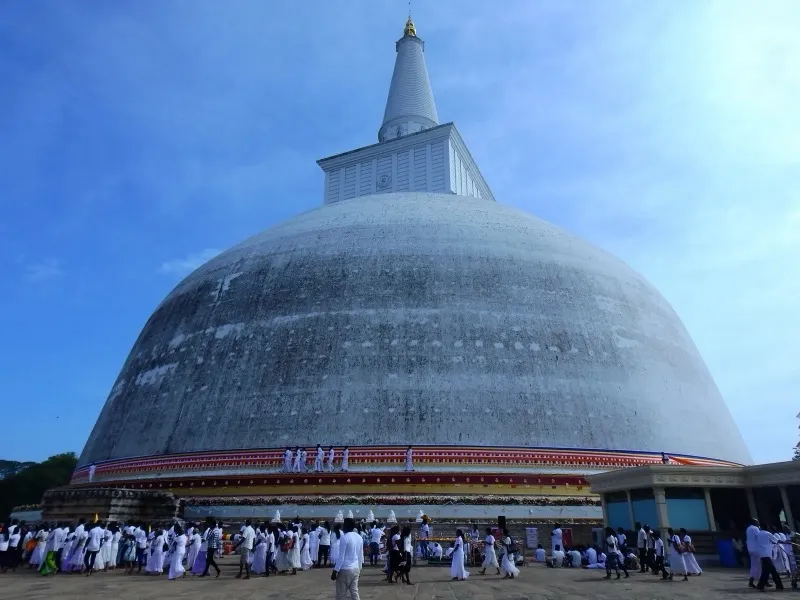
Temple etiquette in Sri Lanka: the rules and the reasons behind them
Shoes and hat off, shoulders and knees covered, never pose with your back to a Buddha. Sri Lanka's temple rules, and why each one matters (October 2026).
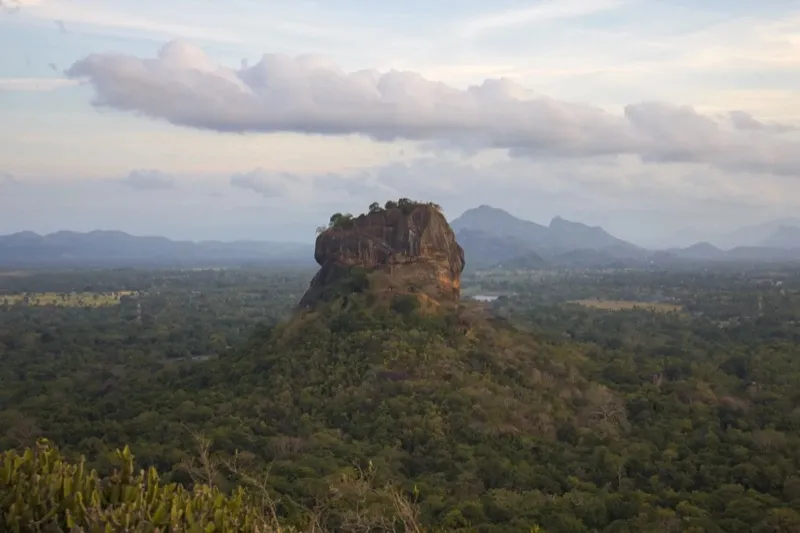
Sri Lanka in two weeks: the classic loop, explained day by day
Two weeks in Sri Lanka: Cultural Triangle, Kandy, the hills, Ella, Yala and the south coast. Day by day, with honest travel-time ranges (checked October 2026).
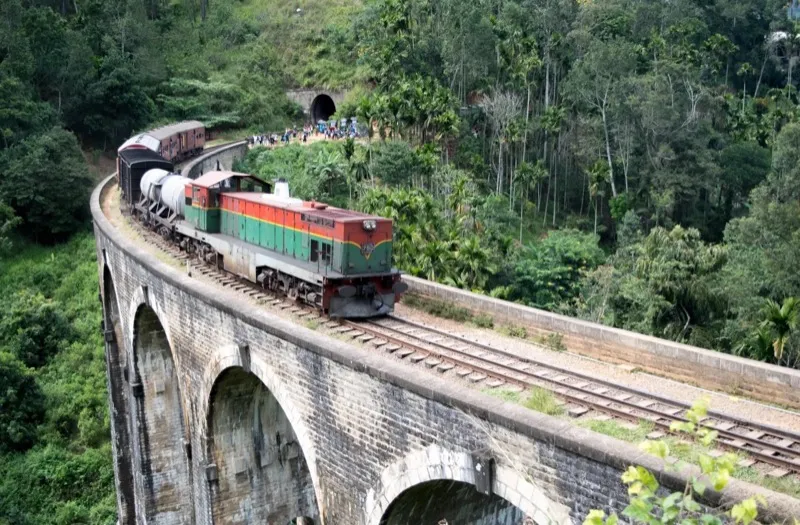
Kandy to Ella by train: booking, classes and the 2026 closure
No train runs Kandy to Ella as of October 2026. Go by road to Nanu Oya and ride the open section. How booking, classes and fares work on this line.
More guides in Kandy and the hills · Culture and etiquette