The Kandy Esala Perahera: what it is and how to watch it
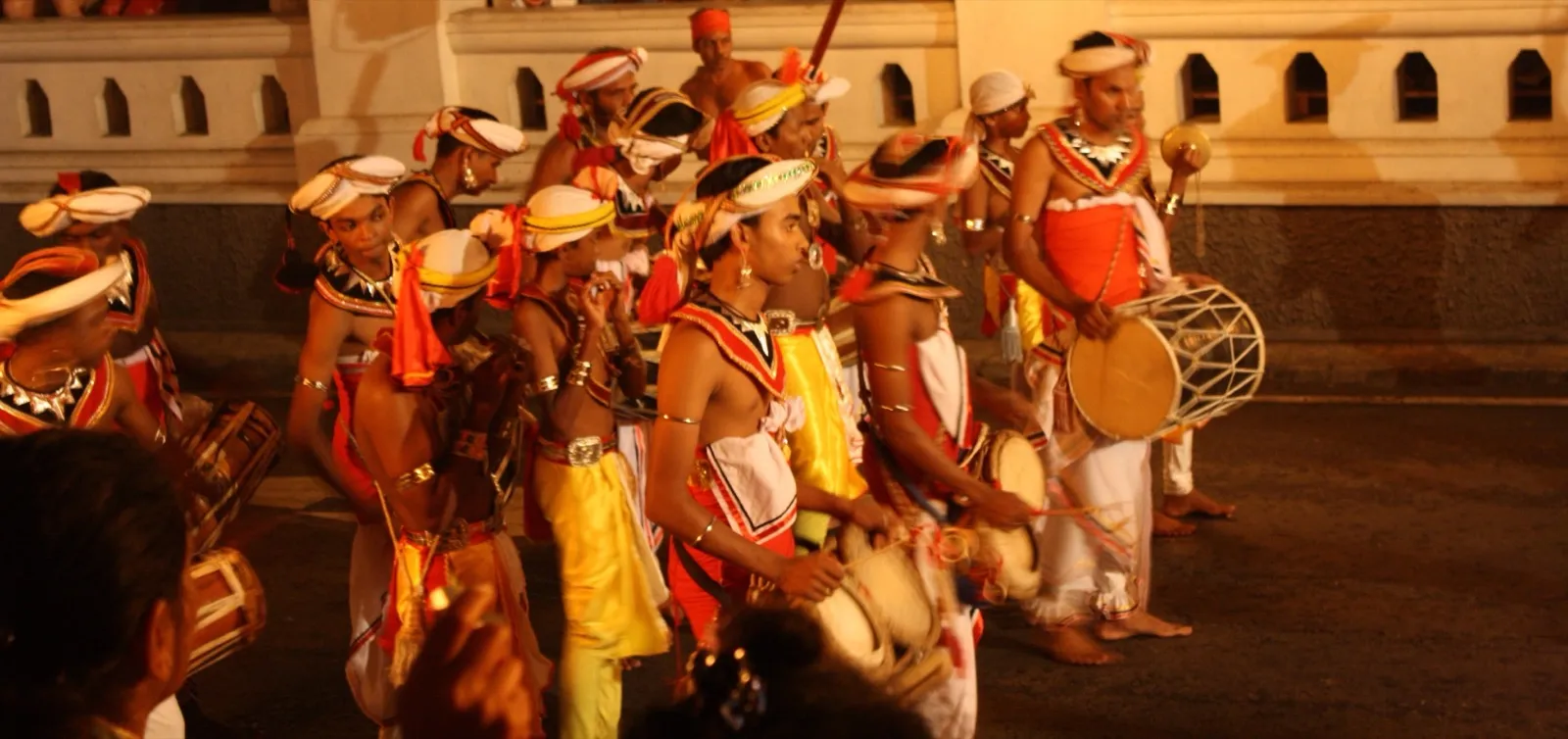
The Kandy Esala Perahera is ten nights of street processions in July or August that honours the Sacred Tooth Relic and the four guardian gods of Kandy. The Temple of the Tooth sets the dates a few weeks ahead. In 2026 it ran from 18 to 28 August; the 2027 dates were not yet published in October 2026.
This guide explains what the procession is, how the ten nights build, what you will see, and how to watch it with respect, including the question of the elephants.
When is the Kandy Perahera, and what time does it start?
The Temple of the Tooth announces the dates each year, a few weeks ahead. The dates follow the lunar calendar, which is why the festival moves between July and August. The 2026 dates were announced on 8 July 2026. Check the temple's website before you book.
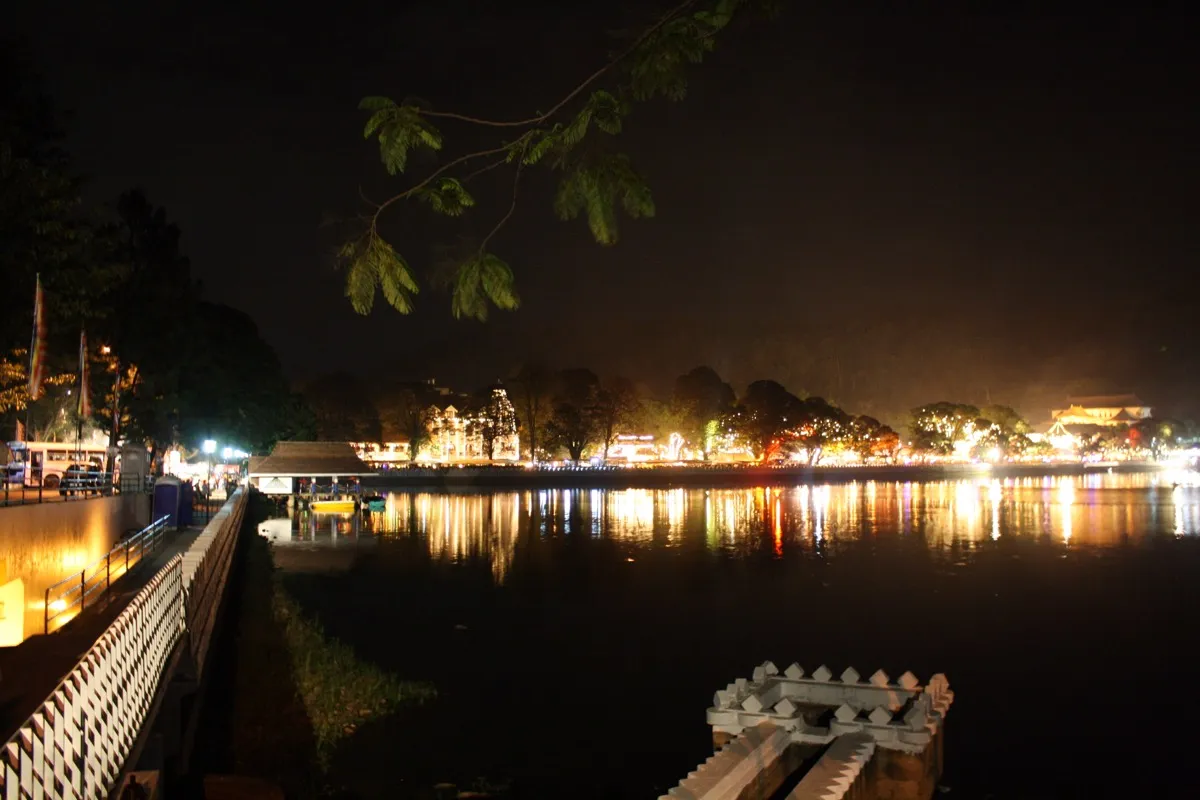
Each night procession leaves at an auspicious time set by the temple, usually between about 6.30 and 7 p.m.
The final Randoli night falls on a full moon Poya day. On Poya days, shops do not sell alcohol and meat is not sold, so plan for that.
What is the Kandy Esala Perahera?
The Kandy Esala Perahera honours the Sacred Tooth Relic kept in the Temple of the Tooth, and the four guardian gods of Kandy: Natha, Vishnu, Kataragama and the goddess Pattini. Each god has a shrine, called a devale, in Kandy, and each devale sends its own procession behind the temple's.
A perahera is a procession.
How old is the Perahera?
The temple traces the relic procession back to the 4th century, soon after the relic reached Sri Lanka, and numbers the festival every year. It called the 2026 festival the 1,716th.
The procession in its present form goes back to King Kirti Sri Rajasinghe, who ruled Kandy from 1747 to 1781. Tradition says he joined the Tooth Relic procession to the older processions of the gods, so that ordinary people could see and honour the relic.
What happens on each night of the Perahera?
The festival starts quietly. Young jackfruit poles, called kap, are planted at the four devales, and for five nights small processions go round the devale grounds only.
Then the street processions begin: five nights of Kumbal Perahera, then five nights of Randoli Perahera. The last and grandest Randoli falls on the full moon.
Before dawn the next morning, the devale processions go to the Mahaweli River at Gatambe for the water-cutting ceremony, the Diya Kepeema. That afternoon a final day procession, the Dahawal Perahera, closes the festival.
The Kumbal nights are the simpler half. The Randoli nights are fuller, with palanquins from the four devales, and the final Randoli is the grandest night, when the elephants and drummers wear their full ceremonial dress.
What will you see in the procession?
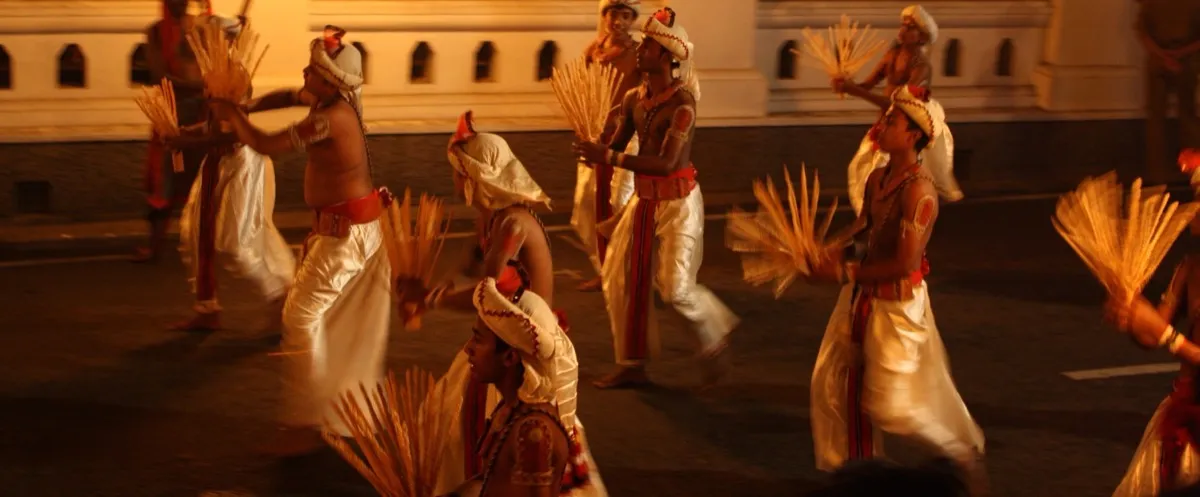
Whip-crackers walk at the front, cracking long whips to announce the procession. Behind them come drummers, Kandyan dancers, flag bearers and torch-bearers with burning copra, with elephants at intervals. Officials in traditional Kandyan dress walk behind the main tusker.
A tusker carries the temple's golden procession casket under a canopy. The temple treats the casket with the same reverence as the relic itself. The temple does not say publicly whether the tooth is inside, so do not assume you will see, or pass near, the tooth itself.
Different tuskers carry the casket on different nights. In 2026, for example, a tusker named Indiraja led the first night, Kataragama Wasana carried the casket on the final Randoli night, and Sinharaja carried it in the day procession.
When the casket passes, watch what the people around you do, and follow their lead.
Are the Perahera elephants treated well?
Dozens of elephants take part. News reports have put the number at up to about 100, but the temple does not publish a count, and it varies from year to year.
The elephants in the procession are captive animals. Most belong to temples or private owners and are brought to Kandy for the festival. Animal-welfare groups have long criticised the use of captive elephants in processions; temples and owners reject claims of mistreatment.
In 2019, photos of Tikiri, a thin 70-year-old female elephant who walked in the Kandy Perahera, caused an international outcry. Organisers withdrew her from the closing procession, and she died that September.
Nadungamuwa Raja, a tusker who carried the casket at the Perahera for many years, died in March 2022, aged 68. The government declared him a national treasure.
You can watch the Perahera and still make your own choices about elephants on the rest of your trip. Do not ride an elephant, and do not take part in activities where you feed, bathe or touch elephants. Elephants used for these activities are usually trained with harsh methods when young, and they spend their lives in captivity. Watching wild elephants in a park, from a distance, is the better choice. See Udawalawe.
Will it rain during the Perahera?
The Perahera falls in the months of the Southwest monsoon, which runs from May to September. The hill country gets rain from both monsoons, from the west in the middle of the year and from the east at the end of it. So an evening on the route in Kandy may be wet. Bring a light rain layer, and keep your camera and phone dry. Our guide to when to visit Sri Lanka explains the seasons.
Where is the best place to watch the Perahera?
The route changes from night to night, and the temple publishes route maps each year. Dalada Veediya, by the temple, is used almost every night. Other streets on recent routes include D.S. Senanayake Veediya, Raja Veediya (King's Street) and Yatinuwara Veediya.
Paid seats are set up along parts of the route, and the price depends on how good the view is. Other spectators wait at the roadside, sometimes for hours, to keep a place. We could not confirm current seat prices from a dated, credible source, so we do not quote any.
What should you wear to the Perahera?
There is no published dress code for watching from the street. If you go into the Temple of the Tooth, its rules apply: no shorts, sleeveless tops or revealing clothes. Wear clothes that cover your shoulders and legs. See what to wear at the Temple of the Tooth.
Can you watch the Perahera online?
If you cannot be in Kandy, the temple streams the processions live on its official Perahera website.
What most visitors miss at the Perahera
- It is a religious procession, not a show. The casket is honoured as the relic itself.
- The nights build. The final Randoli is the grandest.
- The water-cutting at Gatambe, before dawn after the last night.
- Four gods as well as the relic. Each devale sends its own procession.
- The elephants are captive. Their welfare is a real and continuing debate.
- The final night is a Poya day. No alcohol sales.
Before you go to the Perahera
- The dates checked on the temple's website (announced a few weeks ahead).
- A night chosen; the final Randoli is the grandest and the busiest.
- A seat arranged, or a plan to arrive early on the route.
- The route map for your night checked.
- Clothes that cover shoulders and legs if you will enter the temple.
- Meals and drinks planned for the Poya night.
- Respect when the casket passes: follow the people around you.
Questions people ask
When is the Kandy Perahera in 2027?
The 2027 dates were not yet published in October 2026. The Temple of the Tooth announces them a few weeks ahead; in 2026 they were announced on 8 July, and the festival ran from 18 to 28 August.
What time does the Perahera start?
Each night procession leaves at an auspicious time set by the temple, usually between about 6.30 and 7 p.m.
Which night of the Perahera is best?
The final Randoli night, on the full moon, is the grandest, when the elephants and drummers wear their full ceremonial dress. It is also the busiest.
Is the tooth relic carried in the procession?
A tusker carries the temple's golden procession casket. The temple does not say publicly whether the tooth is inside.
How many elephants are in the Perahera?
Dozens. News reports have put the number at up to about 100, but the temple does not publish a count. The elephants are captive animals, and their use is criticised by animal-welfare groups.
Coming soon: Sri Lanka Before You Land, our pre-trip ebook, explains the faiths and festivals behind every place on your route. A free guide, Your First Week in Sri Lanka, will cover the first days on the ground.
Sources (25)
Every fact in this guide was checked against these sources on 3 October 2026. Official and primary sources come first. How we research.
- Sri Dalada Maligawa FAQ · sridaladamaligawa.lk
- Sri Dalada Maligawa: 2026 date announcement (8 July 2026) · sridaladamaligawa.lk
- Sri Dalada Maligawa: Kandy Esala Perahera 2026 schedule and history · sridaladamaligawa.lk
- Sri Dalada Maligawa: Perahera Sandeshaya 2026 (29 Aug 2026) · sridaladamaligawa.lk
- Frontiers in Ethology 2025 · doi.org
- Official Kandy Esala Perahera site (Media Bureau of Sri Dalada Maligawa): History · kandyesalaperahera.com
- Official Kandy Esala Perahera website · kandyesalaperahera.com
- Official perahera site: 2023 procession route · kandyesalaperahera.com
- Official perahera site: Day Perahera 2025 · kandyesalaperahera.com
- Official perahera site: Early morning procession and water cutting 2026 · kandyesalaperahera.com
- Official perahera site: First Kumbal 2026 · kandyesalaperahera.com
- Official perahera site: Grand Randoli Perahera 2026 · kandyesalaperahera.com
- Official perahera site: Kap planting 2026 (13 Aug 2026) · kandyesalaperahera.com
- Official perahera site: Perahera Route 2026 (Google Maps embeds only) · kandyesalaperahera.com
- Official perahera site: first Kumbal 2025 (30 Jul 2025) · kandyesalaperahera.com
- Al Jazeera (AFP), 8 Mar 2022: Nadungamuwa Raja dies at 68 · aljazeera.com
- Fernando et al., Gajah 35 (2011), Pinnawela review · asesg.org
- Daily Mirror: Excise Department dry days 2026 · dailymirror.lk
- 'Kandy Perahera: Are its time honoured traditions in jeopardy?' newspaper feature reprinted on daladamaligawa.org (undated, c. early 2000s) · web.archive.org
- CNN, 25 Sep 2019: Tikiri dies (archived) · web.archive.org
- Godwin Witane, 'Saga of the Sacred Tooth Relic and Kandy Perahera', reprinted on daladamaligawa.org · web.archive.org
- M.D. Raghavan (Ethnologist Emeritus, National Museums of Ceylon), 'The Kandy Perahera', reprinted on daladamaligawa.org (Living Heritage Network, not the temple) · web.archive.org
- Sunday Times, 8 Aug 2010, reprinted on daladamaligawa.org · web.archive.org
- U.D.J. Jinadasa, 'Kandy Esala Perahara rituals and their significance' (Sunday Observer 2001, reprinted on daladamaligawa.org) · web.archive.org
- World Animal Protection, Taken for a Ride (2017) · worldanimalprotection.org
Related guides
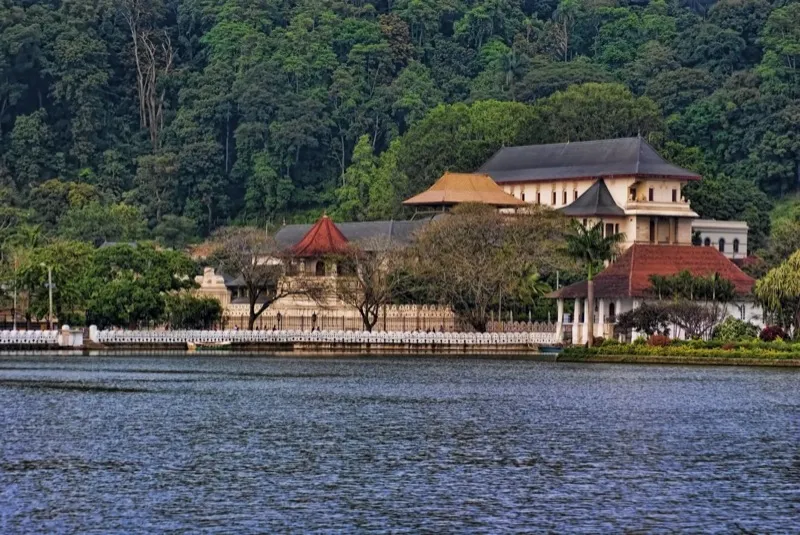
What to wear at the Temple of the Tooth, and why
Cover shoulders and legs, no shorts or sleeveless tops, hat off, shoes left at the booth. The Temple of the Tooth dress code, explained (October 2026).
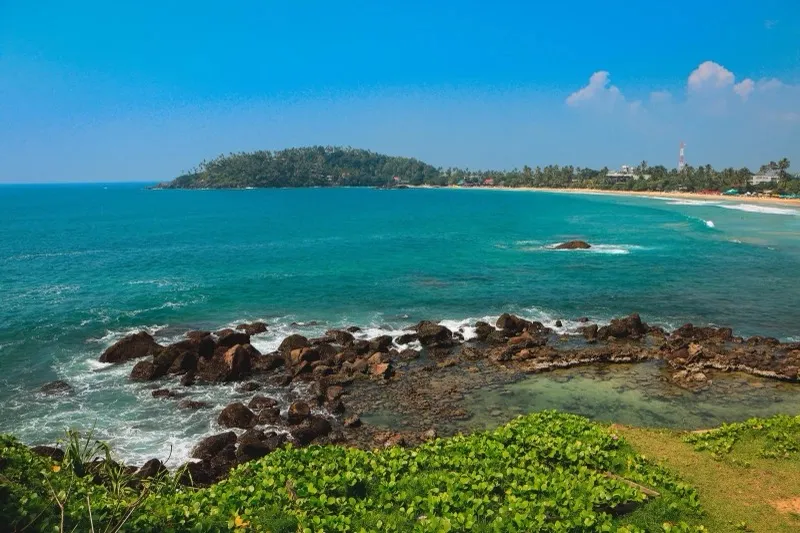
When to visit Sri Lanka: the two monsoons, explained
For the classic loop, January to March is driest. The east coast is best April to September. How the two monsoons decide your route, month by month.
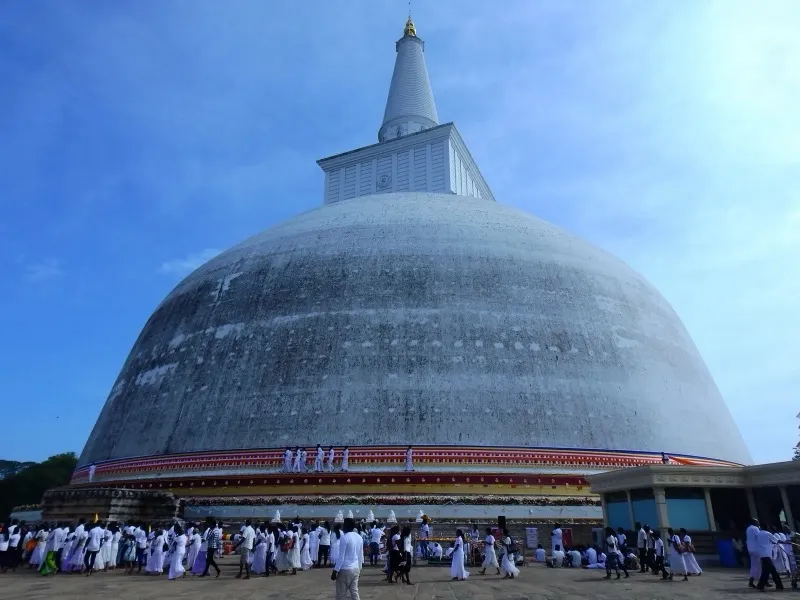
Temple etiquette in Sri Lanka: the rules and the reasons behind them
Shoes and hat off, shoulders and knees covered, never pose with your back to a Buddha. Sri Lanka's temple rules, and why each one matters (October 2026).
More guides in Kandy and the hills · Culture and etiquette