Turtle hatcheries in Sri Lanka: which help, and which harm
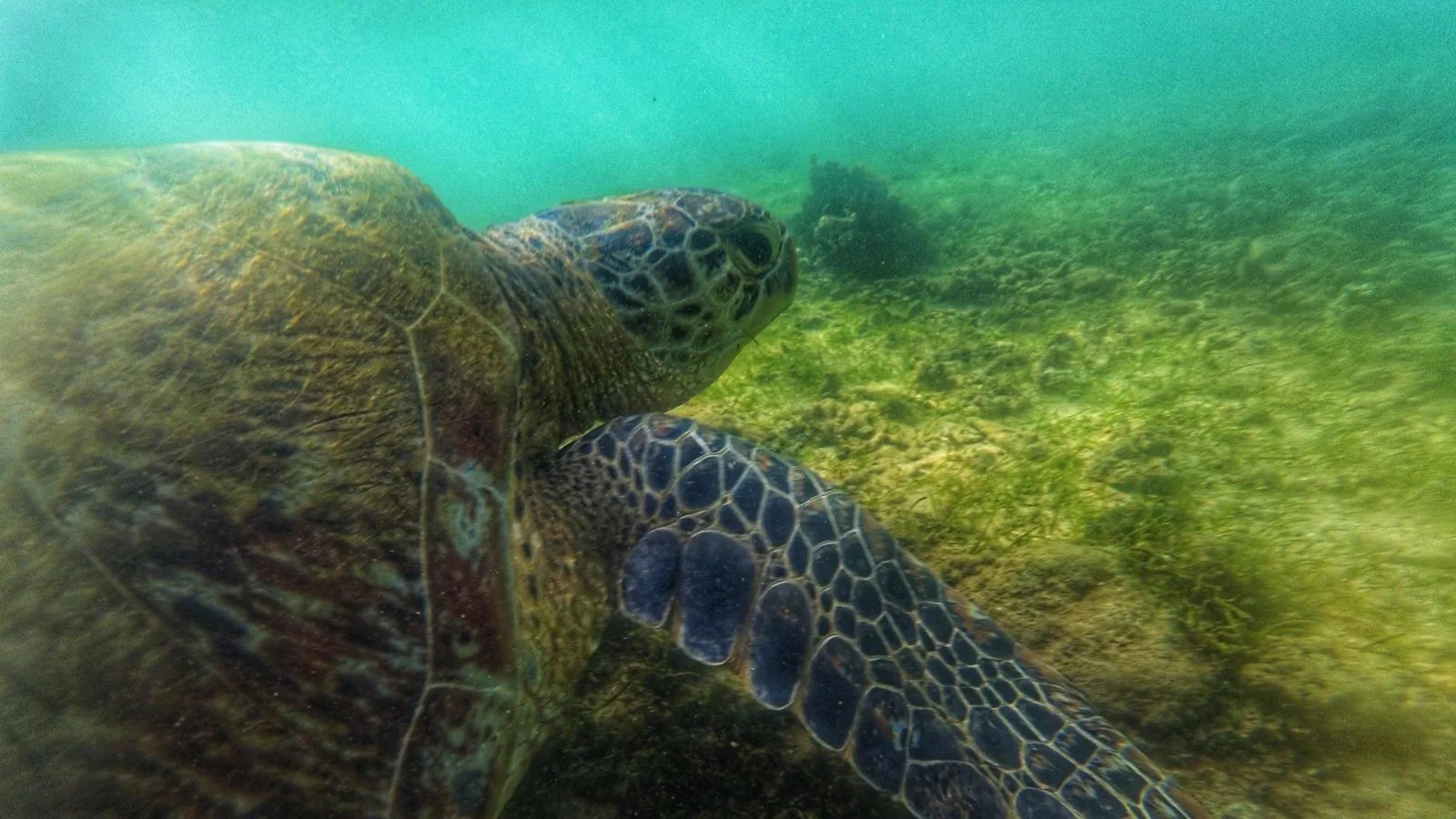
A responsible turtle hatchery moves eggs only from beaches where they are at risk, and releases hatchlings at night, as soon as they emerge, without keeping them in tanks. A harmful one buys eggs, holds hatchlings for visitors and lets people handle turtles. Ask four questions before you pay, or watch turtles nesting on a protected beach instead.
Hatcheries are a familiar stop on the south-west coast, and many visitors assume that paying for one helps turtles. Sometimes it does. Often it does not. This guide explains the difference, using the research that exists, and what you can do.
Which sea turtles nest in Sri Lanka?
Five of the world's seven species of sea turtle nest on Sri Lanka's beaches: the green, olive ridley, hawksbill, leatherback and loggerhead. Green turtles are by far the most common.
On the IUCN Red List, the hawksbill is Critically Endangered, and the leatherback, loggerhead and olive ridley are Vulnerable. The green turtle was moved to Least Concern worldwide in 2025, but the green turtles of the northern Indian Ocean are still listed as Vulnerable, and loggerheads in the north-east Indian Ocean are Critically Endangered.
All five species are protected under Sri Lanka's Fauna and Flora Protection Ordinance, and have been since 1972. Killing or taking a turtle, keeping one, or collecting its eggs from the beach is against the law.
How did turtle hatcheries start in Sri Lanka?
Turtle hatcheries in Sri Lanka go back to the 1950s. The wildlife department started one in Yala in 1956, the first private hatchery followed in 1969, and commercial hatcheries spread in the 1970s. The best known cluster is at Kosgoda, on the south-west coast, where the oldest hatchery dates from the 1960s.
Most of Sri Lanka's hatcheries are private businesses on the south-west coast, around Kosgoda in the Galle district.
Do turtle hatcheries help or harm turtles?
The most detailed survey of these hatcheries is from 2010 and 2011. It is the best evidence available, but it is not a description of every hatchery today. Use it to know what to look for.
Do hatcheries buy turtle eggs?
In the 2010–11 survey, every hatchery visited bought its eggs from fishermen and villagers who dug them up on nearby beaches at night, even though collecting turtle eggs is illegal. Researchers warn that paying for eggs gives them a market value.
Is it harmful to keep hatchlings in tanks?
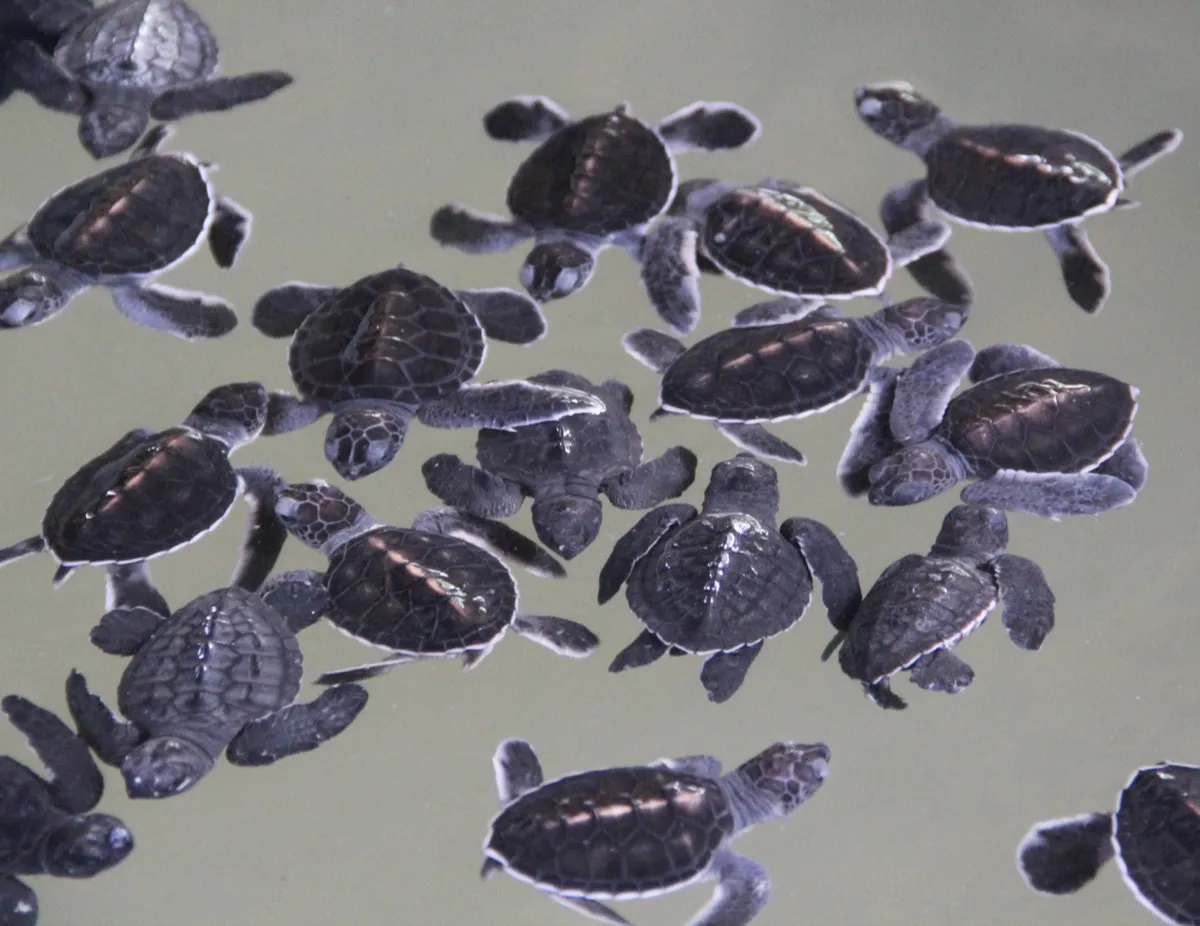
Many hatcheries keep newly hatched turtles in tanks for a day or more so that visitors can see them and pay to release them. That uses up the small store of energy a hatchling needs to get away from the shore.
In an experiment at a Kosgoda hatchery, green turtle hatchlings held for 24 hours crawled about a quarter slower than newly hatched ones, and their swimming strokes slowed the longer they were held.
Should hatchlings be released in daylight?
Hatchlings should go to the sea at night, as soon as they emerge. Releasing them in daylight is considered bad practice because it is likely to lower their chances of survival, and the first hours at sea are already the most dangerous of a turtle's life.
Why are older turtles kept in tanks?
Hatcheries also commonly keep older turtles in tanks as an attraction. In the 2010–11 survey, every hatchery had between three and ten young and half-grown turtles of three or four species on display, and all of them fed their turtles fish, even the green turtles, which eat sea grass and algae as adults.
Can you touch the turtles?
In the 2010–11 survey, hatcheries had signs forbidding touching, yet visitors were handling eggs, hatchlings and older turtles at most of them.
What does a good turtle hatchery do?
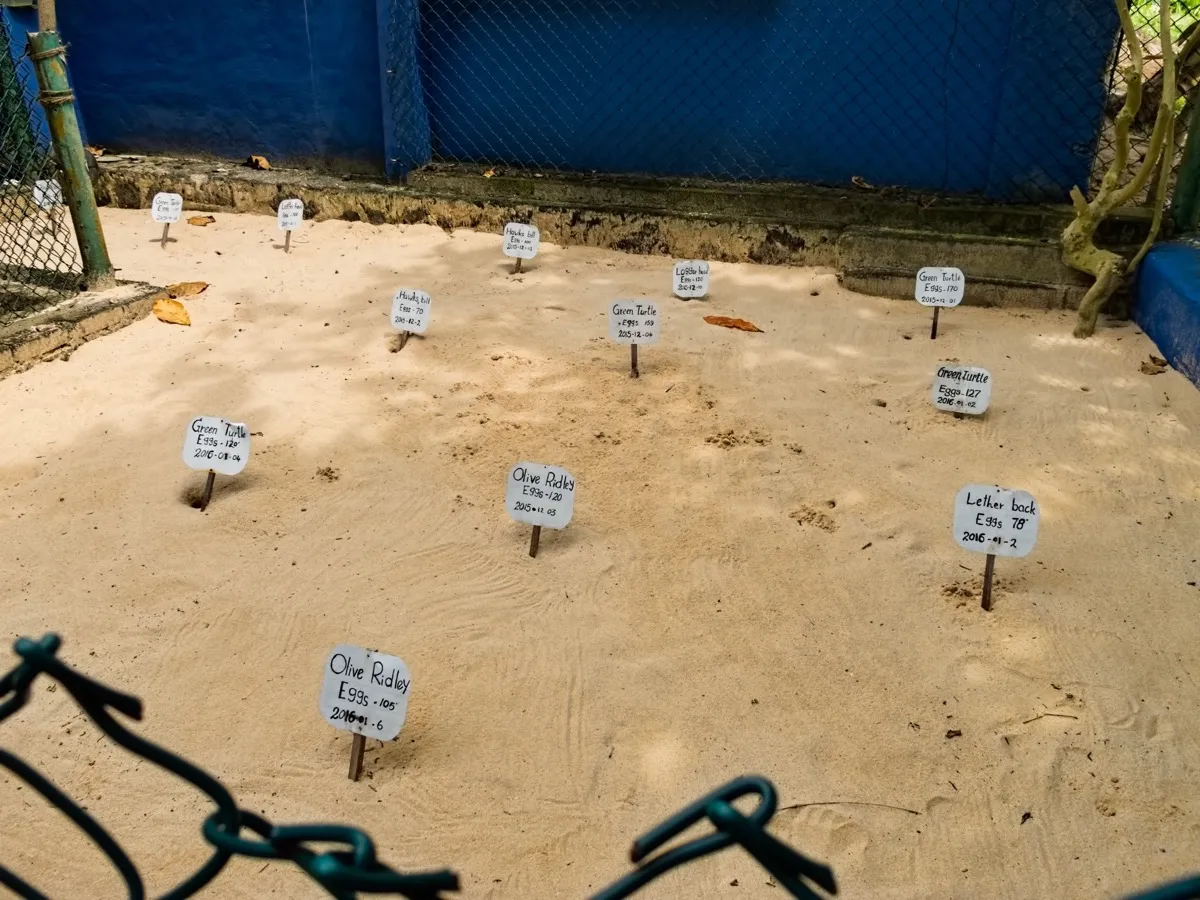
Good turtle conservation leaves nests where they are and guards them on the beach. A responsible hatchery moves eggs only from beaches where they are at risk, buries them again in protected sand with space between nests, and lets the young turtles go to the sea within a day of hatching, at night, without keeping them in tanks.
Does a permit mean a hatchery is good?
Under Sri Lankan law a turtle hatchery needs a permit from the Department of Wildlife Conservation. But there is no public list of permitted hatcheries, and a permit is not proof of good practice, so judge a hatchery by what it does, not by a certificate on the wall.
What should you ask a turtle hatchery?
Before you pay, ask four questions:
- Where do your eggs come from, and do you buy them?
- How long do you keep hatchlings before they go to the sea?
- Can visitors touch or hold the turtles?
- Do you release them at night, straight after they hatch?
A good answer is: only eggs at risk, released the same night, no touching, and no turtles kept in tanks.
If the answers are vague, or if you are offered a daytime release or a turtle to hold, you have your answer. You can thank the staff and leave.
Should you hold a baby turtle?
Do not touch or hold a turtle at a hatchery, even if staff hand one to you. This is the one thing every visitor can control, whatever the hatchery does.
Where can you see turtles nesting in Sri Lanka?
The best way to see turtles is a nesting watch on a protected beach at night. At Rekawa, near Tangalle, a community programme runs watches every night inside a sanctuary declared by the Department of Wildlife Conservation.
The rules protect the turtles:
- No flash and no bright lights.
- Do not use your own torch.
- Never touch a turtle or a young turtle.
- Stay with your group.
When is turtle nesting season?
Turtles nest in Sri Lanka all year, so a night watch can work in any month, but you will see far more in the main season. Researchers give March to May as the main nesting season, peaking in April; the Rekawa programme calls April to July its high season and October to January its low season.
Rekawa is near Tangalle, on the south coast that the classic loop passes along. See our two-week itinerary. For the sea itself, see swimming safety in Sri Lanka.
What most visitors miss about turtle hatcheries
- Paying for eggs can drive egg collection, which is illegal.
- Holding hatchlings weakens them. A day in a tank slowed them by about a quarter in one experiment.
- Daylight releases are considered bad practice.
- A permit is not proof of good practice.
- Touching is the visitor's choice. Say no, even if a turtle is offered.
- A night watch on a protected beach shows you turtles without any of these problems.
Before you visit a hatchery
- The four questions ready before you visit any hatchery.
- No touching or holding, whatever you are offered.
- No daytime release experiences.
- A night watch at Rekawa considered instead, with no flash and no torch.
- Your visit timed for the main nesting months if you can: April is the peak.
Our guides to whale watching from Mirissa and Udawalawe's elephants apply the same idea: watch wild animals on their terms.
Questions people ask
Are turtle hatcheries in Sri Lanka ethical?
It depends on what the hatchery does. A responsible hatchery moves eggs only from beaches where they are at risk and releases hatchlings at night, as soon as they emerge, without keeping them in tanks. In a 2010–11 survey, every hatchery visited bought its eggs, and visitors handled turtles at most of them.
Is it illegal to collect turtle eggs in Sri Lanka?
Yes. All five species are protected under the Fauna and Flora Protection Ordinance, and collecting turtle eggs from the beach is against the law.
Can you release baby turtles in Sri Lanka?
Releases should happen at night, straight after hatching. Daytime releases for visitors are considered bad practice, so do not pay for one.
Where can you see turtles nesting?
At Rekawa, near Tangalle, a community programme runs night watches inside a sanctuary declared by the Department of Wildlife Conservation. No flash, no bright lights, and no touching.
When is turtle nesting season in Sri Lanka?
Turtles nest all year, but researchers give March to May as the main season, peaking in April; the Rekawa programme calls April to July its high season.
Coming soon: Sri Lanka Before You Land, our pre-trip ebook, explains how to watch Sri Lanka's wildlife without harming it. A free guide, Your First Week in Sri Lanka, will cover the first days on the ground.
Sources (9)
Every fact in this guide was checked against these sources on 3 October 2026. Official and primary sources come first. How we research.
- Coast Conservation Department, CZMP 2024-29 · coastal.gov.lk
- CMS/IOSEA MOS8 Inf.6.a, NIO Marine Turtle Task Force report, incl. DWC Director General presentation 'Turtle Conservation in Sri Lanka' (27/10/2015) · iosea-turtles.cms.int
- Brodie et al. 2008, Chelonian Conservation and Biology 7(2) · doi.org
- IUCN SSC Marine Turtle Specialist Group, 'Marine Turtle Red List Assessments' · iucn-mtsg.org
- Perera et al. 2022, J. Natl. Sci. Found. Sri Lanka 50(4):755-769 · jnsfsl.sljol.info
- Turtle Watch Rekawa · turtlewatchrekawa.org
- Sea Turtle Conservancy, 'Artificial Lighting' · conserveturtles.org
- Rajakaruna, Ekanayake, Kapurusinghe & Ranawana 2013, Indian Ocean Turtle Newsletter 17:2 (survey of 7 hatcheries, Oct 2010 and Mar 2011) · iotn.org
- Mejias Balsalobre & Bride 2016, Marine Turtle Newsletter 151:16-21 (retention experiment at a Kosgoda hatchery) · kar.kent.ac.uk
Related guides
Whale watching from Mirissa: the season, and how to choose a responsible boat
Most Mirissa whale trips run November to April. Sightings are not guaranteed and have fallen recently. The season, the rules, and how to choose a boat.

Udawalawe: elephants in the wild, and the transit home
One of the most reliable places to see wild elephants, in any month. The safari, the Elephant Transit Home, and how to watch responsibly (Oct 2026).

Sri Lanka in two weeks: the classic loop, explained day by day
Two weeks in Sri Lanka: Cultural Triangle, Kandy, the hills, Ella, Yala and the south coast. Day by day, with honest travel-time ranges (checked October 2026).
More guides in South and west coast · Wildlife