Whale watching from Mirissa: the season, and how to choose a responsible boat
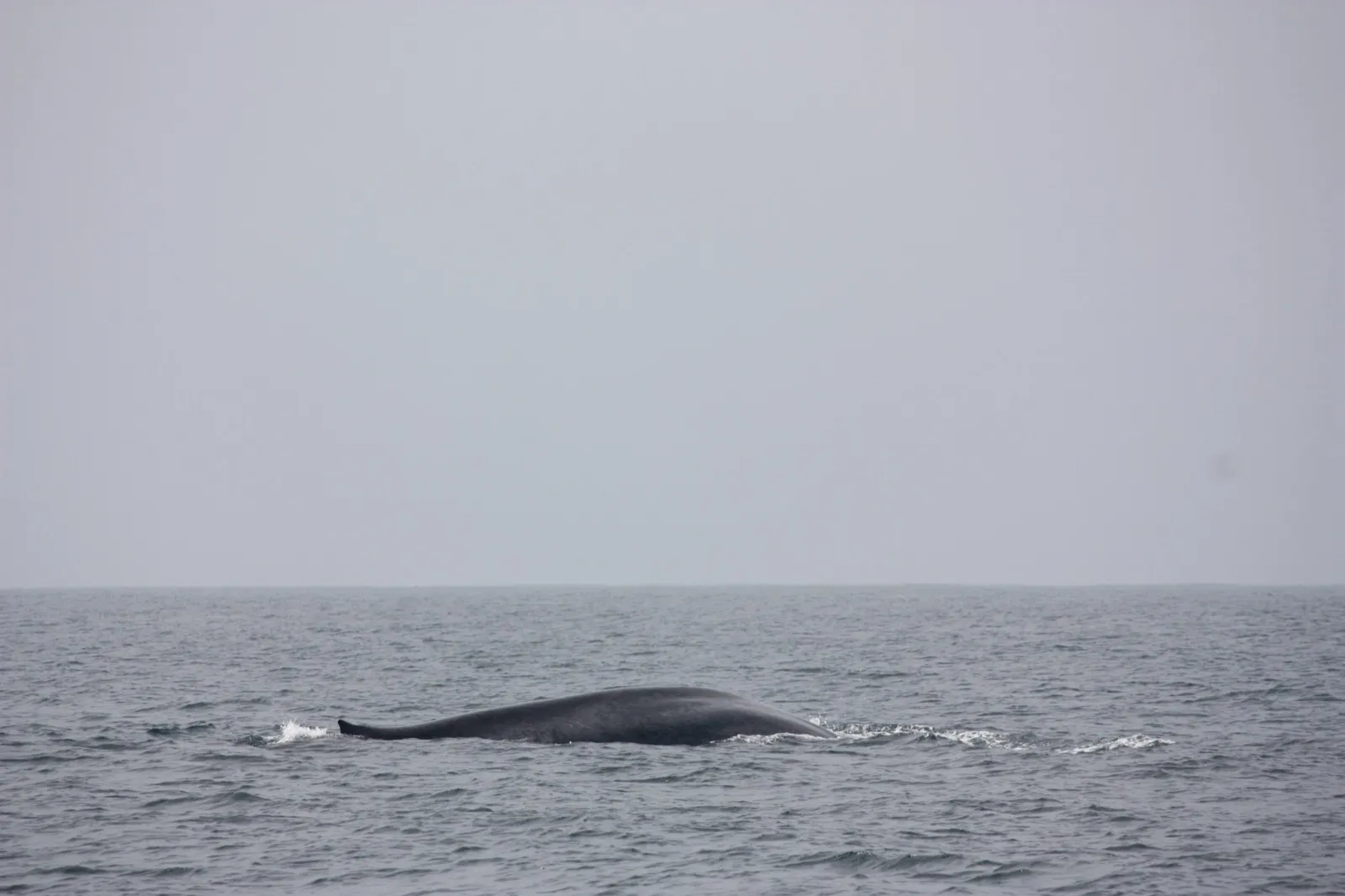
Most whale-watching trips from Mirissa run from November to April. Sources differ on the exact months, but all of them include December to March. From May to October the south-west monsoon makes the sea rough, and few boats go out. Sightings are never guaranteed, and blue whale sightings have fallen sharply in recent years. Choose a licensed boat that keeps 100 metres away.
This guide explains why whales come so close to this coast, what you can realistically expect to see, and how to choose a boat that does not harm the animals you came for.
When is whale-watching season in Mirissa?
Most whale-watching trips from Mirissa run from November to April. Sources differ on the exact months, but all of them include December to March. From May to October the south-west monsoon makes the sea rough. Few boats go out then, and some stop completely.
The season is set by the sea, not by the whales. The blue whales are in these waters all year. What changes is whether a small boat can safely reach them.
Why are there whales off Mirissa?
Blue whales are the main reason people go. Unlike most blue whales, which travel between distant feeding and breeding areas, the blue whales of the northern Indian Ocean stay in warm waters all year. Off Mirissa they have been recorded in every month.
Scientists usually call them the Northern Indian Ocean blue whale, Balaenoptera musculus indica. They are not the same as the pygmy blue whales of the southern Indian Ocean, but how these groups are related is still being studied.
Deep water starts close to the shore here. The continental shelf off the south-west coast of Sri Lanka is less than 10 kilometres wide. Currents meet south of the island and bring nutrients up from deep water, and this feeds the small animals that blue whales eat. Boats may still travel 20 kilometres or more out to sea to find whales.
What whales and dolphins can you see from Mirissa?
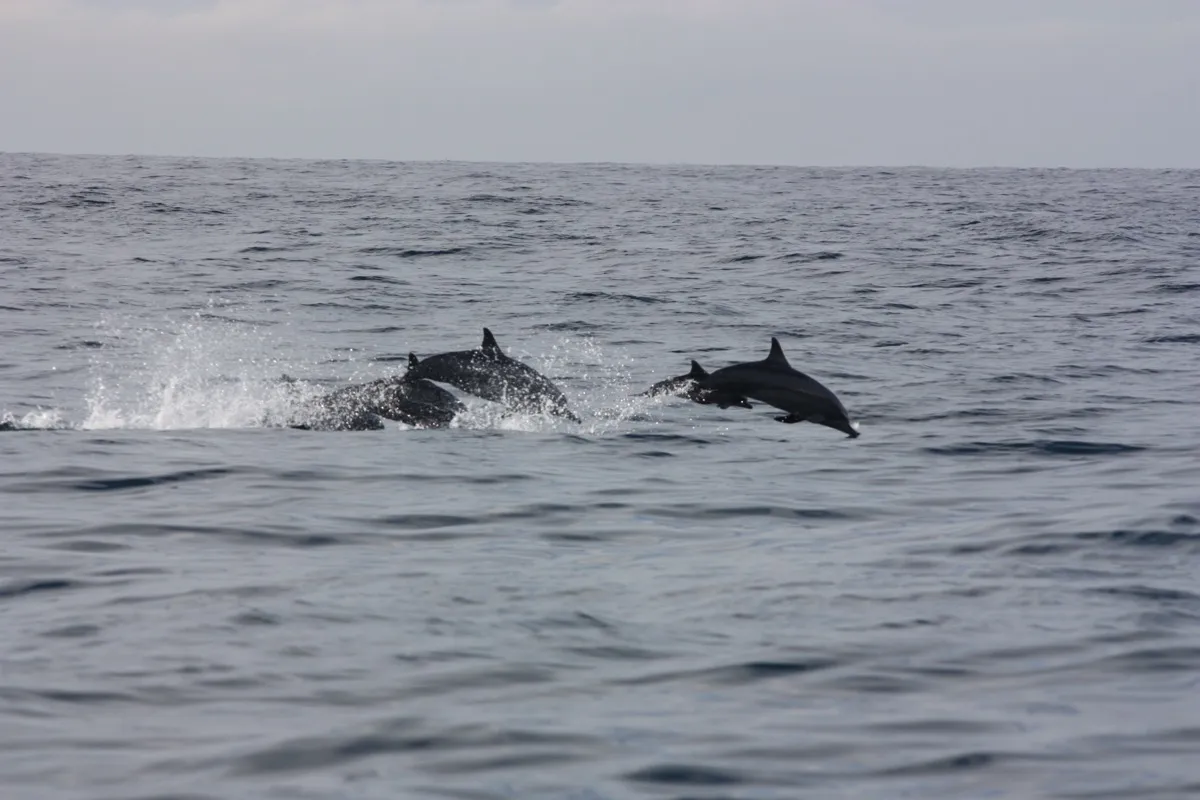
Other species are seen too, but less predictably. Spinner dolphins are common off the south coast, sometimes in very large groups. Sperm whales and Bryde's whales are seen on some trips. Many trips see dolphins but no whales.
On the IUCN Red List, the blue whale is listed as Endangered and the sperm whale as Vulnerable.
Are whale sightings guaranteed in Mirissa?
Whale sightings are never guaranteed. One Mirissa operator says it finds whales on about half of its trips, and blue whales on only about one trip in five. Before you book, ask what happens if no whales are seen. Policies differ between operators.
Sightings have also fallen in recent years. Researchers reported very few blue whale sightings in Sri Lankan waters in 2024, including only three off Mirissa, and a government survey suggested a decline of more than 90 percent. Scientists link this to warming seas, shipping and disturbance, but the causes are not yet proven. It is not known whether the whales will return in later seasons.
Guides and videos made before 2024 may describe better years. If you go, go for the ocean, the dolphins and the chance of a whale, not a promise of one. For wildlife on land, see which safari in Sri Lanka.
How do ships threaten the whales off Sri Lanka?
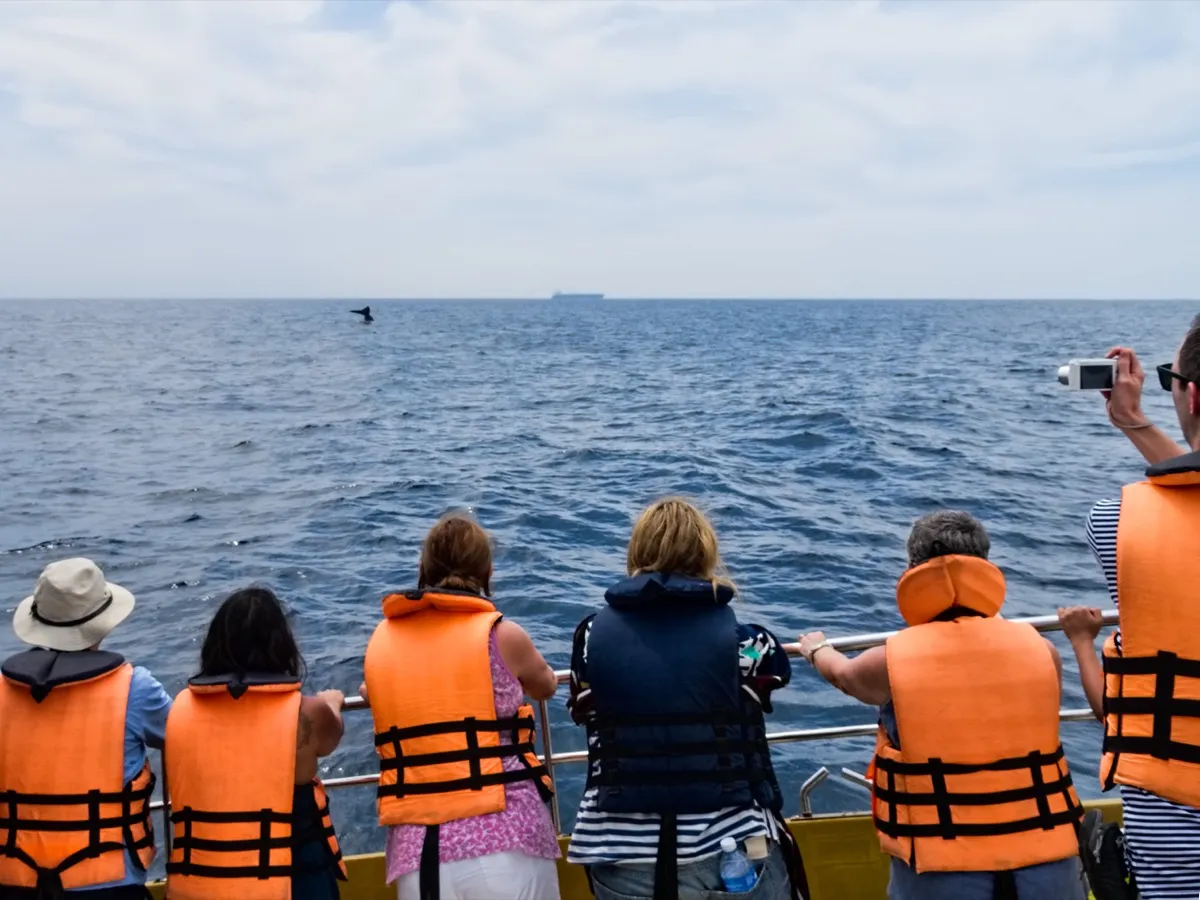
One of the world's busiest shipping routes passes just south of Mirissa, through the area where the whales feed. Ships hit and kill blue whales here.
Scientists found that moving the shipping lanes about 15 nautical miles further south could cut the risk to the whales by about 95 percent. In 2023 the International Whaling Commission and shipping industry groups asked the International Maritime Organization to move the lanes, but the Sri Lankan government opposed the change. Some shipping companies now choose to sail further south on their own.
What are the whale-watching rules in Sri Lanka?
Whale watching in Sri Lanka is controlled by the Department of Wildlife Conservation, under rules from 2012. Every boat needs a licence and must carry a guide trained by the Department. The rules say:
- Boats must slow down from 400 metres away.
- Boats must switch off the engine at 100 metres from a whale, and never go closer than 100 metres.
- For dolphins the limit is 50 metres.
- Boats must not cut in front of or behind the animals.
- Boats must not use food, light or sound to attract them.
- Passengers may not get into the sea. The only exception is diving, and the boat operator must get the Director-General's approval for it in advance.
A separate tourism guideline also asks for no more than three boats within 300 metres of an animal, and a speed below 6 knots in that zone.
Licences come from the Department of Wildlife Conservation, not the Navy. The Department licenses each boat for one calendar year, registers it, and trains and registers the guides. The Navy has a different role: it runs its own whale-watching ship, and boats must report emergencies to the Navy or the Police. The Coast Guard helps the Department with patrols.
Do Mirissa whale-watching boats follow the rules?
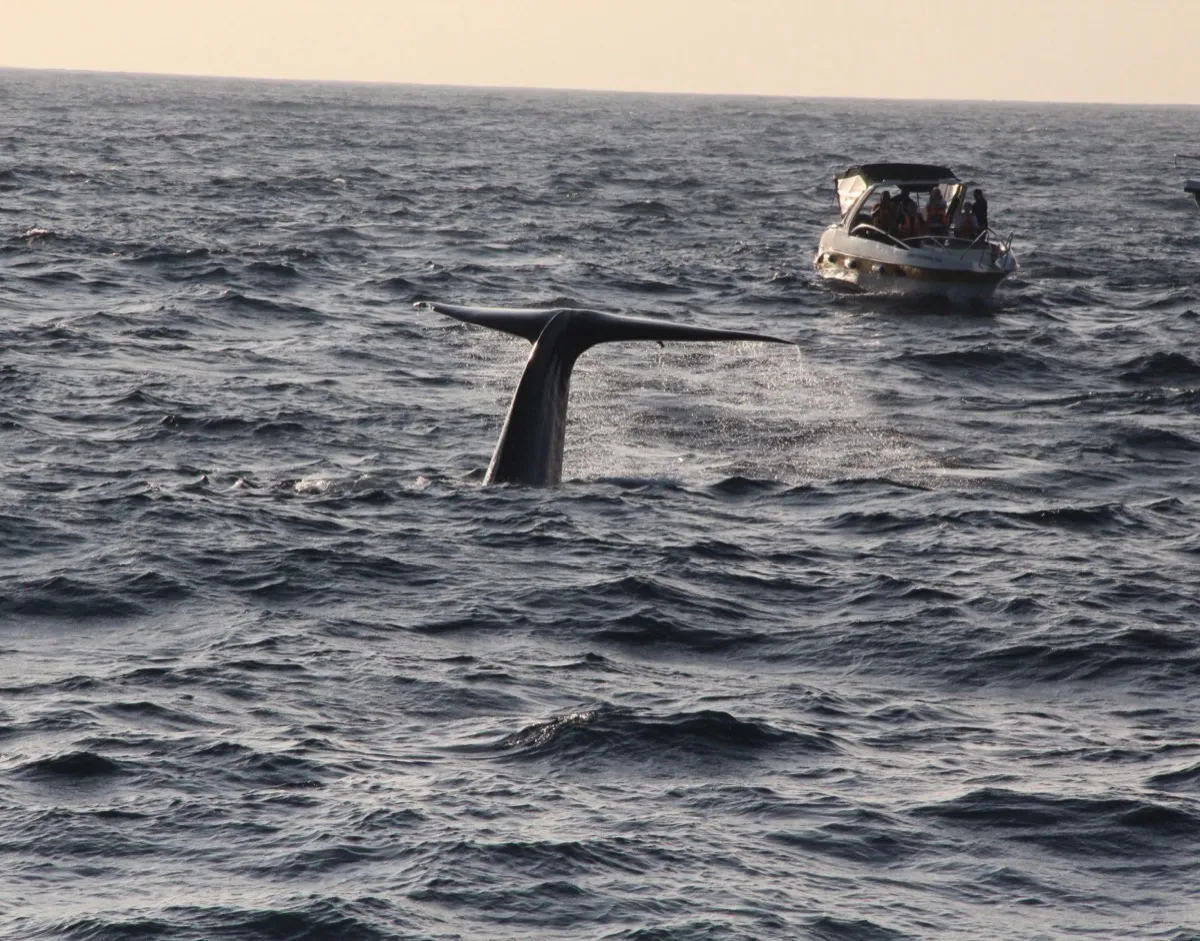
Research has found that many boats do not follow the rules. Studies from 2012 and 2013 found that boats off Mirissa often came too fast and too close, and that the whales moved away. A 2016 study found the rules were poorly enforced. In 2024 a conservation group contacted operators in Mirissa and Trincomalee, and most of those who replied offered swimming with whales, which the rules do not allow.
This is why your choice of boat matters. A boat that races to a whale and sits beside it gives you a closer photo and a more stressed animal.
How do you choose a responsible whale-watching boat?
Some signs of a legal and responsible boat:
- It has a Wildlife Department licence on board.
- Its number is painted where you can read it.
- It carries a trained guide.
- It has life jackets for everyone.
- It does not offer swimming with whales.
- It stops at least 100 metres from a whale and switches off its engine.
If a boat chases whales or races in front of them, it is breaking the rules. You can ask these questions before you book: Is the boat licensed? Is there a trained guide? How close do you go? Do you offer swimming? A responsible operator will answer them easily.
How long is a whale-watching trip, and what is it like?
Boats leave Mirissa harbour early, usually around 6:30 in the morning, with check-in at about 6:00. A trip often lasts 4 to 5 hours, but it can be shorter or much longer, because the boat goes where the whales are.
The open ocean always has some swell. If you get seasick easily, ask a pharmacy for a seasickness tablet and take it before you board. Some boats will not return early because a passenger feels ill.
How much does whale watching in Mirissa cost?
Prices change often. In October 2026, one Mirissa operator listed an adult ticket at 20,000 Sri Lankan rupees, including government fees. The Sri Lanka Navy's whale-watching cruises have sailed only from Trincomalee since July 2025, not from the south coast. Check the price, and whether the wildlife fee is included, when you book.
Where can you see whales outside the Mirissa season?
Off Trincomalee, on the north-east coast, research records blue whales mainly from February to April, and few after April. The Sri Lanka Navy runs its Trincomalee cruises from May to October, when that sea is calm. Kalpitiya, on the north-west coast, is a third whale-watching area. Our guide to when to visit Sri Lanka explains how the two monsoons move the seasons around the island.
What most visitors miss about whale watching in Mirissa
- The whales live here all year. The season is about the sea, not the whales.
- Sightings have fallen. The 2024 numbers were very low, and nobody yet knows why for certain.
- The ships matter as much as the boats. Ship strikes kill blue whales off this coast.
- Swimming with whales is not allowed, even when it is offered.
- The 100-metre rule is yours to ask about. A good operator will be glad you did.
Before you go whale watching
- Plan for the season: roughly November to April. Every source includes December to March.
- Choose a licensed boat with a trained guide and life jackets for everyone.
- Ask how close the boat goes, and say no to swimming offers.
- Ask what happens if no whales are seen.
- Check the price and whether the wildlife fee is included (as checked October 2026: 20,000 rupees from one operator, including government fees).
- Take a seasickness tablet before you board if you need one.
- Bring a hat, sunscreen and water for 4 to 5 hours at sea.
Questions people ask
What is the best month for whale watching in Mirissa?
Sources differ on the exact months, but every source includes December to March, so those are the safest months to plan for. Most trips run from November to April. From May to October the sea is rough and few boats go out.
Can you see blue whales in Mirissa all year?
The blue whales of the northern Indian Ocean stay in warm waters all year, and off Mirissa they have been recorded in every month. What changes is the sea: from May to October it is usually too rough for small boats.
How close do boats get to the whales?
Under Sri Lanka's rules, boats must switch off the engine at 100 metres from a whale and never go closer than 100 metres. For dolphins the limit is 50 metres.
Can you swim with whales in Sri Lanka?
No. Sri Lanka's 2012 whale-watching rules do not allow passengers to swim with whales. Only diving is allowed, and only with the Wildlife Director-General's approval, which the boat operator must get in advance. Some operators still offer swimming, but it is against the rules.
How long does a Mirissa whale-watching trip take?
A trip often lasts 4 to 5 hours, but it can be shorter or much longer, because the boat goes where the whales are. Boats usually leave around 6:30 in the morning.
Coming soon: Sri Lanka Before You Land, our pre-trip ebook, explains how to watch Sri Lanka's wildlife without harming it. A free guide, Your First Week in Sri Lanka, will cover the first days on the ground.
Sources (24)
Every fact in this guide was checked against these sources on 3 October 2026. Official and primary sources come first. How we research.
- Sea Mammals (Observation, Regulation and Control) Regulations, No. 1 of 2012 - Gazette Extraordinary No. 1774/27, 6 Sep 2012 (FAOLEX copy of the gazette) · faolex.fao.org
- NOAA Fisheries, MMPA Import Provisions comparability finding - Sri Lanka final report (2026) · fisheries.noaa.gov
- IUCN Red List, Taylor et al. 2019, Physeter macrocephalus, e.T41755A160983555 · iucnredlist.org
- Anderson et al. 2012, J. Cetacean Res. Manage. 12(2):203-218, blue whales off Sri Lanka (Trincomalee sightings peak Feb-Apr; scarce late Apr-Nov) · journal.iwc.int
- SLTDA, Guideline for Whale and Dolphin Watching - Water Based Adventure Tourism Activities (PDF created 2 May 2023) · sltda.gov.lk
- Sri Lanka Navy Whale Watching - cruise schedule and charges · whalewatching.navy.lk
- Sri Lanka Navy Whale Watching - home page · whalewatching.navy.lk
- de Vos, Pattiaratchi & Wijeratne 2014, Surface circulation and upwelling patterns around Sri Lanka, Biogeosciences 11:5909-5930 · bg.copernicus.org
- Priyadarshana et al. 2016, Distribution patterns of blue whale and shipping off southern Sri Lanka, Regional Studies in Marine Science 3:181-188, doi:10.1016/j.rsma.2015.08.002 · biospherefoundation.org
- Randage, Alling, Currier & Heywood 2014, Review of the Sri Lanka blue whale, J. Cetacean Res. Manage. 14:43-49 · biospherefoundation.org
- de Vos, Pattiaratchi & Harcourt 2014, Inter-annual variability in blue whale distribution off southern Sri Lanka, J. Mar. Sci. Eng. 2:534 · doi.org
- IUCN Red List, Cooke 2018, Balaenoptera musculus, e.T2477A156923585 · dx.doi.org
- IMO document MEPC 80/16/3 (28 Apr 2023), Call for establishment of a new TSS south of Sri Lanka, submitted by IWC, ICS, BIMCO, INTERTANKO, CLIA, INTERCARGO, IPTA, IFAW, WSC (third-party hosted copy) · energiesdelamer.eu
- Society for Marine Mammalogy, Committee on Taxonomy - List of marine mammal species and subspecies (updated April 2026) · marinemammalscience.org
- Raja & the Whales (Mirissa operator) - trip page: season, departure, duration, rates, sighting odds · rajaandthewhales.com
- IWC Whale Watching Handbook - Sri Lanka country profile · wwhandbook.iwc.int
- IUCN Marine Mammal Protected Areas Task Force - South West to Eastern Sri Lanka IMMA factsheet (2022) · marinemammalhabitat.org
- Maritime Executive, 6 Jul 2023, Sri Lanka opposes proposal to reduce whale strikes in TSS (MEPC 80) · maritime-executive.com
- Mongabay, 30 Apr 2025, Blue whale decline in Sri Lanka tied to climate and human activity · news.mongabay.com
- Mongabay, Oct 2022, Shipping lane change could be sea change for Sri Lanka's blue whales · news.mongabay.com
- Berlage et al. (The Pearl Protectors), Oct 2024, Conserving gentle giants: case study on illegal whale-swimming in Sri Lanka (NGO qualitative report) · pearlprotectors.org
- The Morning (Sri Lanka), 23 Feb 2025, Protecting the sea's gentle giants · themorning.lk
- The Morning (Sri Lanka), 26 Oct 2025, Maritime tourism: a whale of a gap in regulations · themorning.lk
- Norwegian Scientific Committee for Food and Environment (VKM), Non-detriment finding for sperm whale, Feb 2025 · vkm.no
Related guides
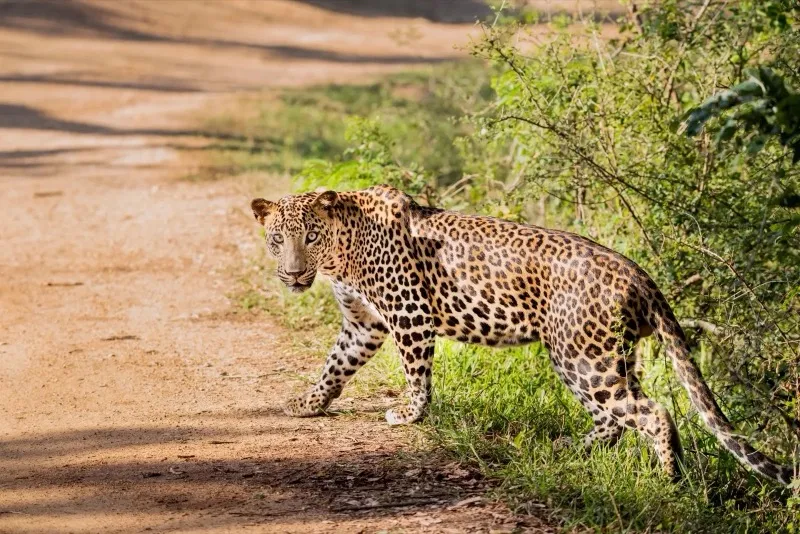
When to see leopards in Yala, and how to choose a responsible safari
Leopards are seen in Yala all year. Best odds: the first and last hours of the day, in the drier May to September months. Fees, rules and ethical choices.
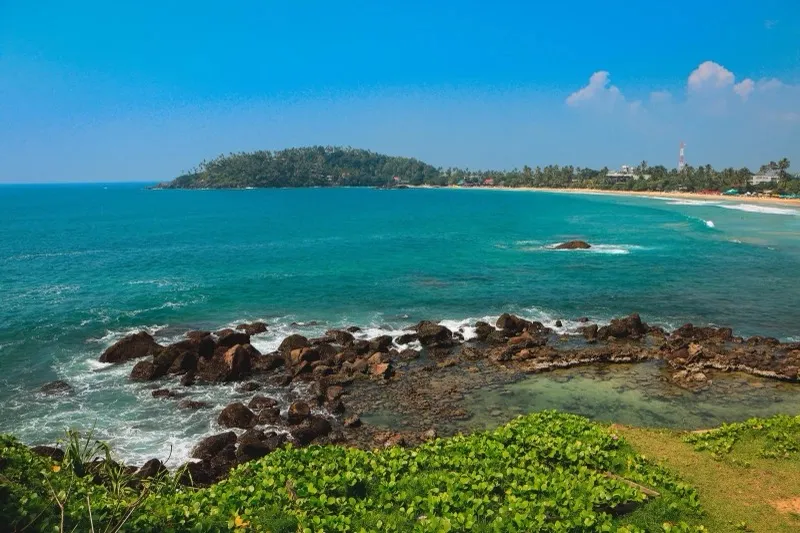
When to visit Sri Lanka: the two monsoons, explained
For the classic loop, January to March is driest. The east coast is best April to September. How the two monsoons decide your route, month by month.
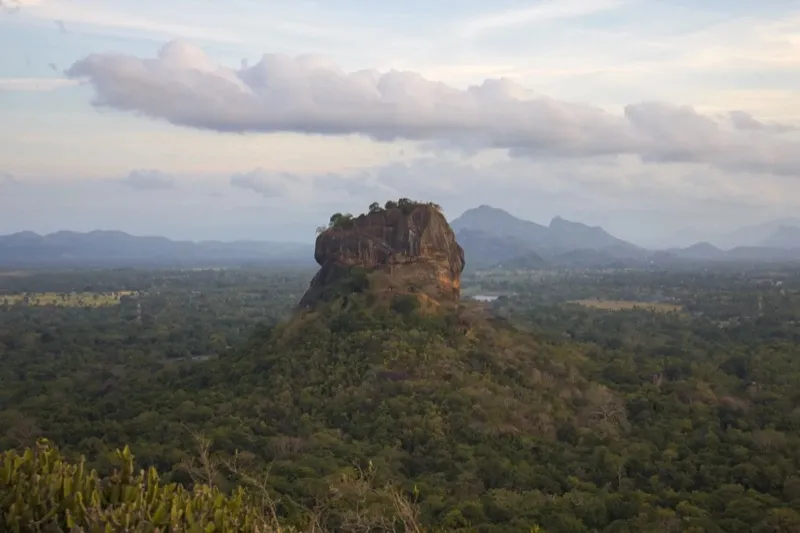
Sri Lanka in two weeks: the classic loop, explained day by day
Two weeks in Sri Lanka: Cultural Triangle, Kandy, the hills, Ella, Yala and the south coast. Day by day, with honest travel-time ranges (checked October 2026).
More guides in South and west coast · Wildlife