Udawalawe: elephants in the wild, and the transit home
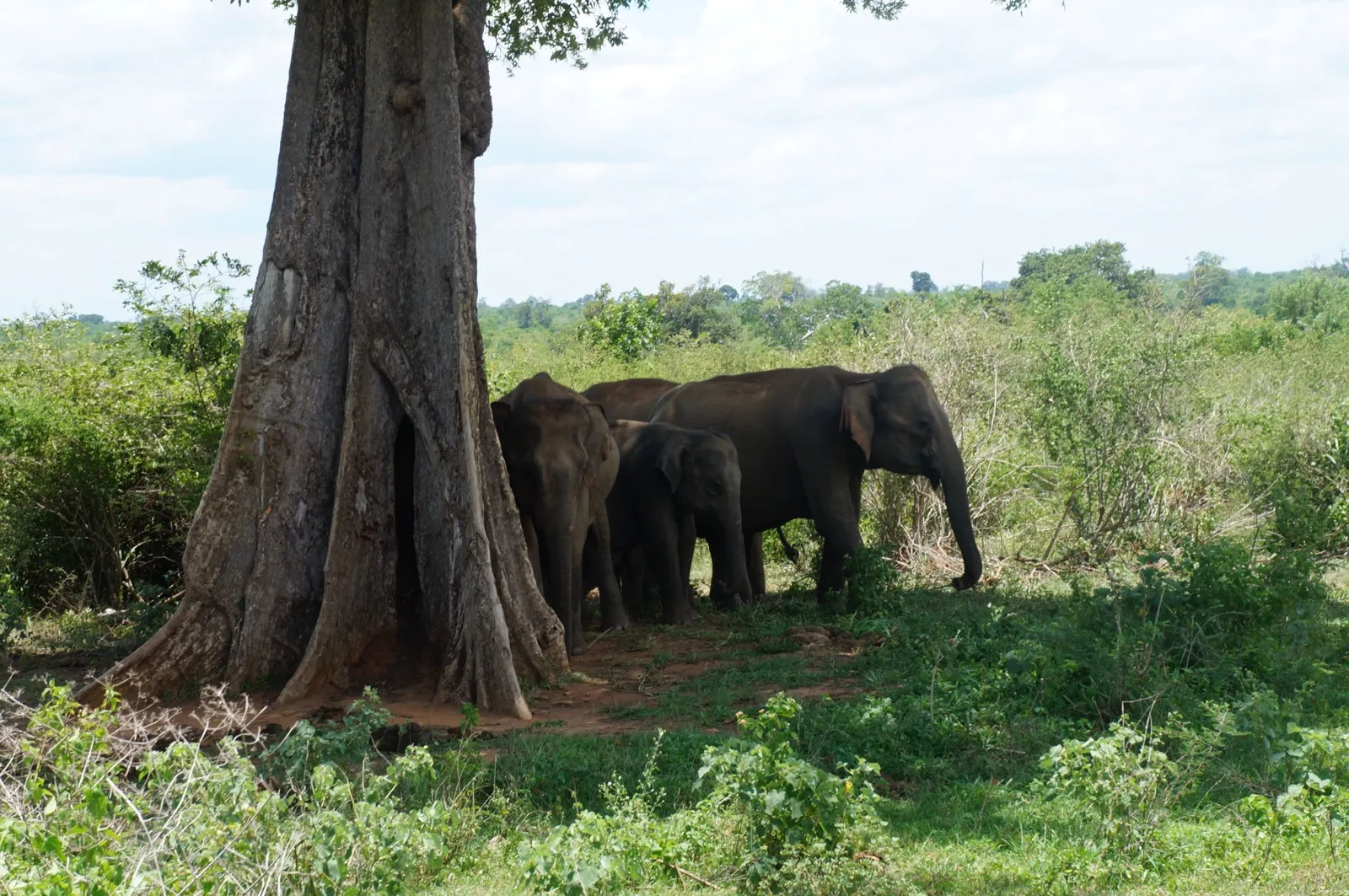
An Udawalawe safari is a jeep drive, usually a half day in the morning or afternoon, in a park open 6 a.m. to 6 p.m. It is one of the most dependable places in Sri Lanka to see wild elephants, in any month. Next to the park, the Elephant Transit Home returns orphaned calves to the wild. Never feed elephants.
This guide explains what you will see, how the Transit Home differs from places that keep elephants in captivity, and how to make sure your visit does no harm.
What is Udawalawe National Park?
Udawalawe National Park covers about 308 square kilometres of grassland, scrub and forest around the Udawalawe reservoir, on the border of Sabaragamuwa and Uva provinces. Sri Lanka's wildlife department says it was declared to protect the catchment of the reservoir and to give a home to animals displaced by the big irrigation projects.
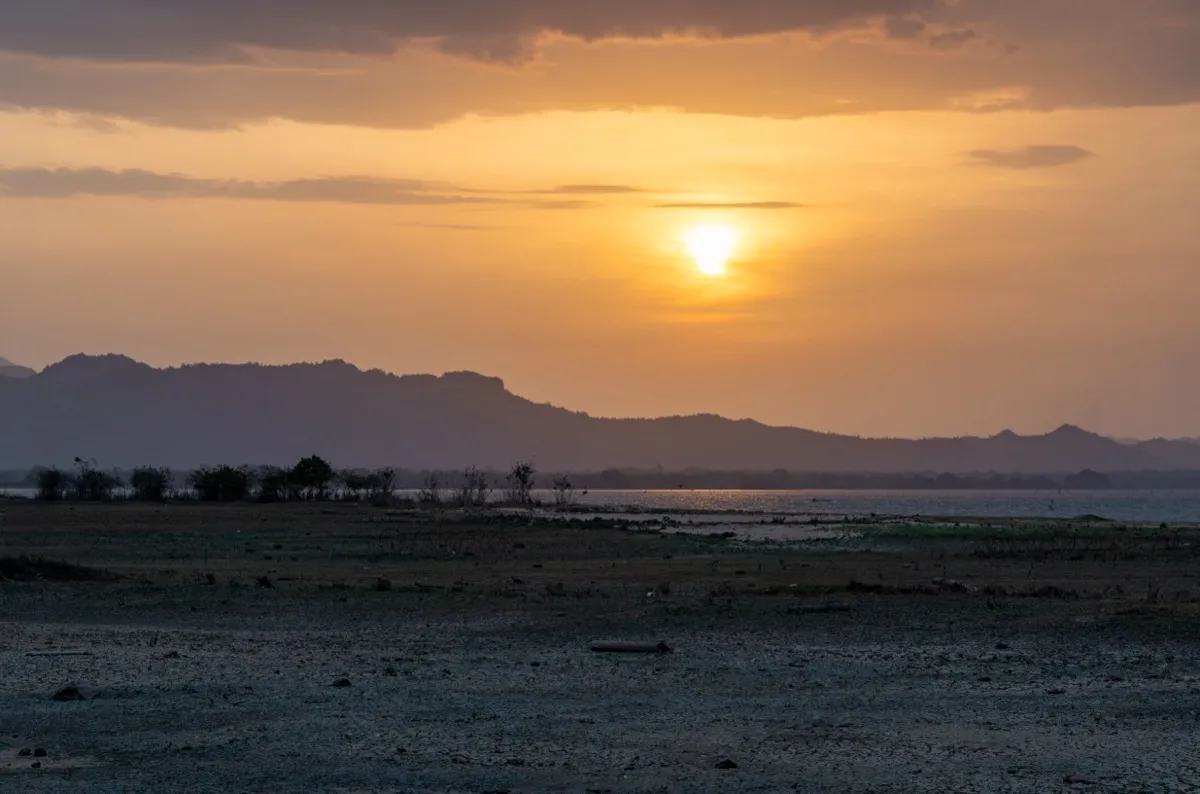
Udawalawe is Sri Lanka's third most visited national park. In 2024 it had about 276,000 visitors, and the Elephant Transit Home about 212,000.
How many elephants live in Udawalawe?
Researchers who identified elephants one by one estimate that 800 to more than 1,100 elephants use the park. Not all of them are inside at once: elephants move in and out through gaps in the fence.
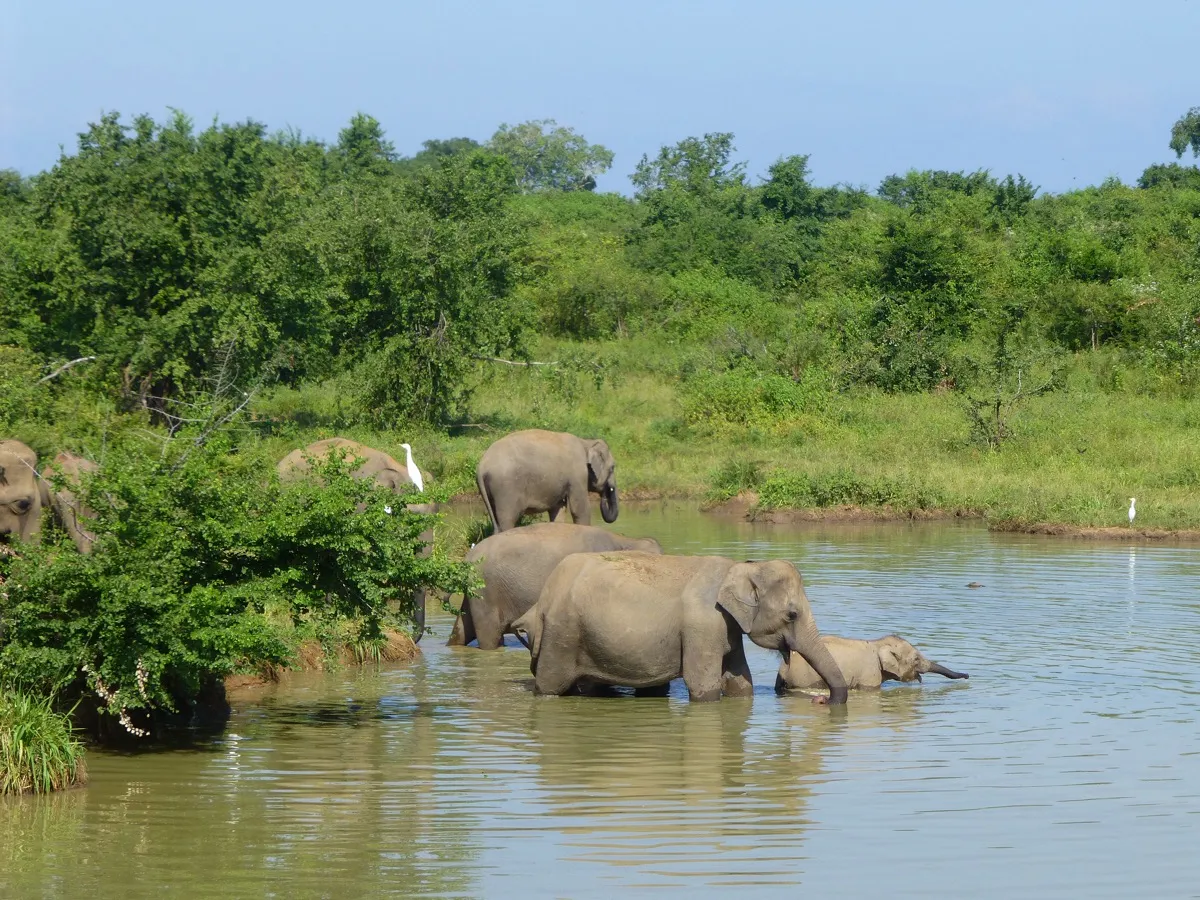
The Asian elephant is listed as Endangered on the IUCN Red List. Sri Lanka's elephants are usually classed as their own subspecies, Elephas maximus maximus, although geneticists still debate how distinct they are from mainland Asian elephants. A national count in 2024 by the Department of Wildlife Conservation found at least 7,451 wild elephants in Sri Lanka (checked October 2026).
Do not expect big tusks. Researchers at Udawalawe report that the females and most of the males there have no tusks, so a tusker is a rare and lucky sighting.
Best time for an Udawalawe safari
Researchers who work with the wildlife department write that herds and bulls can easily be seen at Udawalawe at any time of day, in any month. That makes it different from Minneriya, where the elephants gather in large numbers only in the dry season. See the Gathering at Minneriya.
Most national parks, Udawalawe included, are open from 6 in the morning to 6 in the evening (checked October 2026). Morning and late-afternoon drives are the most popular.
What else can you see in Udawalawe?
Besides elephants you may see water buffalo, spotted deer, jackals and mugger crocodiles, and, rarely, a leopard. The reservoir draws water birds such as cormorants, spot-billed pelicans, painted storks and Asian openbills, and 184 bird species have been recorded around it.
What is the Elephant Transit Home?
Next to the park is the Elephant Transit Home, set up by the Department of Wildlife Conservation in 1995. It takes in orphaned elephant calves, raises them with as little human contact as possible, and releases them into the wild, mostly into Udawalawe National Park. A 2025 study counted 162 calves released so far.
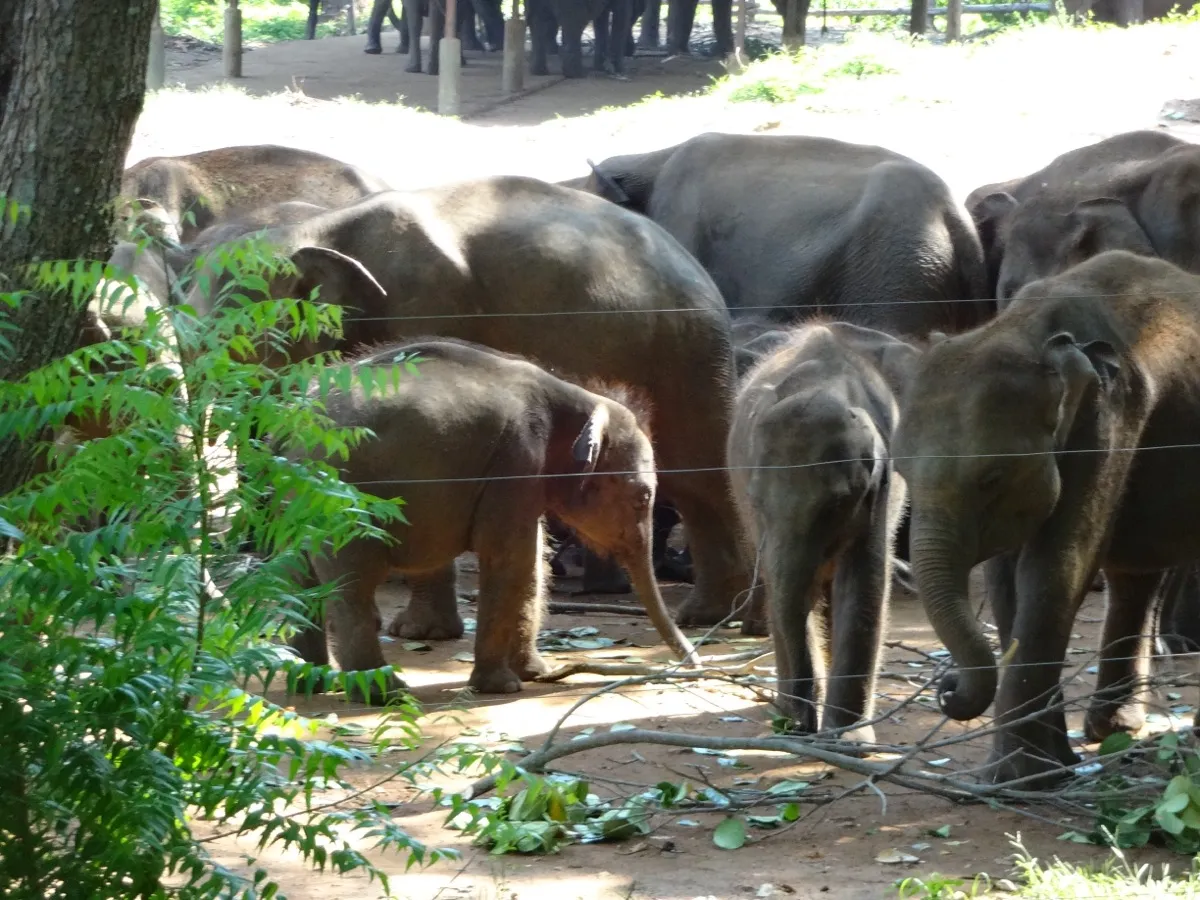
Visitors pay to watch the calves' milk feeds. As checked in October 2026 we could not confirm the current viewing times or ticket price from an official source, so check at the gate or with your hotel the day before.
You watch from a distance. Visitors do not touch or feed the calves; only keepers handle them, because calves that get used to people struggle to return to the wild.
Is the Elephant Transit Home the same as Pinnawala?
Pinnawala Elephant Orphanage, near Kegalle, works differently. It was set up in 1975 for orphaned calves and is now run by the Department of National Zoological Gardens. Its elephants are not returned to the wild: the herd lives in captivity, grows mainly through births, and adult elephants are kept on chains for part of the day or night. The Transit Home at Udawalawe was created in 1995 so that orphans could go back to the wild instead.
The difference matters when you choose where to see young elephants. For the same choice on the coast, see turtle hatcheries in Sri Lanka.
Should you feed elephants at the Udawalawe fence?
An electric fence runs along much of the park boundary, including beside a main road. Bull elephants often wait at the fence because passing drivers throw them fruit; researchers have counted up to 20 there at once.
Do not feed them and do not stop to watch others do it. Feeding animals is banned in national parks, and wildlife officials say feeding wild elephants from vehicles is illegal.
Elephants that learn to expect food from traffic become dangerous. On the Kataragama–Buttala road, elephants looking for food damage more than 100 vehicles a year, and five people have died in such attacks in six years (checked October 2026).
Why are elephants and people in conflict in Sri Lanka?
Udawalawe's calm herds are not the whole story. Sri Lanka has one of the world's most serious conflicts between people and elephants, as farms spread into elephant country. Researchers report that it records more elephant deaths from this conflict each year than any other country, and the second-highest number of human deaths. In 2022, 433 elephants and 145 people died.
This is part of why feeding at the fence matters. An elephant that links people with food is more likely to come into conflict with them.
How does an Udawalawe safari work?
Most visitors take a half-day jeep safari, in the morning or the afternoon. A full day is possible, from the 6 a.m. opening to the 6 p.m. closing. Your hotel or guesthouse can arrange a jeep, and jeep drivers also wait for customers near the park entrance. Agree the price, the hours and what it includes before you set off; park tickets are paid separately. We could not confirm a current jeep-hire price, so we do not quote one.
How much are the Udawalawe park fees?
You need a park permit for each visit. Your jeep operator usually buys it at the gate, or it can be booked online through the wildlife department's e-permit service.
The national park fees in force were set by Government Gazette 2292/11, published on 8 August 2022, and have applied since 2 September 2022. As checked in October 2026, this was the latest official fee table we could confirm. Udawalawe is in the top price band, with Yala and Horton Plains. Under that table:
- A foreign adult pays 25 US dollars for a day visit in the tourist season, or 20 dollars in the regular season.
- A child aged 6 to 12 pays 15 or 10 dollars; children under 6 enter free.
- Each group also pays a service charge of 10 dollars per vehicle and a small vehicle fee, and taxes are added at the counter.
- Jeep hire is separate.
How do you watch elephants responsibly?
- Stay inside your jeep except at marked stopping points.
- Do not ask your driver to get closer to an elephant or to block its path. Disturbing wild animals is an offence inside a national park.
- Safari jeeps must stay on the marked tracks, keep to the speed limit, and give animals right of way. The 2022 park regulations set 20 km/h.
- Take all rubbish out with you.
- Do not ride an elephant, and do not take part in activities where you feed, bathe or touch elephants. Elephants used for these activities are usually trained with harsh methods when young, and they spend their lives in captivity. Watching wild elephants in a park, from a distance, is the better choice.
How far is Udawalawe from Ella and Tissamaharama?
Udawalawe is about 100 km by road from Ella, roughly 2.5 to 3.5 hours' drive, and about 80 km from Tissamaharama, roughly 1.75 to 2.5 hours (estimates, checked October 2026). That makes it an easy stop between the hills and the south coast. See our two-week itinerary.
What most visitors miss at Udawalawe
- Any month works for elephants at Udawalawe.
- Tuskers are rare. Most males here have no tusks.
- The Transit Home returns calves to the wild. That is its purpose.
- Feeding at the fence harms elephants and people, even when it looks kind.
- The fee table is from 2022. Check the price at the gate.
Before your Udawalawe safari
- A morning or late-afternoon safari booked.
- Transit Home feeding times and price checked the day before.
- Expect the 2022 park fees plus vehicle charges and taxes (as checked October 2026).
- No feeding at the fence, and no stopping to watch others do it.
- A plan to stay in the jeep and ask the driver not to crowd animals.
- No elephant rides or bathing experiences on the rest of your trip.
Questions people ask
Is Udawalawe good for seeing elephants?
Yes. Udawalawe is one of the most dependable places in Sri Lanka to see wild elephants, and researchers say herds and bulls can be seen there at any time of day, in any month.
What time does Udawalawe National Park open?
Most national parks, Udawalawe included, are open from 6 in the morning to 6 in the evening (checked October 2026). Morning and late-afternoon drives are the most popular.
How much is the Udawalawe entry fee?
Under the latest official fee table we could confirm, from 2022, a foreign adult pays 25 US dollars for a day visit in the tourist season, or 20 dollars in the regular season, plus a 10-dollar service charge per vehicle, a vehicle fee and taxes. Jeep hire is separate (as checked October 2026).
Can you touch the calves at the Elephant Transit Home?
No. Visitors watch from a distance; only keepers handle the calves, because calves that get used to people struggle to return to the wild.
Udawalawe or Yala?
Udawalawe is the more dependable park for elephants; Yala Block I is the main leopard park. See when to see leopards in Yala.
Coming soon: Sri Lanka Before You Land, our pre-trip ebook, explains how to watch Sri Lanka's wildlife without harming it. A free guide, Your First Week in Sri Lanka, will cover the first days on the ground.
Sources (29)
Every fact in this guide was checked against these sources on 3 October 2026. Official and primary sources come first. How we research.
- DWC notice 'Revision of Fees - Visitor Services' (1 Sep 2022), citing Gazette Extraordinary 2292/11 · dwc.gov.lk
- Department of Wildlife Conservation, National Parks page · dwc.gov.lk
- DWC Wildlife Park Permits Reservation eService · dwc.lankagate.gov.lk
- Fauna and Flora Protection Ordinance (Cap. 567, as amended to Act 22 of 2009), FAOLEX copy · faolex.fao.org
- Department of Wildlife Conservation, Performance Report 2024 (tabled in Parliament) · parliament.lk
- de Silva, Webber, Weerathunga, Corea & Wittemyer, 'Demographic variables for wild Asian elephants using longitudinal observations', PLoS ONE 8(12): e82788 (2013), Udawalawe study · pmc.ncbi.nlm.nih.gov
- Sri Lanka Tourism Development Authority, 'Guideline for Vehicle Safari Tour Operations' (PDF dated 14 Feb 2024) · sltda.gov.lk
- Perera, Silva-Fletcher, Thitaram, Kosaruk & Brown, 'Rapid post-release adaptation of released orphan elephants...', Conservation Physiology coaf044 (20 June 2025) · academic.oup.com
- Fernando, Jayewardene, Prasad (DWC), Hendavitharana (DWC) & Pastorini, 'Current Status of Asian Elephants in Sri Lanka', Gajah 35 (2011) 93-103 · asesg.org
- 'Genomics Reveals Distinct Evolutionary Lineages in Asian Elephants', Ecology and Evolution (2025), PMC12361634 · doi.org
- 'Strategies of protected area use by Asian elephants...', Scientific Reports 12 (2022), Udawalawe study (PMC9630427) · doi.org
- Clinical Case Reports (2022) - author affiliation 'Department of National Zoological Gardens, Elephant Orphanage, Pinnawala' (PMC9637248) · doi.org
- Fernando et al., 'First country-wide survey of the Endangered Asian elephant...', Oryx 55(1): 46-55 (2021) · doi.org
- Green, Schmidt-Burbach et al., Frontiers in Ethology (2025) · doi.org
- Sooriyabandara et al., 'Genetic features of Sri Lankan elephant, Elephas maximus maximus...', PLoS ONE (2023) · doi.org
- Transboundary and Emerging Diseases (2022), PMC9796006 - ETH herd of 64 orphans; Pinnawala 'large herd of 93' · doi.org
- Gazette Extraordinary No. 2292/11 of 8 Aug 2022, wildlife visitor regulations under the FFPO · web.archive.org
- Ada Derana, 28 Sep 2026, 'Legal action to be taken against those feeding wild elephants on Kataragama-Buttala road' · adaderana.lk
- Centre for a Smart Future, 'Getting the Price Right' (March 2025), Tables 5, 7, 8 and Annex 2 summarising DWC fee gazettes · csf-asia.org
- 'The Begging Strategy of Andean Dogs', Animals 13: 704 (2023) - cites Udawalawe begging elephants · doi.org
- 'Understanding Barriers to Human-Wildlife Coexistence: Evidence From Southern Sri Lanka', Ecology and Evolution (2026), PMC13316820 · doi.org
- Lonely Planet, Zinara Rathnayake, '16 Tips for Keeping Costs Low...' · lonelyplanet.com
- Mongabay, 12 Sep 2024 · news.mongabay.com
- Newswire, 10 Jun 2026 · newswire.lk
- OpenStreetMap Nominatim geocoder (ETH and park locations) · nominatim.openstreetmap.org
- Protected Planet / World Database on Protected Areas, site 901 Uda Walawe · protectedplanet.net
- OSRM routing engine on OpenStreetMap data (queried 2026-10-03) · router.project-osrm.org
- IWMI Sri Lanka Wetlands Database, 'Udawalawe Reservoir' profile (archived 7 Oct 2011) · web.archive.org
- World Animal Protection, 'Taken for a Ride' (2017) · worldanimalprotection.org
Related guides
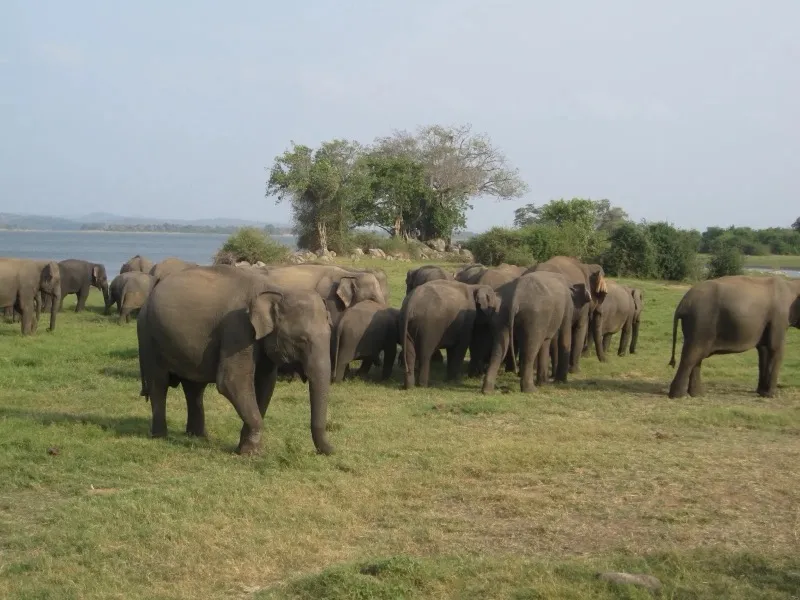
The Gathering at Minneriya: when and why the elephants come
From about June to October, hundreds of elephants gather on the drying Minneriya and Kaudulla reservoirs. When to go, why they come, and how to watch well.
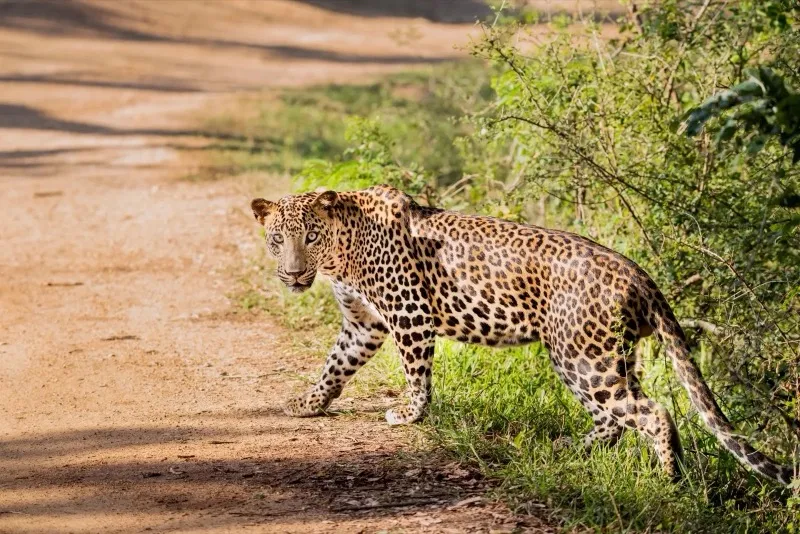
When to see leopards in Yala, and how to choose a responsible safari
Leopards are seen in Yala all year. Best odds: the first and last hours of the day, in the drier May to September months. Fees, rules and ethical choices.
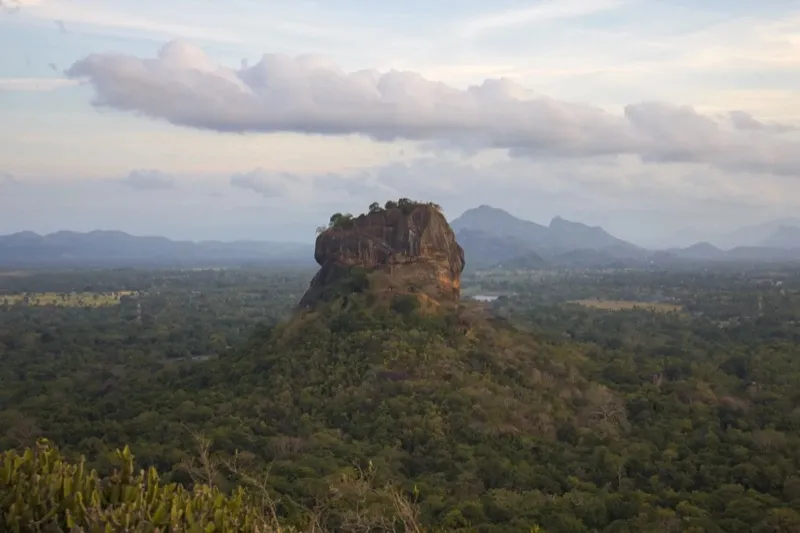
Sri Lanka in two weeks: the classic loop, explained day by day
Two weeks in Sri Lanka: Cultural Triangle, Kandy, the hills, Ella, Yala and the south coast. Day by day, with honest travel-time ranges (checked October 2026).
More guides in Wildlife