The Dambulla cave temple: what the five caves hold
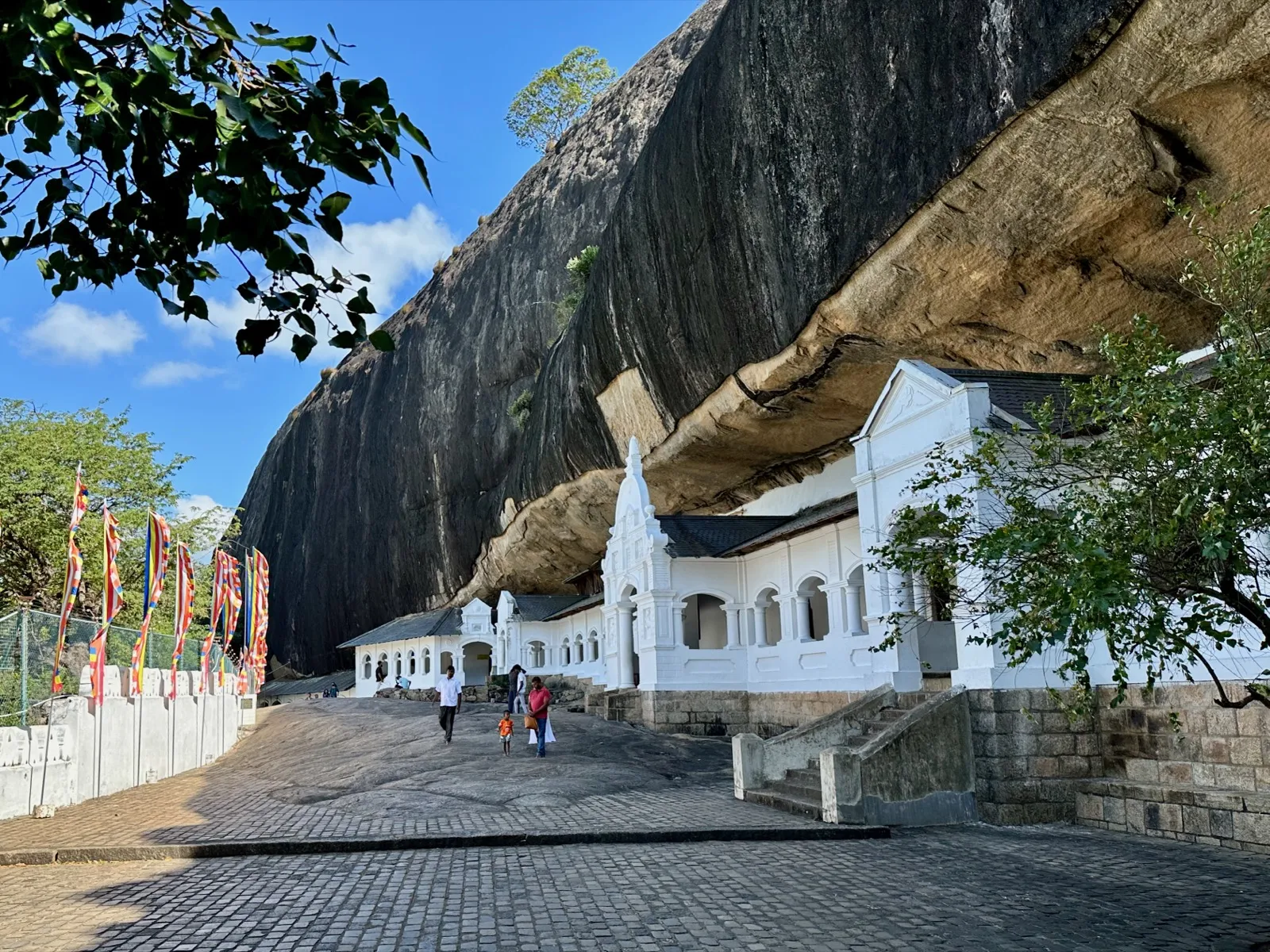
The Dambulla cave temple is five cave shrines on a granite rock, holding 157 statues and about 2,100 square metres of painted walls and ceilings. Monks have lived here since about the third century BCE, and it is a UNESCO World Heritage Site. It is still a working temple, so dress for worship and leave your shoes before the caves.
This guide explains what each cave holds, who made them, how the visit works, and what is easy to miss.
What is the Dambulla cave temple?
The Dambulla cave temple has been a UNESCO World Heritage Site since 1991. UNESCO now lists it as the Rangiri Dambulla Cave Temple. Its old English name was the Golden Temple of Dambulla. Do not confuse it with the modern Golden Temple at the foot of the rock, which is not part of the World Heritage Site.
The cave temple is a working Buddhist temple. It belongs to the Asgiriya Chapter of Buddhist monks, and the monks run its daily rituals. The state Department of Archaeology protects it by law and looks after the conservation of the paintings and statues.
How old is the Dambulla cave temple?
Buddhist monks have lived in caves on this rock since about the third century BCE. The caves were probably first turned into shrines in the first century BCE.
Local tradition says King Valagamba, also called Vattagamani Abhaya, hid here when he was driven out of Anuradhapura in the first century BCE. When he won back his throne, he turned the caves into a temple to give thanks. The ancient chronicle that tells his story does not name Dambulla, so treat this as tradition.
The cave temples were painted and repainted over many centuries. Most of what you see today dates from the 18th century. So the rock has been used for more than 2,000 years, but most of the colour on the walls comes from the 1700s. You are looking at a place that has been kept alive by repainting, not a ruin.
What is in each of the five caves?
One tip: see the caves in reverse order, from Cave 5 back towards Cave 1. That way they grow in size and splendour, and Cave 2, the finest, comes near the end.
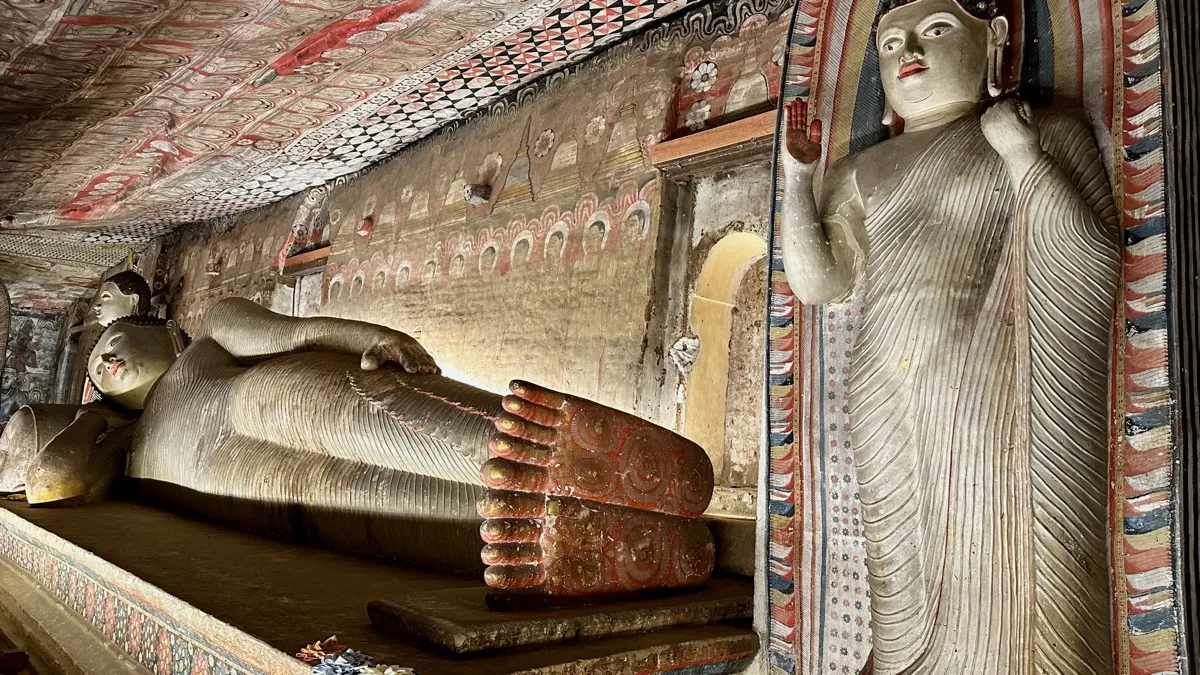
Cave 1: Devaraja Lena, the Temple of the King of the Gods
The king of the gods here is Vishnu, who, by tradition, made the caves. Almost the whole narrow cave is filled by a reclining Buddha about 14 metres long, carved from the rock. His disciple Ananda stands at his feet.
Cave 2: Maharaja Lena, the Temple of the Great Kings
Cave 2 is the largest and finest. It is more than 50 metres long. It takes its name from statues of two kings: Valagamba, who built Anuradhapura's Abhayagiri dagoba, and Nissanka Malla, a 12th-century king of Polonnaruwa.
In one corner, water drips from a crack in the ceiling into a pot. The drip is said never to stop, even in drought, and it is treated as sacred.
Cave 3: Maha Alut Viharaya, the Great New Temple
Cave 3 was made in the 18th century, in the time of King Kirti Sri Rajasinghe, and his statue stands inside. It holds about 50 Buddha images and paintings in the Kandyan style.
Cave 4: Pachchima Viharaya, the Western Temple
Cave 4 is small, with seated Buddhas around the walls and a small stupa in the middle. Thieves once broke into the stupa looking for treasure.
Cave 5: Devana Alut Viharaya, the Second New Temple
Cave 5 is the newest of the five. Its images are made of brick and plaster, not cut from the rock, and it was completely repainted in 1915.
Why are there Hindu gods in a Buddhist cave temple?
The caves also hold gods. Vishnu, Kataragama and Ganesh are worshipped by Hindus as well as by many Sri Lankan Buddhists. Saman is a Sri Lankan guardian god. Vishnu appears in Cave 1, Cave 2 and Cave 5, and statues of Saman and Vishnu stand in Cave 2.
This is one of the details most visitors miss: a Buddhist cave temple that also holds the images of gods.
How hard is the climb to the Dambulla caves?
The caves sit high on a large granite rock, and you reach them on foot. The climb takes moderate effort. From the top you can see across the plains as far as Sigiriya.
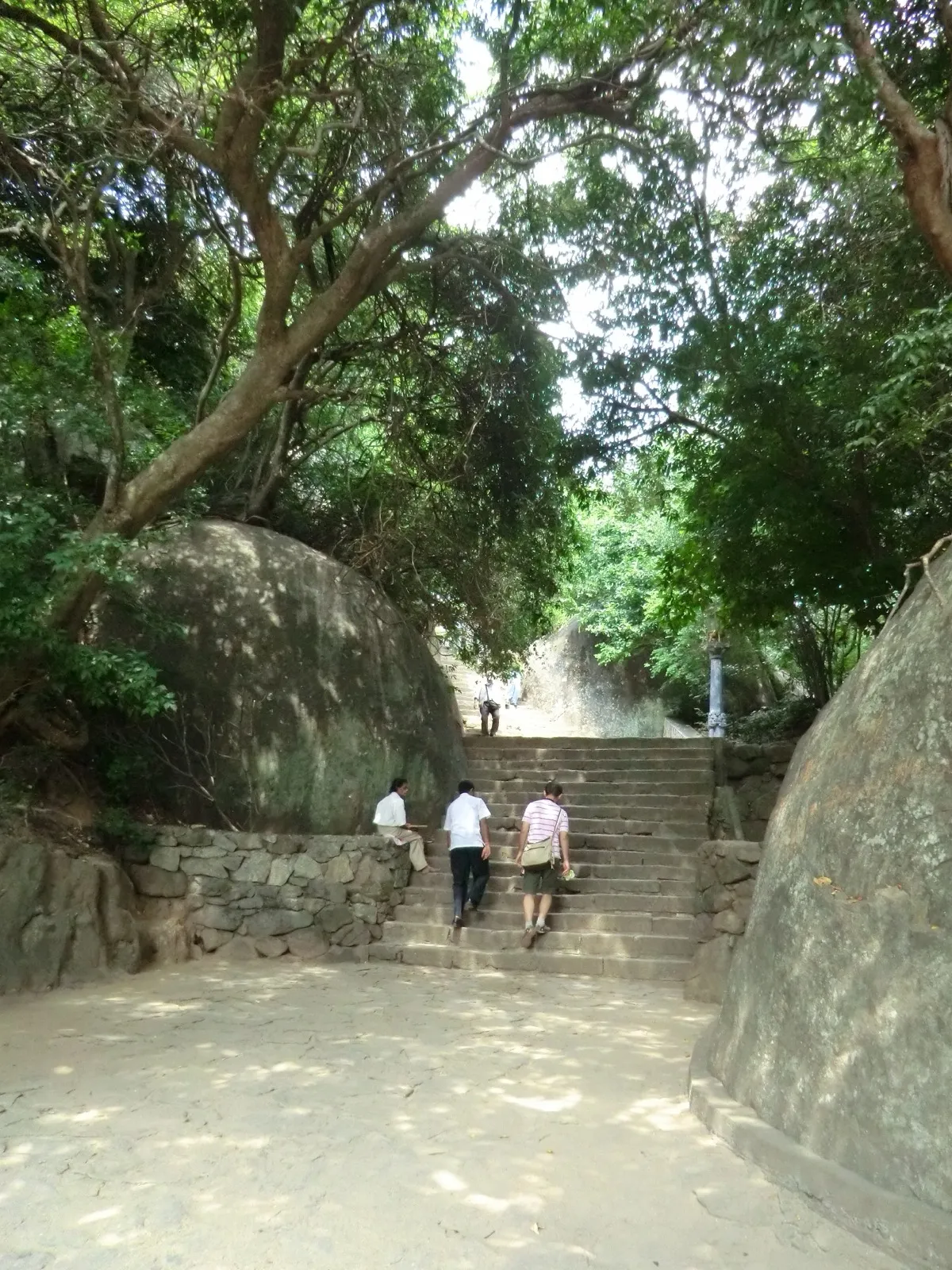
Many monkeys live on the rock, especially near the caves. Keep food out of sight and hold on to your bags. An electric fence was put up in 2015 to keep monkeys out of the caves, because they had damaged paintings and statues.
How much is the Dambulla cave temple ticket?
Foreign visitors pay an entry fee. The temple's monks collect it, not the state, so this is not the Central Cultural Fund ticket that covers Sigiriya and Polonnaruwa. Buy it on site and check the current price there. We could not confirm the current price from an official source in October 2026, so we do not quote one.
What should you wear, and can you take photos?
At a Buddhist temple, take off your shoes and your hat. Cover your shoulders and your knees: no shorts, no sleeveless tops. At Dambulla, you take off your shoes before the cave temples, and the stone gets hot, so the morning is the best time. At some temples, a person looks after shoes and asks for a small payment when you collect them.
Do not use flash inside the caves. Sri Lanka Tourism advises against flash because it can damage old murals. UNESCO asked for a flash ban here in 2016, but no official ban followed, so the rule is yours to keep. Check the signs on the day for any other photo rules. Never pose with your back to a Buddha statue. Our guide to temple etiquette in Sri Lanka explains the reasons.
Is the Golden Temple the same as the cave temple?
At the foot of the rock is the Golden Temple, a modern building topped by a seated golden Buddha about 30 metres high. It is not part of the UNESCO World Heritage Site. It is run by the same chief monk as the cave temple. Beneath the statue is the Golden Temple Buddhist Museum.
Do not mix up two museums. The Golden Temple Buddhist Museum belongs to the temple at the foot of the rock. The Museum of Wall Paintings is a separate state museum, run by the Central Cultural Fund, about 3 km from Dambulla town. It shows copies of paintings from caves and temples across Sri Lanka. Its entry price is 3 US dollars for a foreign adult (checked October 2026).
Is the Dambulla cave temple in danger?
UNESCO has followed the site's condition for years. A 2023 UNESCO mission found paintings being lost to water seeping through rock cracks, fungi, wasp nests and visitor impacts. In 2025 the World Heritage Committee asked Sri Lanka for a new management plan and a heritage impact study for the planned Central Expressway section to Dambulla. The site is not on the List of World Heritage in Danger.
What you can do: no flash, no touching the walls, and a quiet voice inside the caves.
What most visitors miss at Dambulla
- The gods. Vishnu, Kataragama, Ganesh and Saman share the caves with the Buddha.
- The dripping water in Cave 2, treated as sacred.
- The age of the paintings. Most date from the 18th century, on a site used for over 2,000 years.
- Two different temples. The golden Buddha at the foot is modern and outside the World Heritage Site.
- Two different museums. The state Museum of Wall Paintings is about 3 km away.
Before you visit the Dambulla caves
- Clothes that cover shoulders and knees.
- Go in the morning, before the stone gets hot underfoot.
- Cash for the entry fee, paid on site, and small change in case someone keeps your shoes.
- No flash, and never pose with your back to a Buddha statue.
- Food and loose bags kept away from the monkeys.
- See the caves from Cave 5 towards Cave 1.
Questions people ask
How many caves are there at Dambulla?
Five cave shrines. They hold 157 statues and about 2,100 square metres of painted walls and ceilings.
How much is the Dambulla cave temple ticket?
Foreign visitors pay an entry fee collected by the temple's monks, not the Central Cultural Fund ticket that covers Sigiriya and Polonnaruwa. We could not confirm the current price from an official source in October 2026, so check it on site.
Is the golden Buddha part of the cave temple?
No. The Golden Temple at the foot of the rock is a modern building with a seated golden Buddha about 30 metres high. It is not part of the UNESCO World Heritage Site, though it is run by the same chief monk.
Can you take photos inside the Dambulla caves?
Do not use flash: Sri Lanka Tourism advises against it because it can damage old murals. UNESCO asked for a flash ban here in 2016, but no official ban followed. Check the signs for other photo rules, and never pose with your back to a Buddha statue.
What should you wear at Dambulla?
Cover your shoulders and knees, and take off your shoes and hat before the cave temples. The stone gets hot, so the morning is the best time.
Coming soon: Sri Lanka Before You Land, our pre-trip ebook, explains the history behind every site on your route. A free guide, Your First Week in Sri Lanka, will cover the first days on the ground.
Sources (17)
Every fact in this guide was checked against these sources on 3 October 2026. Official and primary sources come first. How we research.
- Central Cultural Fund ticket price table (updated 24 Sep 2026) · ccf.gov.lk
- Central Cultural Fund, Dambulla Cave Temple page · ccf.gov.lk
- UK FCDO travel advice, Sri Lanka, Safety and security · gov.uk
- Sri Lanka Tourism, travel tips · srilanka.travel
- Central Province Tourism Department, Museum of Wall Painting in Dambulla · tourism.cp.gov.lk
- Government of Canada travel advice, Sri Lanka · travel.gc.ca
- ICOMOS Advisory Body Evaluation, Dambulla, November 1991 · whc.unesco.org
- Report of the ICOMOS Reactive Monitoring mission to the Golden Temple of Dambulla, 11-15 March 2015 · whc.unesco.org
- Report of the joint WHC/ICOMOS Reactive Monitoring mission to Dambulla, 7-13 January 2023 · whc.unesco.org
- UNESCO State of Conservation 2018, Golden Temple of Dambulla · whc.unesco.org
- UNESCO World Heritage Centre, Rangiri Dambulla Cave Temple (561) · whc.unesco.org
- World Heritage Committee Decision 40 COM 7B.46 (2016) · whc.unesco.org
- World Heritage Committee Decision 43 COM 8B.1 (2019), name change · whc.unesco.org
- World Heritage Committee Decision 45 COM 7B.173 (2023) · whc.unesco.org
- World Heritage Committee Decision 47 COM 7B.87 (2025) · whc.unesco.org
- Mahavamsa, Geiger translation, ch. XXXIII · vipassana.com
- Rough Guides, Dambulla and around · roughguides.com
Related guides
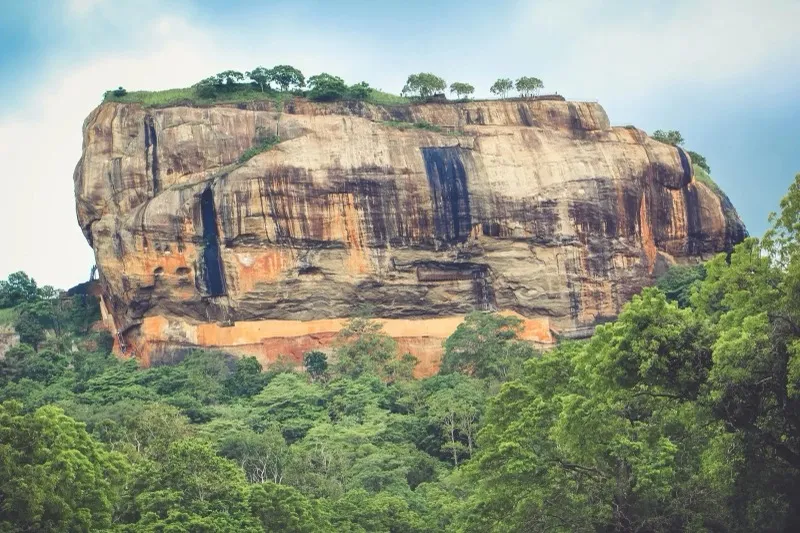
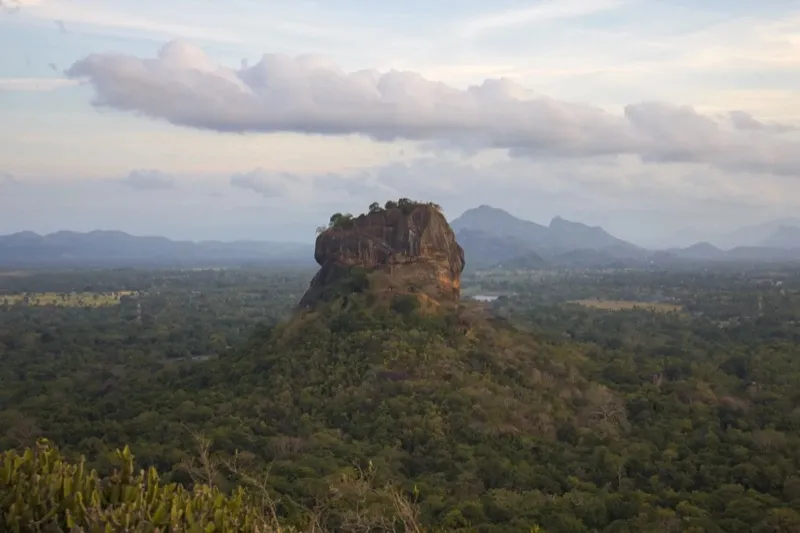
Is Sigiriya worth climbing? What you see, and what most visitors miss
Yes, if you know what you are looking at: a 5th-century royal capital on a 180 m rock. What the climb involves, the fee, and what most visitors miss.
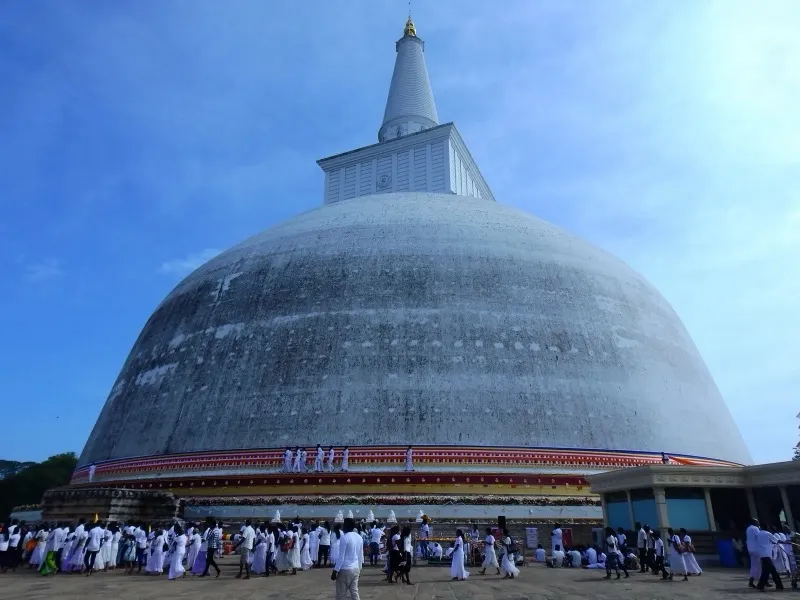
Temple etiquette in Sri Lanka: the rules and the reasons behind them
Shoes and hat off, shoulders and knees covered, never pose with your back to a Buddha. Sri Lanka's temple rules, and why each one matters (October 2026).
Sri Lanka in two weeks: the classic loop, explained day by day
Two weeks in Sri Lanka: Cultural Triangle, Kandy, the hills, Ella, Yala and the south coast. Day by day, with honest travel-time ranges (checked October 2026).
More guides in Cultural Triangle · Culture and etiquette