Is Sigiriya worth climbing? What you see, and what most visitors miss
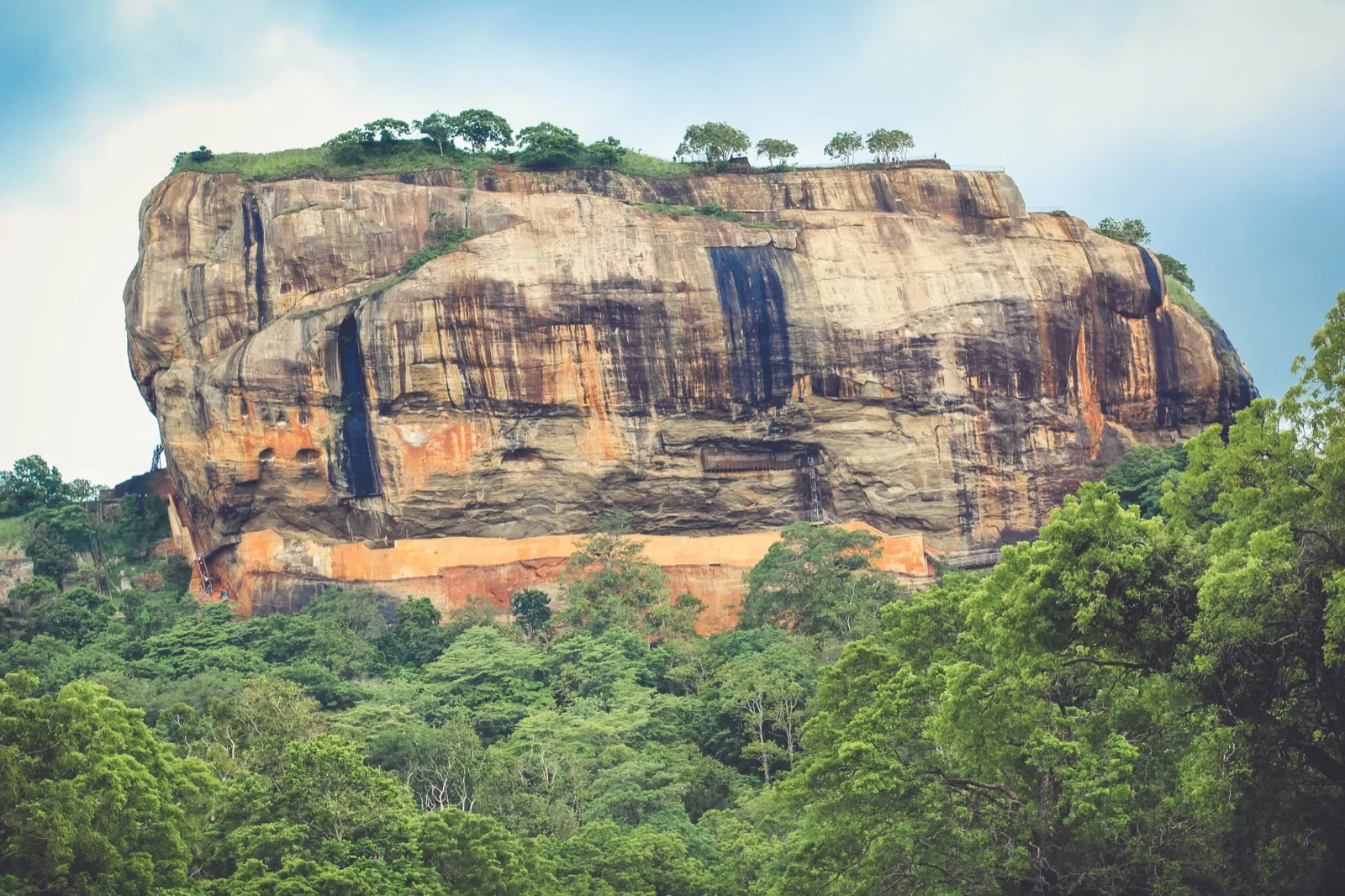
Yes, Sigiriya is worth climbing, if you know what you are looking at. It is a royal capital built on a rock 180 metres above the plain in the late 5th century, now a UNESCO World Heritage Site. The climb is about 1,200 steps and the foreign adult ticket is US$35 (as checked October 2026).
The view from the top is the reason most people go. It is not the best reason. This guide explains what the rock is, what you pass on the way up, how hard the climb is, and the details that most visitors walk straight past.
What is Sigiriya?
Sigiriya is a single rock that rises about 180 metres above the surrounding plain. Its top is about 349 metres above sea level. UNESCO lists it as the "Ancient City of Sigiriya", and it was inscribed as a World Heritage Site in 1982.
The site was in use long before any king arrived. Buddhist monks lived in caves around the rock from about the 3rd century BCE.
The name comes from Sinhagiri, which means Lion Rock. Visitors once climbed through a huge lion built of brick and plaster. Today only its two paws remain, at the start of the final climb.
Who built Sigiriya, and why?
King Kashyapa I, also written Kassapa, made Sigiriya his capital in the late 5th century CE. He reigned from about 477 to 495 CE.
The story comes from the Culavamsa, a Buddhist chronicle written centuries later. It says Kashyapa took the throne from his father, King Dhatusena, and had him killed. His half-brother Moggallana fled to India and came back with an army. When Kashyapa's army broke in battle, he killed himself.
After Kashyapa died, Sigiriya was given to Buddhist monks. It served as a monastery until about the 14th century. It was then abandoned.
Most scholars accept that Sigiriya was a royal palace. A minority view, argued by former Commissioner of Archaeology Raja de Silva, says it was a Buddhist monastery even in Kashyapa's time. You do not need to settle the question to enjoy the visit. It is a useful reminder that the guides' version of the story is one reading of the evidence, not the only one.
What do you see on the way up Sigiriya?
The climb is not one view at the end. It is a sequence of places, and each one tells part of the story.
The gardens
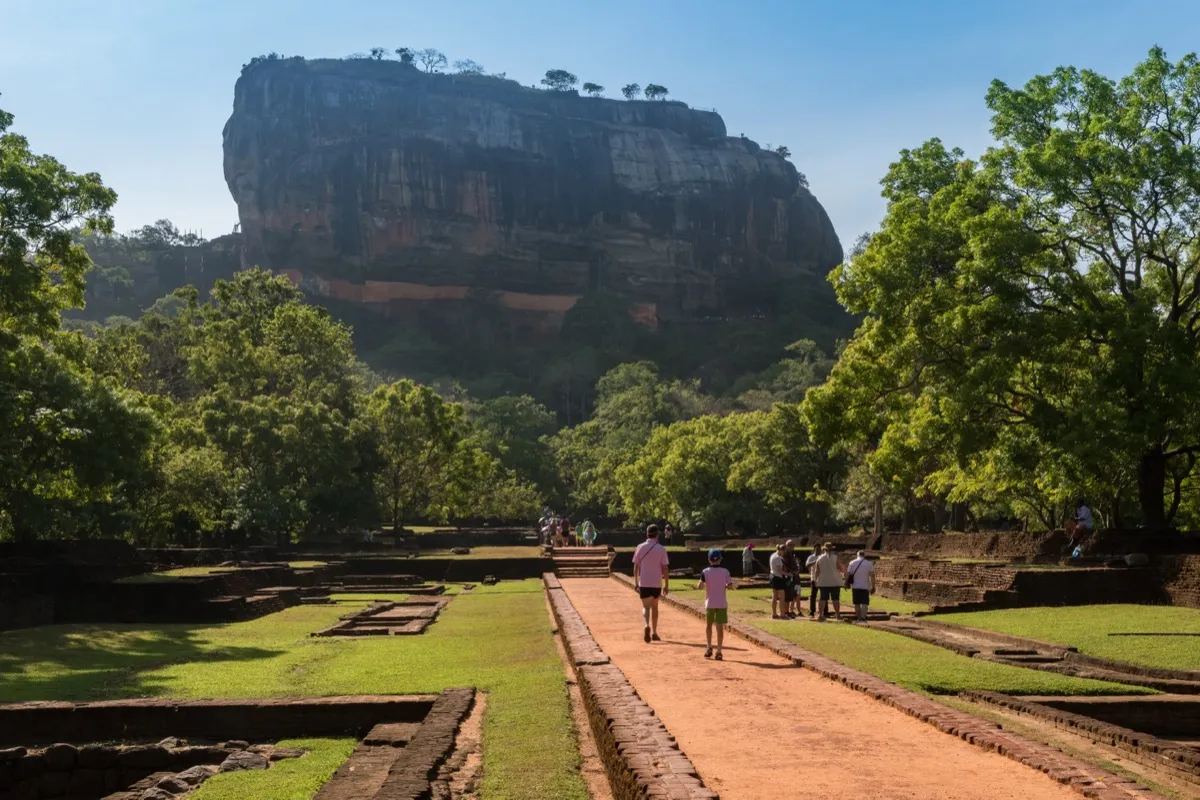
Before you reach the rock, you walk through the gardens. The water gardens are laid out symmetrically. According to the Central Cultural Fund, which manages the site, some of the ancient fountains still work in the rainy season.
Besides the water gardens, the site has boulder gardens and terraced gardens on the slopes below the rock. Many visitors hurry through this part to start the climb. It is worth slowing down. The gardens show that this was a planned royal city, not just a rock with a view.
The painted women (frescoes)
About twenty painted women survive in a sheltered pocket of the rock face. Official counts give 21 or 22. The site's managers say the rock face once held many more. You reach them on steep metal stairs fixed to the rock.
Photographing the frescoes has been banned since December 2015. The ban covers all photos, not only flash. Photos are allowed elsewhere on the rock. Check the signs on the day.
The Mirror Wall
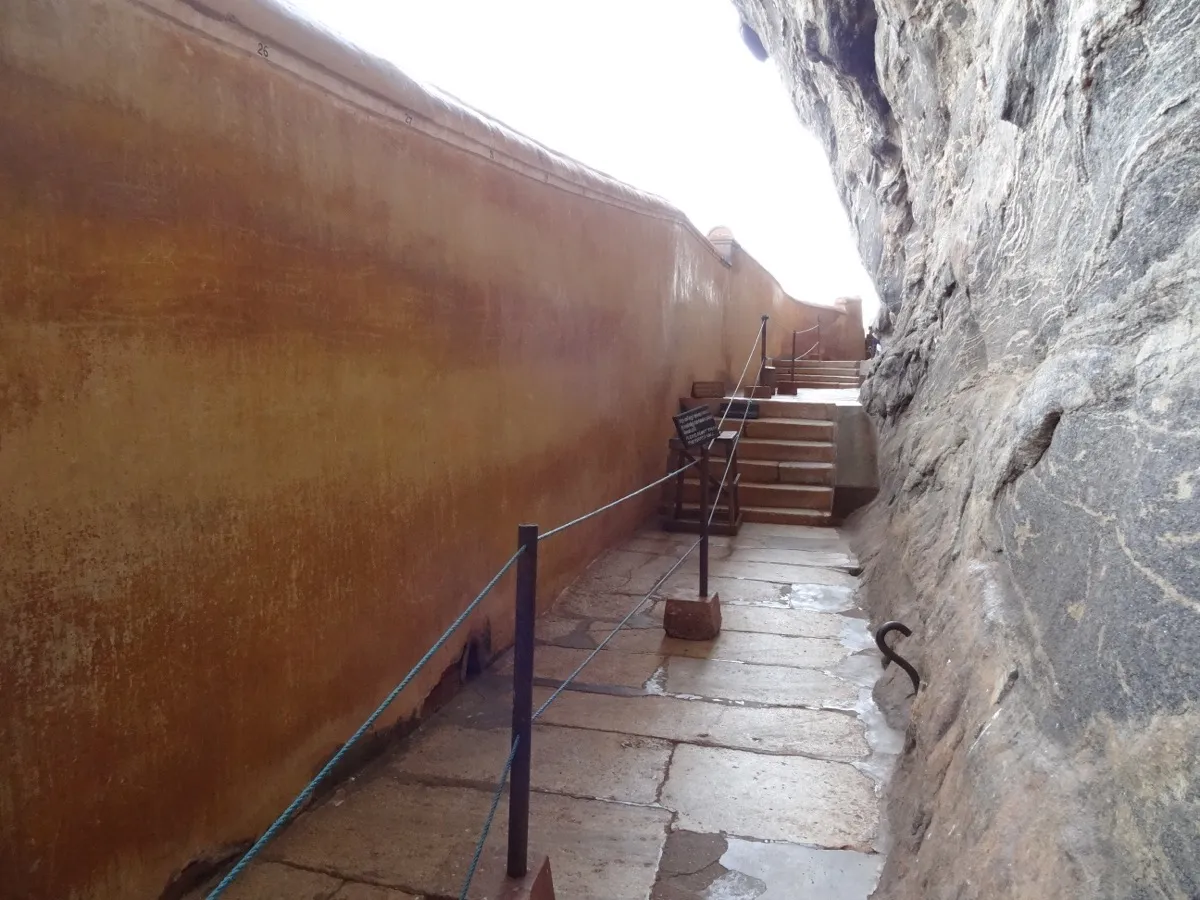
Further along the path is the Mirror Wall. Visitors wrote short poems on it over several centuries. Most of the verses that have been studied date from the 8th to the 10th century. They are among the oldest known texts in the Sinhala language.
This is the detail most visitors miss. The writing is faint and you have to look closely. What you are looking at is a record of earlier visitors, people who climbed the same rock more than a thousand years ago and wrote down what they felt.
The Lion's Paws
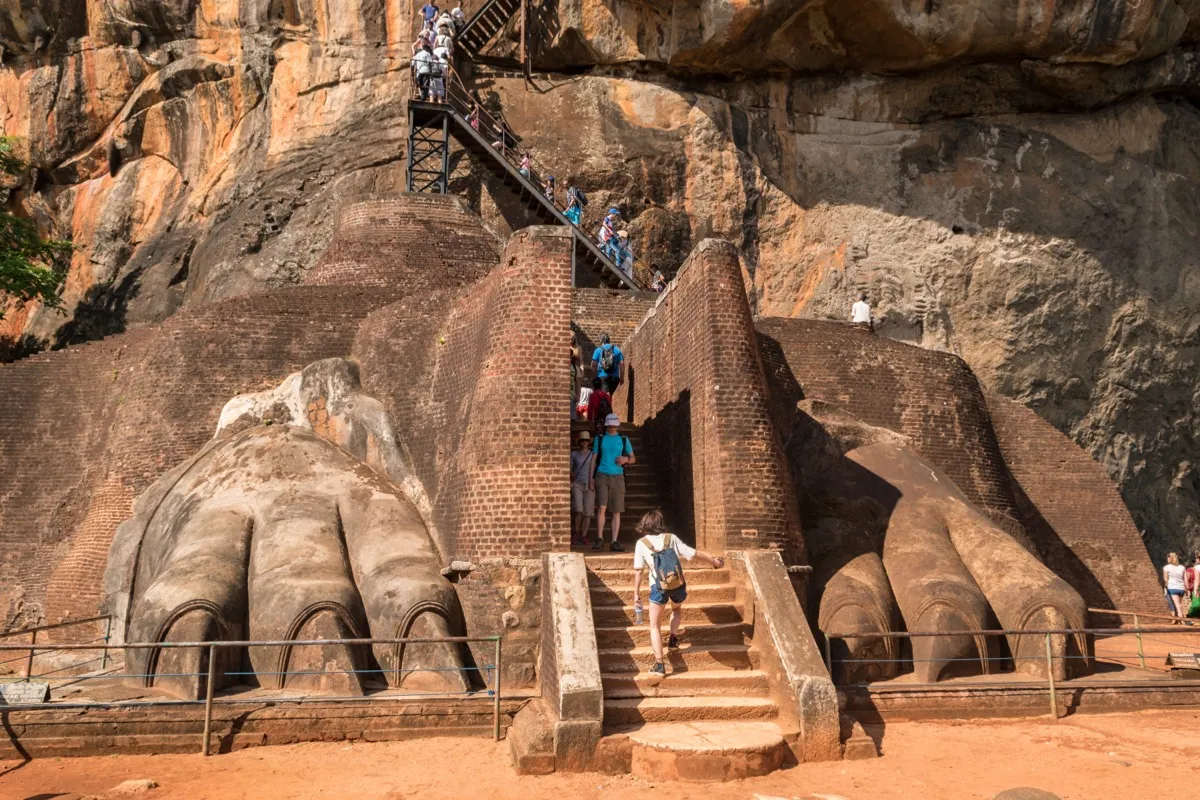
On a terrace near the top stand the two paws of the lion, built of brick and plaster. From here the final climb begins, on metal stairs up the rock face.
The summit
The top of the rock holds the ruins of the palace. From here you can look down on the plan of the site below you, with the gardens laid out in straight lines.
How long does it take to climb Sigiriya, and is it hard?
The climb has about 1,200 steps. The Central Cultural Fund says the ascent alone takes 1.5 to 2 hours. Allow extra time for the gardens and the way down.
There is no lift. The only way to the top is on foot. Parts of the route are steep metal staircases fixed to the rock face. People with a strong fear of heights may find these sections hard.
The exposed rock gets very hot in the middle of the day. The Central Cultural Fund suggests visiting early in the morning or late in the afternoon, when it is cooler.
Swarms of stinging insects sometimes attack visitors on the rock. Sri Lankan news reports call them wasps, and that is the word on the warning signs at the rock. A bee specialist says they are in fact giant honeybees, so you may also see them called bees or hornets. Staff may stop the climb when this happens. In August 2024 the Central Cultural Fund suspended entry after dozens of tourists were stung. Follow the instructions of site staff.
Sigiriya ticket price and opening hours (2026)
All of these are from the Central Cultural Fund's website (as checked October 2026). Prices are set in US dollars and charged in rupees at a conversion rate the Central Cultural Fund sets, so the rupee price can change.
- Foreign adult: US$35.
- Half ticket (children aged 6 to 12): US$20.
- Visitors from SAARC countries: a reduced "relief" ticket, with a passport.
- Museum: the Central Cultural Fund price list shows a separate Sigiriya Museum ticket (US$6). Ask at the counter if your Sigiriya ticket covers the museum. Keep your ticket.
- Buying: order online through the CCF eTicket site, then collect the ticket at the site counter. Or buy at the counter.
- Counter hours: 7.00 a.m. to 5.00 p.m.
- One entry only: a ticket is valid for one entry on the day it is issued. If you leave, you cannot go back in on the same ticket.
- Drones: do not fly a drone at Sigiriya. The Central Cultural Fund forbids filming, including with drones, without its prior written approval.
How do you get to Sigiriya?
Sigiriya is about 170 km by road from Colombo. The drive takes about 3.5 to 5 hours, depending on traffic (estimate, checked October 2026). It is about 15 km from Dambulla town (estimate, checked October 2026), so many visitors base themselves in either place. Our two-week itinerary shows where it fits in the classic loop.
So, is Sigiriya worth it?
It depends on what you want from it.
- If you want a view, Sigiriya gives you a good one. So does Pidurangala, a separate rock about 1 km north of Sigiriya, and from its top you see Sigiriya itself. Our guide to Sigiriya or Pidurangala compares the two.
- If you want to understand the place, Sigiriya is the only choice. The gardens, the paintings, the Mirror Wall and the paws are all on this rock, and you only see them up close by climbing it.
The visitors who leave disappointed are usually the ones who climbed for the photo at the top, in the midday heat, and walked past everything on the way.
What most visitors miss at Sigiriya
- The gardens. They are the plan of a royal city, and some fountains still work in the rainy season.
- The Mirror Wall verses. Look closely. They are among the oldest known texts in Sinhala.
- The scholarly debate. Palace or monastery: the evidence still allows both readings.
- The time before Kashyapa. Monks lived in caves here from about the 3rd century BCE, seven centuries before the king.
- The museum. It explains much of what you see on the rock. Ask at the counter if your Sigiriya ticket covers it.
Before you climb Sigiriya
- Start early: counters open at 7.00 a.m. (as checked October 2026).
- US$35 per foreign adult (as checked October 2026), charged in rupees at the Central Cultural Fund's conversion rate.
- Water, a hat and comfortable shoes with grip.
- No camera at the frescoes. No drone.
- Time beyond the 1.5 to 2 hours of the ascent, for the gardens and the way down.
- One entry per ticket, so finish everything before you leave.
- If staff stop the climb because of wasps, follow their instructions.
Questions people ask
How much is the Sigiriya ticket for foreigners?
US$35 for a foreign adult and US$20 for a child aged 6 to 12 (as checked October 2026), charged in rupees at the Central Cultural Fund's conversion rate. The ticket is valid for one entry on the day it is issued.
How long does it take to climb Sigiriya?
The Central Cultural Fund says the ascent alone takes 1.5 to 2 hours. Allow extra time for the gardens and the way down.
How many steps are there at Sigiriya?
About 1,200. There is no lift, and parts of the route are steep metal staircases fixed to the rock face.
What time does Sigiriya open?
The ticket counters open at 7.00 a.m. and close at 5.00 p.m. (as checked October 2026). The rock is very hot at midday, so go early or late in the afternoon.
Can you take photos of the Sigiriya frescoes?
No. Photographing the frescoes has been banned since December 2015, and the ban covers all photos, not only flash. Photos are allowed elsewhere on the rock.
Coming soon: Sri Lanka Before You Land, our pre-trip ebook, explains the history behind every site on your route. A free guide, Your First Week in Sri Lanka, will cover the first days on the ground.
Sources (19)
Every fact in this guide was checked against these sources on 3 October 2026. Official and primary sources come first. How we research.
- Central Cultural Fund ticket price table, embedded in ccf.gov.lk/ticket-issuance/; 'Last Updated: September 24, 2026' · ccf.gov.lk
- Central Cultural Fund, 'Sigiriya Rock Fortress' site page · ccf.gov.lk
- Central Cultural Fund, Permission for Filming & Photographs · ccf.gov.lk
- Central Cultural Fund, Ticket Issuance page · ccf.gov.lk
- Central Cultural Fund eTicket portal, landing page terms and conditions · eservices.ccf.gov.lk
- ICOMOS advisory body evaluation, World Heritage nomination no. 202, Paris, May 1982 · whc.unesco.org
- UNESCO World Heritage Centre, 'Ancient City of Sigiriya' (list no. 202) · whc.unesco.org
- Culavamsa, Part I, tr. Wilhelm Geiger (1929), chapters 38-39, Internet Archive full text · archive.org
- Ada Derana, 'Ban on photographing Sigiriya Frescoes', 30 Dec 2015 · adaderana.lk
- Encyclopaedia Britannica, 'Sigiriya' (rev · britannica.com
- Colombo Telegraph, Ari Ariyaratne, 'Unsettling the palace narrative: Dr Raja de Silva's monastic theory of Sigiriya', 4 Aug 2026 (opinion piece) · colombotelegraph.com
- Daily Mirror (Sri Lanka), 'Sigiriya frescoes photographing prohibited', 30 Dec 2015 · dailymirror.lk
- Daily Mirror (Sri Lanka), 'Visits to Sigiriya suspended', 14 Aug 2024 · dailymirror.lk
- Mongabay, 'A whiz and a buzz: Bee attacks at Sri Lanka rock fortress...', 20 May 2022 · news.mongabay.com
- Open Library catalogue record: S. Paranavitana, 'Sigiri graffiti; being Sinhalese verses of the eighth, ninth, and tenth centuries' (first ed. 1956) · openlibrary.org
- OpenStreetMap peak nodes: Pidurangala 4366143462 (7.96621, 80.76170) and Sigiriya 4366143463 (7.95666, 80.75993) · openstreetmap.org
- Rough Guides, Sigiriya and around · roughguides.com
- OSRM driving-route calculation on OpenStreetMap data, run 2026-10-03 · router.project-osrm.org
- The Morning, '22 tourists hospitalised following wasp attack in Sigiriya', 14 Aug 2024 · themorning.lk
Related guides
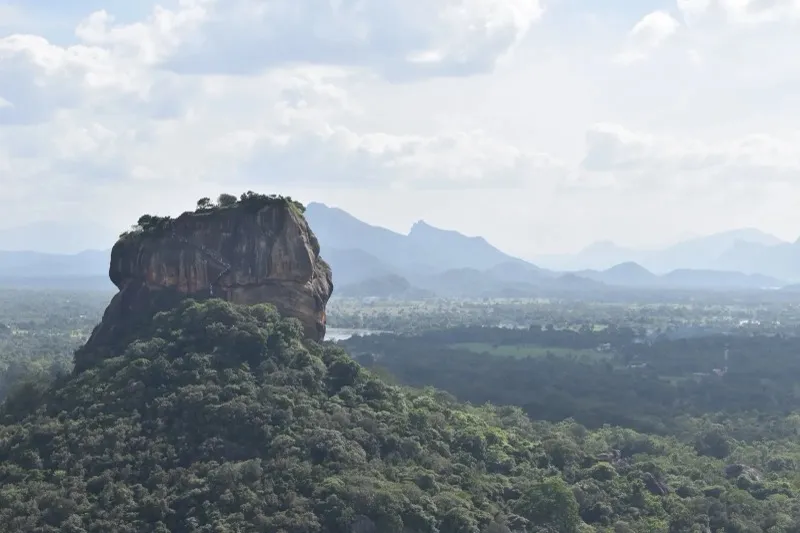
Sigiriya or Pidurangala? What each climb gives you
Climb Sigiriya to understand the site; climb Pidurangala to see the rock itself. Many visitors do both in one day. What each climb involves (October 2026).
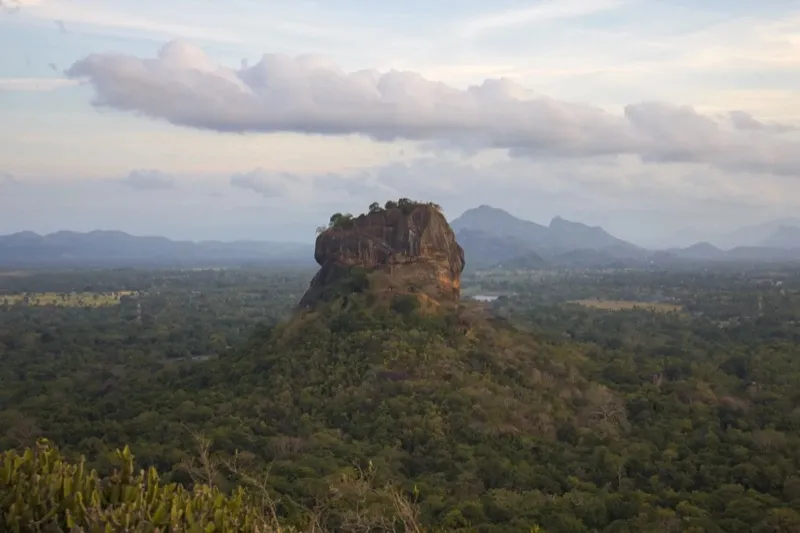
Sri Lanka in two weeks: the classic loop, explained day by day
Two weeks in Sri Lanka: Cultural Triangle, Kandy, the hills, Ella, Yala and the south coast. Day by day, with honest travel-time ranges (checked October 2026).
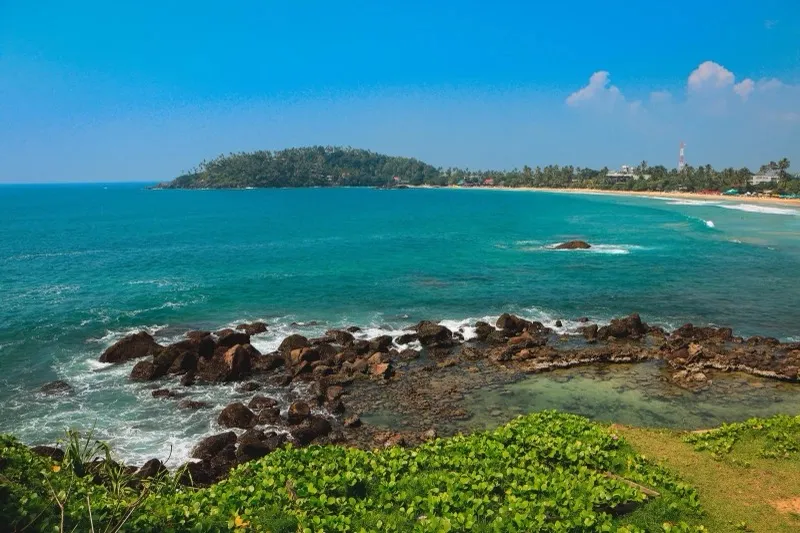
When to visit Sri Lanka: the two monsoons, explained
For the classic loop, January to March is driest. The east coast is best April to September. How the two monsoons decide your route, month by month.
More guides in Cultural Triangle