Galle Fort: who built it, and what to look for on the walk
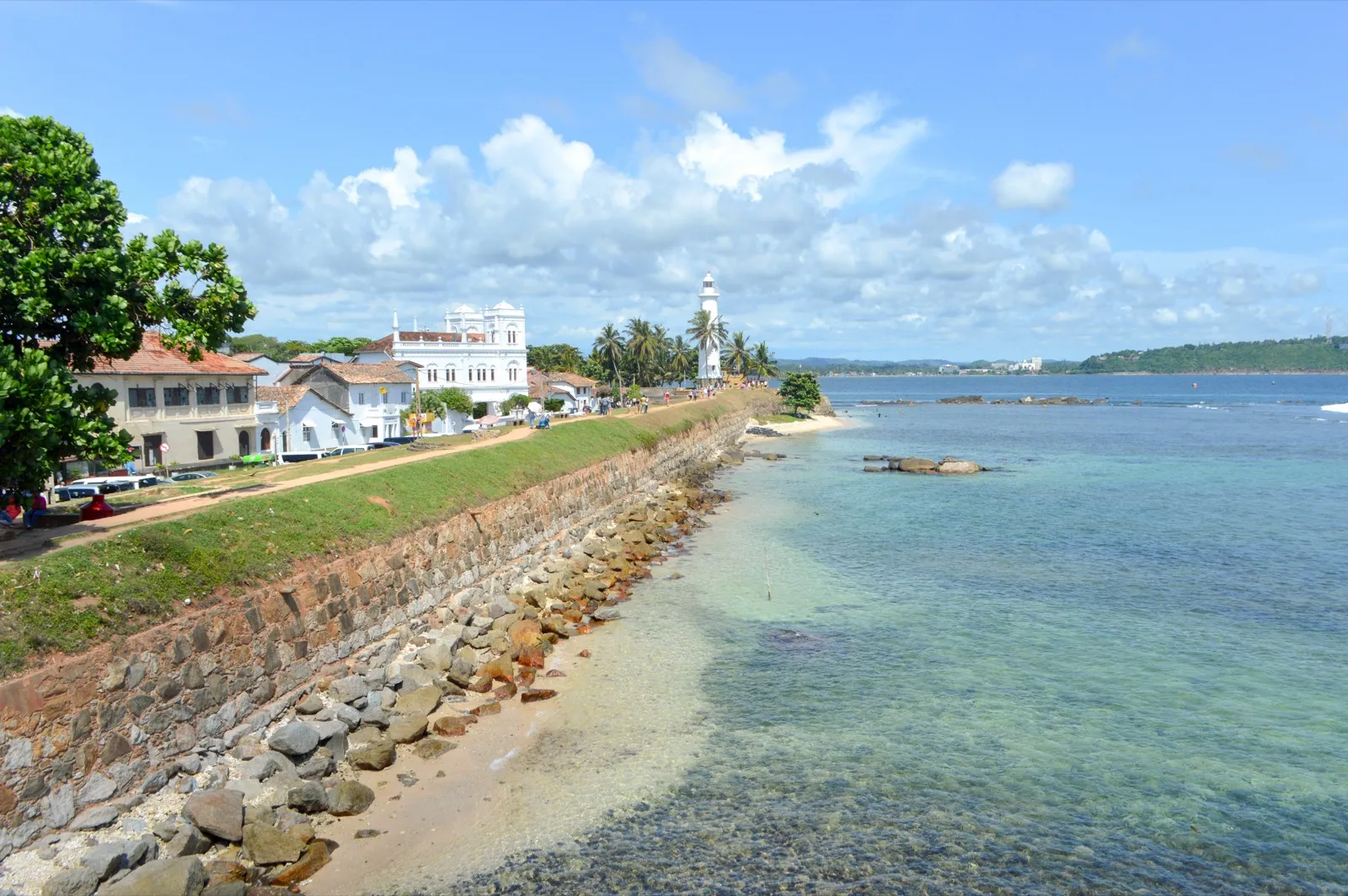
The Portuguese built the first small fort at Galle in 1588. The Dutch captured Galle in 1640 and, between 1663 and 1729, built most of the walls and bastions that stand today. The British ruled it from 1796. Galle Fort is a UNESCO World Heritage Site, a living town, and free to enter (as checked October 2026).
This guide tells the story in order, then gives you what to look for on a walk round the walls: the gates, the bastions, the churches and the details most visitors walk past.
Galle Fort in dates
- 1344: Ibn Battuta stops at Galle and calls it a small town.
- 1409: the date on the three-language stone later found in Galle.
- 1506: the Portuguese first reach Sri Lanka; their ships probably stopped at Galle.
- 1588: the Portuguese build the first small fort.
- 1640: the Dutch capture Galle.
- 1663 to 1729: the Dutch build most of the walls and bastions that stand today.
- 1796: the British take Galle.
- 1948: Sri Lanka's independence.
- 1988: UNESCO lists the Old Town of Galle and its Fortifications.
- 2004: the tsunami; the ramparts keep the force of the wave off the houses inside.
Was Galle a port before the Europeans?
Galle was a port long before the Europeans came. The Moroccan traveller Ibn Battuta stopped there in 1344, on his way along the south coast to Colombo. He called it Qali and described it as a small town.
In 1911, an engineer found a carved stone slab in Galle, used as the cover of a drain. It has the same message in three languages: Chinese, Tamil and Persian. It records gifts sent by the Chinese emperor through the admiral Zheng He. It is dated early 1409. The stone was taken to the Colombo Museum, now the Colombo National Museum.
When did the Portuguese build Galle Fort?
The Portuguese first reached Sri Lanka in 1506, under Lourenço de Almeida. Their ships probably stopped at Galle. Many guidebooks give the year as 1505 and add a story that a storm blew them there. Historians now place the voyage in 1506.
The Portuguese built the first small fort at Galle in 1588.
What did the Dutch build at Galle?
The Dutch captured Galle in 1640. Between 1663 and 1729 they built most of the walls and bastions that stand today. A bastion is a section of wall that juts out, so defenders could fire along the walls.
The walls are built of coral stone and granite. Under the streets, the Dutch built drains that the tide still flushes out to sea. UNESCO counts this old drainage system, still in use, as part of what makes Galle special.
When did the British take Galle?
The British took Galle from the Dutch in 1796. It stayed under British rule until Sri Lanka's independence in 1948. They left their own layer: the lighthouse, a church, a clock tower and their coat of arms over the old Dutch gate.
Do people still live inside Galle Fort?
Galle Fort is a UNESCO World Heritage Site. Its official name is the Old Town of Galle and its Fortifications. It was listed in 1988.
Galle Fort is not a museum. It is a living town. People still live and work inside the old walls. The Department of Archaeology owns the walls and controls building in the whole fort. The Galle Heritage Foundation, set up by law in 1994, helps residents and owners look after the old houses.
So walk as a guest. The houses you photograph are homes.
What should you look for on a walk round Galle Fort?
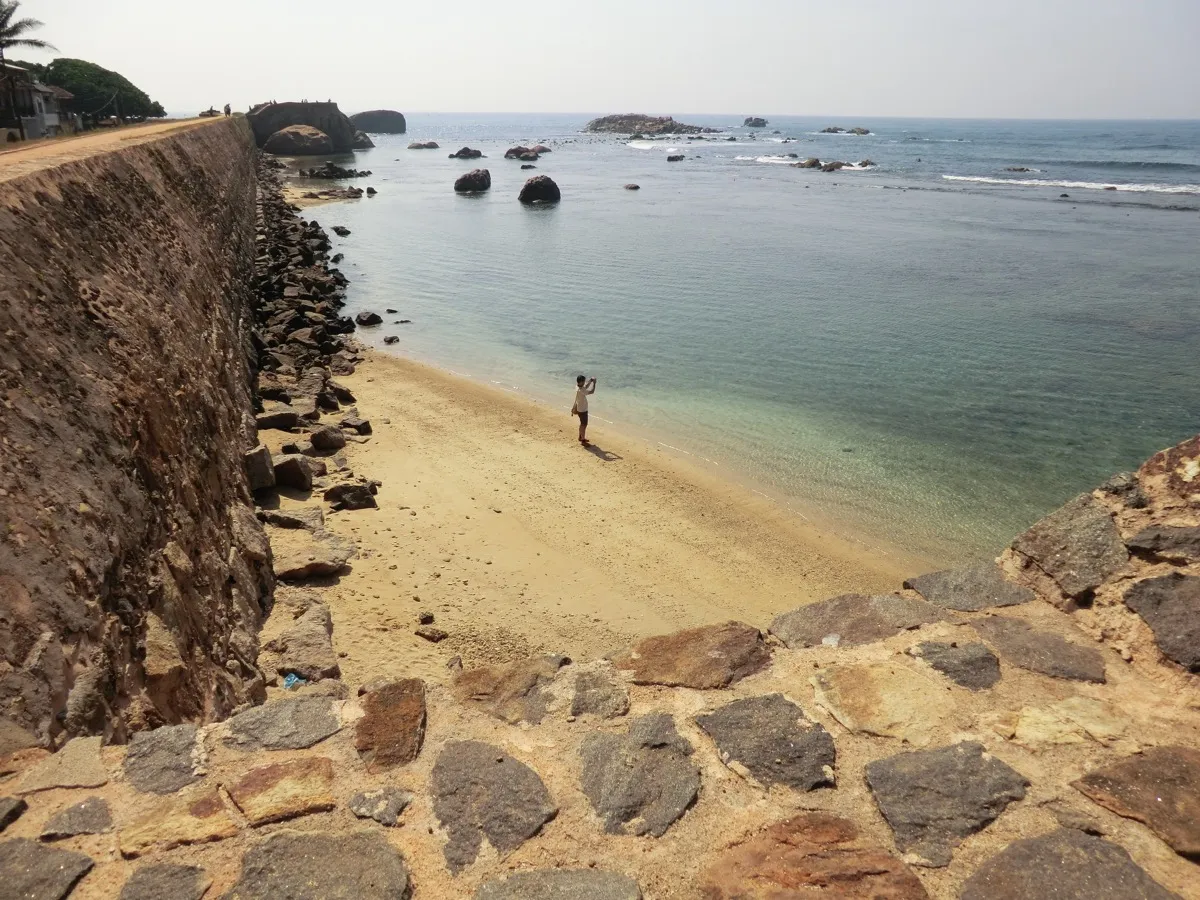
The ramparts run for about 3 km around the old town. You can walk most of the way along the top of the walls. Go in the late afternoon. Many people gather at Flag Rock to watch the sun set over the sea.
There is no ticket to enter Galle Fort or to walk the ramparts, as checked October 2026. The museums and the underground galleries in the bastions charge their own entry fees.
The Old Gate
The Old Gate is the original Dutch entrance, on the harbour side. On the outside, above the arch, is the British royal coat of arms. Walk through and look back. On the inner side is the coat of arms of the Dutch East India Company, the VOC, with a rooster on top, two lions and the date 1669 in Roman numerals.
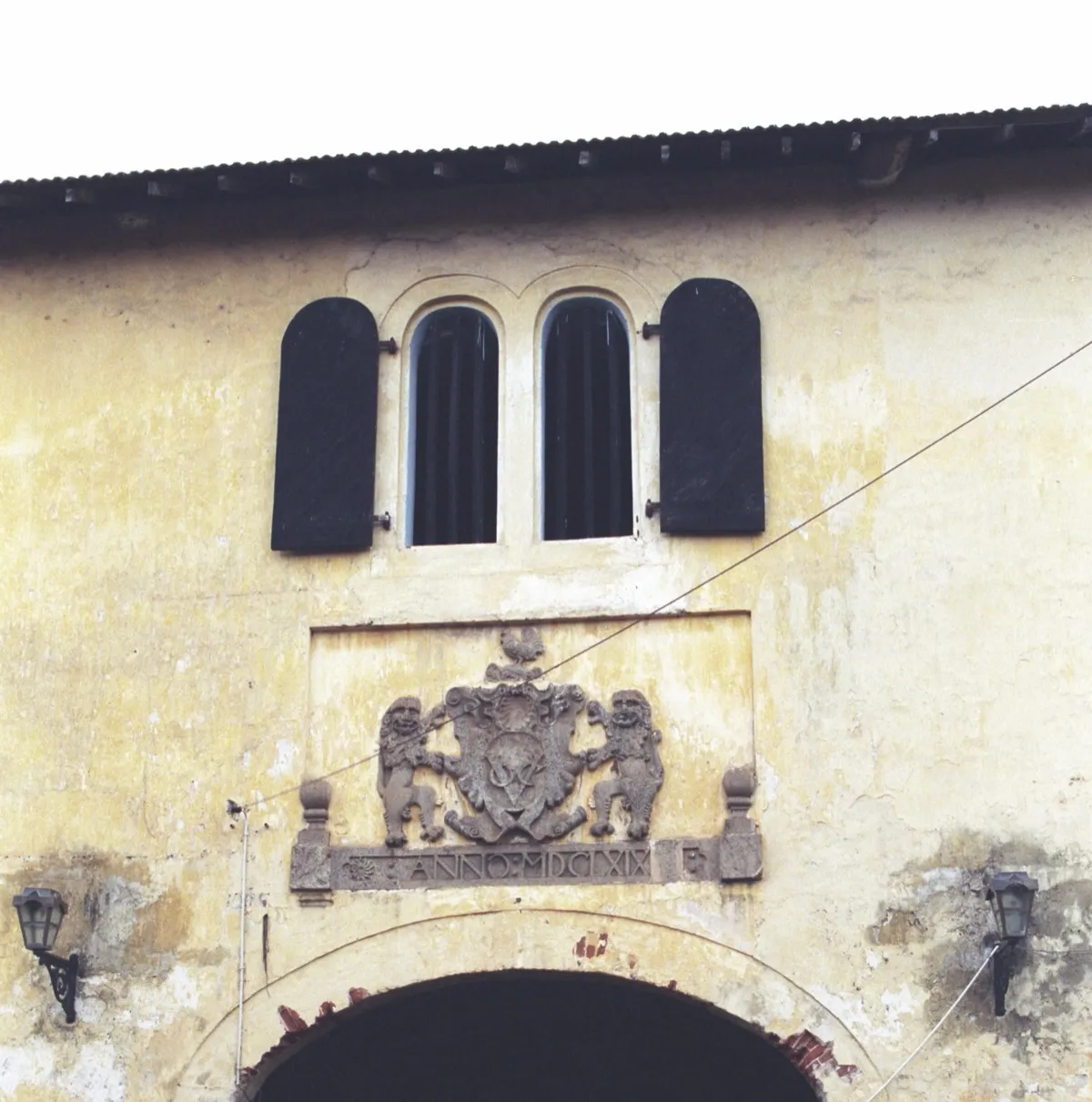
Two empires, one gate: the fort's history in a single view.
The bastions
The walls have 14 bastions, each with a name. Walking the ramparts, look for the Moon, Sun and Star bastions on the land side, and Flag Rock, Triton, Point Utrecht and Aeolus by the sea.
The Zwart Bastion, or Black Fort, is the oldest structure in the fort. The Portuguese first built it, and the Dutch rebuilt it after 1640. The Moon Bastion is the largest.
Under some bastions are old gunpowder stores and bunkers that you can go inside. The Galle Heritage Foundation runs small displays in them, at the Black Fort, the Star Bastion and the Moon Bastion. They open 8:30 to 17:30 every day, with tickets at each door, as checked October 2026.
The lighthouse
The white lighthouse on Point Utrecht Bastion was built by the British in 1939. It replaced an older lighthouse that burned down in 1936. Sri Lanka's first lighthouse stood at Galle, from 1848.
The Dutch Reformed Church
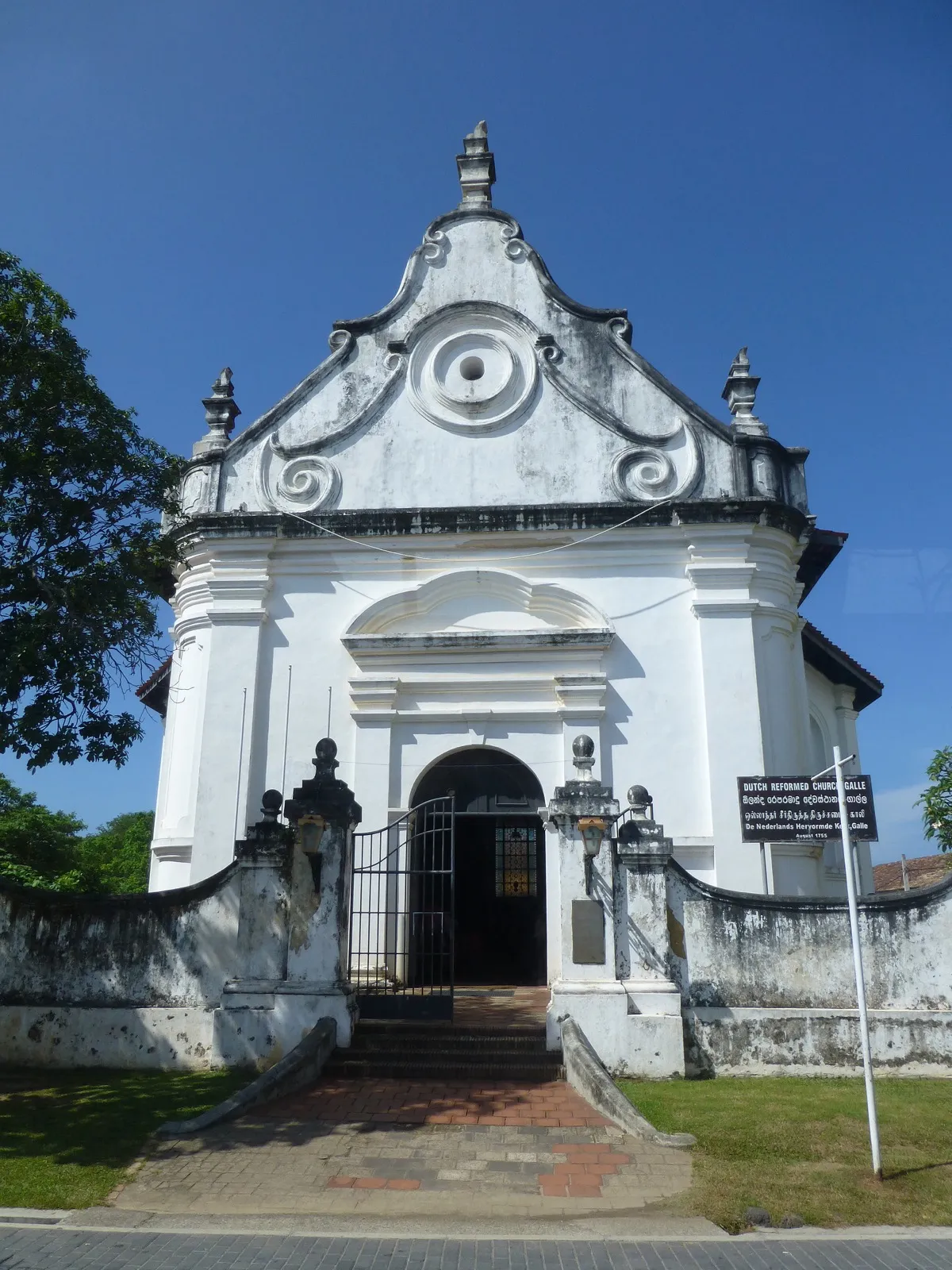
The Dutch Reformed Church, or Groote Kerk, was completed in 1755. Look down as you walk in. Much of the floor is old gravestones, with carved skulls and Dutch inscriptions. One marks Abraham Samlant, the Dutch commander of Galle, who died in 1766. It is still a working church, so dress modestly and keep quiet during services.
All Saints' Church
All Saints' Church is the Anglican church in the fort, built by the British. It was consecrated in 1871.
The clock tower
Near the main entrance to the fort stands a clock tower from the British period, dated 1883 by Sri Lanka's Central Cultural Fund.
The Old Dutch Hospital
The Old Dutch Hospital, near the eastern ramparts, was built by the Dutch. It has been restored and now holds shops and restaurants.
Which museums are in Galle Fort?
The maritime museum is in a long Dutch warehouse from 1671, built into the ramparts above the Old Gate. The 2004 tsunami flooded it and destroyed most of its collection. The Netherlands paid for the rebuilding, and it reopened in 2010.
The Galle National Museum is in the oldest Dutch building left in the fort, built in 1656. It shows masks, lace, carving and objects from the Dutch period. It opens Tuesday to Sunday, 9:00 to 16:45, except public holidays, as checked October 2026.
Did Galle Fort survive the 2004 tsunami?
In the 2004 tsunami, the ramparts kept the force of the wave off the houses inside. Engineers who surveyed Galle afterwards found no visible structural damage in the fort. Water still came in at the harbour side and flooded the maritime museum. The new town outside the walls was badly hit.
Walls built between about 300 and 360 years ago for defence also protected the town from the sea. It is worth remembering on the ramparts, looking out at the water.
What most visitors miss in Galle Fort
- The back of the Old Gate. The VOC arms and the date 1669 face inwards.
- The floor of the Groote Kerk. Gravestones, with skulls and Dutch names.
- The drains. The tide still flushes the Dutch system.
- The underground galleries under the Black Fort, Star and Moon bastions.
- The 1409 stone. Galle's three-language slab is in the Colombo National Museum, not in Galle.
- The date of the Portuguese arrival. It was 1506, not 1505.
Before you walk Galle Fort
- No ticket needed for the fort or the ramparts (as checked October 2026).
- Late afternoon for the walk, sunset at Flag Rock.
- Modest clothes for the churches.
- Cash for the museum and gallery tickets.
- Galle National Museum: closed on Mondays and public holidays.
- Respect for residents: the fort is their home.
Galle is on the south coast leg of our two-week itinerary, about 35 km from Mirissa. From Colombo, you can come by train along the coast. For the boats from there, see whale watching from Mirissa.
Questions people ask
Who built Galle Fort?
The Portuguese built the first small fort at Galle in 1588. The Dutch captured Galle in 1640, and between 1663 and 1729 they built most of the walls and bastions that stand today. The British ruled it from 1796.
Is Galle Fort free to enter?
Yes. There is no ticket to enter Galle Fort or to walk the ramparts, as checked October 2026. The museums and the underground galleries in the bastions charge their own fees.
How long does it take to walk the walls?
The ramparts run for about 3 km around the old town, and you can walk most of the way along the top. Go in the late afternoon, and finish at Flag Rock for the sunset.
What is the date on the Old Gate?
On the inner side of the Old Gate is the coat of arms of the Dutch East India Company, the VOC, with the date 1669 in Roman numerals. The British royal coat of arms is on the outside.
When is the Galle National Museum open?
Tuesday to Sunday, 9:00 to 16:45, except public holidays, as checked October 2026.
Coming soon: Sri Lanka Before You Land, our pre-trip ebook, explains the history behind every site on your route. A free guide, Your First Week in Sri Lanka, will cover the first days on the ground.
Sources (22)
Every fact in this guide was checked against these sources on 3 October 2026. Official and primary sources come first. How we research.
- Central Cultural Fund (Govt of Sri Lanka), Galle Fort heritage page · ccf.gov.lk
- Central Cultural Fund, Galle (Maritime Archaeology) Museum page · ccf.gov.lk
- Galle Heritage Foundation, Black Fort (Zwart Bastion) · galleheritage.gov.lk
- Galle Heritage Foundation, Display Galleries · galleheritage.gov.lk
- Galle Heritage Foundation, Moon Gallery · galleheritage.gov.lk
- Galle Heritage Foundation, Our History · galleheritage.gov.lk
- Galle Heritage Foundation, Star Gallery · galleheritage.gov.lk
- Galle Heritage Foundation, Who We Are · galleheritage.gov.lk
- Department of National Museums, Galle Maritime Museum page · museum.gov.lk
- Department of National Museums, Galle National Museum page · museum.gov.lk
- UNESCO World Heritage Centre, Old Town of Galle and its Fortifications (451) · whc.unesco.org
- Bishop P. C. Claughton, 'Last Days in Ceylon', Mission Life vol. III (1872), pp. 67-72 (Project Canterbury transcription) · anglicanhistory.org
- Ibn Battuta, Travels in Asia and Africa 1325-1354, trans. H. A. R. Gibb (Broadway Travellers, 1929), Ceylon chapter · archive.org
- S. Paranavitana, 'The Tamil inscription on the Galle trilingual slab', Epigraphia Zeylanica vol. III no. 36 (1928-33), pp. 331-341 · archive.org
- The Travels of Ibn Battuta, vol. IV, trans. Gibb & Beckingham (Hakluyt Society), p. 856 · archive.org
- Photograph of the floor gravestone of Commandeur Abraham Samlant (d. 1766) inside the Groote Kerk · commons.wikimedia.org
- Photograph of the inner face of the Old Gate showing the VOC arms and 'ANNO MDCLXIX' (M. Gunther, CC BY-SA 4.0) · commons.wikimedia.org
- Photograph of the outer face of the Old Gate showing the British royal arms with 'Dieu et mon droit' (Dan arndt, CC BY-SA 4.0) · commons.wikimedia.org
- Z. Biedermann et al., 'Ceylon', Encyclopedia of Portuguese Expansion (EVE), Universidade Nova de Lisboa · eve.fcsh.unl.pt
- R. Rowlett, The Lighthouse Directory (UNC), Sri Lanka, Galle (Pointe de Galle) · ibiblio.org
- EEFIT (Institution of Structural Engineers), The Indian Ocean Tsunami of 26 December 2004: field survey report (2006), Galle section · istructe.org
- OSRM routing engine (OpenStreetMap data), car profile, run 2026-10-03; house road-time rule (brand.md §4) · router.project-osrm.org

,_Galle_Fort_0707.jpg)
.jpg)
Related guides
Sri Lanka in two weeks: the classic loop, explained day by day
Two weeks in Sri Lanka: Cultural Triangle, Kandy, the hills, Ella, Yala and the south coast. Day by day, with honest travel-time ranges (checked October 2026).
Whale watching from Mirissa: the season, and how to choose a responsible boat
Most Mirissa whale trips run November to April. Sightings are not guaranteed and have fallen recently. The season, the rules, and how to choose a boat.
When to visit Sri Lanka: the two monsoons, explained
For the classic loop, January to March is driest. The east coast is best April to September. How the two monsoons decide your route, month by month.
More guides in South and west coast