Twenty Sinhala and Tamil phrases worth learning
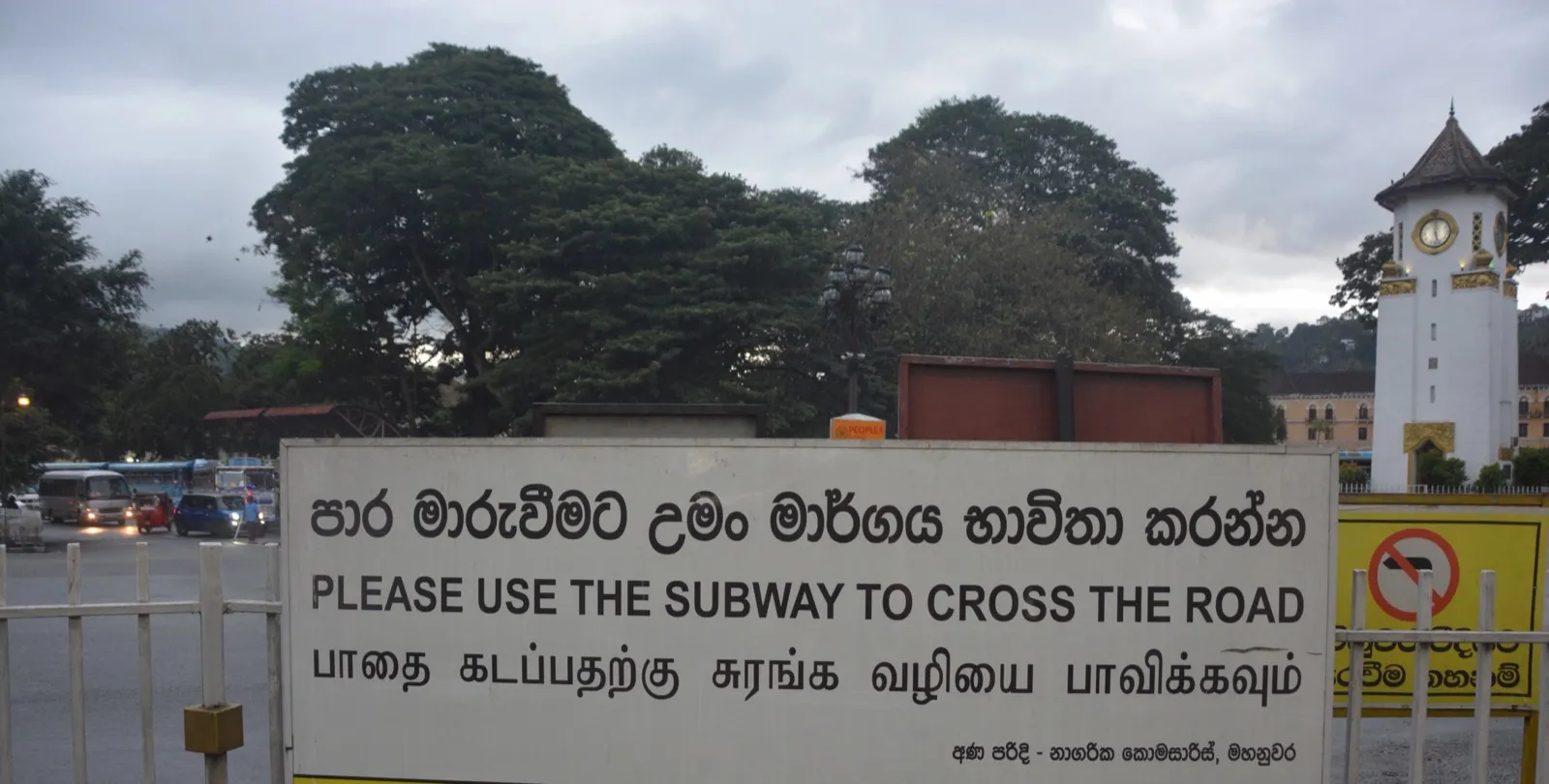
Start with four words: Ayubowan (hello, in Sinhala) and Vanakkam (hello, in Tamil), then sthuthiyi and nandri (thank you, in Sinhala and Tamil). Add "how much?", "less spicy", "where is…?" and "no problem", and you can greet, thank, shop and eat with a few words in Sri Lanka's two official languages. Pronunciation guides below are approximate.
You do not need these phrases to travel. But a few words in someone's own language change the conversation. This guide gives twenty phrases, most of them in both Sinhala and Tamil, with the script and an approximate pronunciation.
What languages are spoken in Sri Lanka?
Sri Lanka has two official languages, Sinhala and Tamil, and both are also national languages. English is the "link language". Tamil became an official language through the 13th Amendment to the Constitution in 1987.
The census does not ask which language people speak at home. It asks whether people aged 10 and over can read and write each language. In 2024, about 85 in 100 could read and write Sinhala, about 45 in 100 Tamil, and about 57 in 100 English.
Tamil is the main language of the north and much of the east, and of the hill-country Tamil communities on the tea estates. Most Muslims read and write Tamil too, though many also use Sinhala. If you are not sure, start in English, or greet with both Ayubowan and Vanakkam.
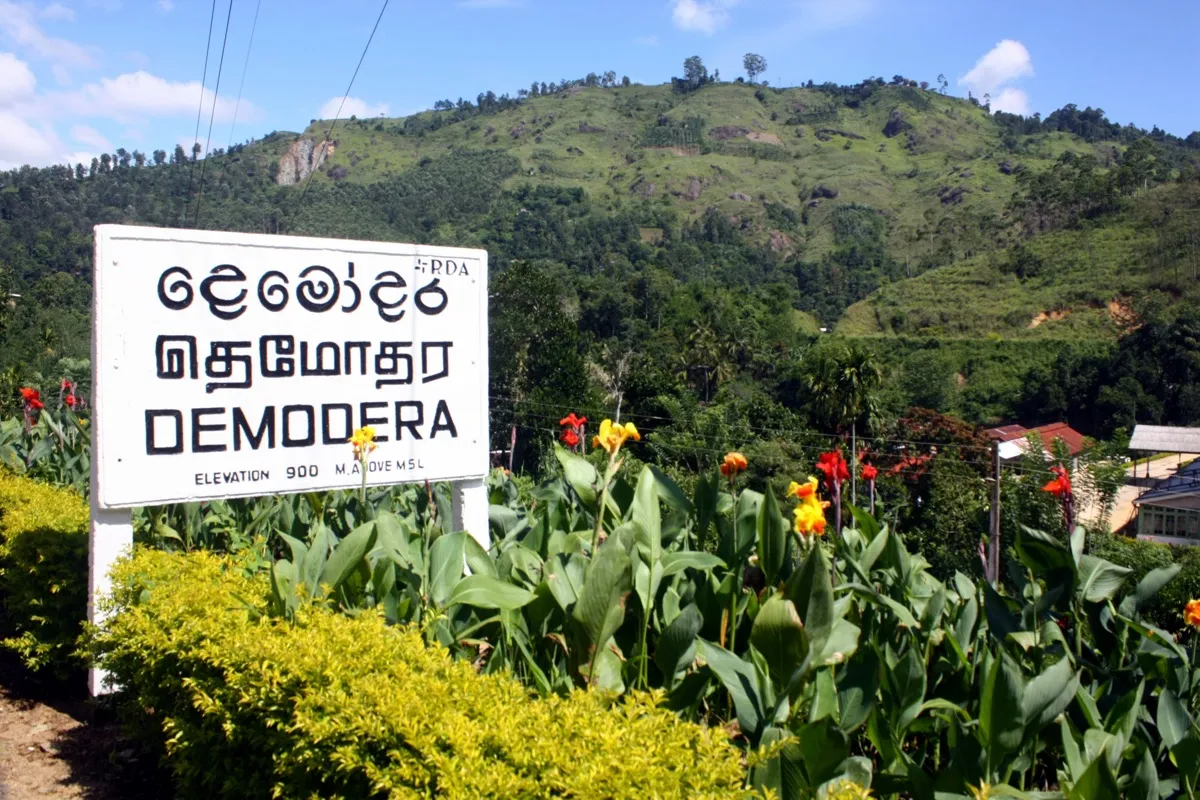
Sinhala and Tamil each have their own script. Both come from the ancient Brahmi script, but they look quite different, and a reader of one cannot read the other.
Is spoken Sinhala different from written Sinhala?
Sinhala is written in a formal style with its own grammar and many words of its own. People speak a different, everyday style. The phrases here are the spoken style, so they may not match what you see written on signs or in a dictionary. Tamil has a similar gap between written and spoken forms.
How do you say hello and thank you in Sinhala and Tamil?
1. Hello. In Sinhala: Ayubowan (say: AA-yu-boh-wan; ආයුබෝවන්). It means "may you live long", and it also works as goodbye. In Tamil: Vanakkam (say: va-NAK-kam; வணக்கம்). Say either with your palms together and a small bow of the head. Both are polite and a little formal; between friends people often just ask "How are you?"
2. Thank you. In Sinhala: sthuthiyi, often heard as is-TOO-ti (ස්තූතියි); you will also hear the fuller STOO-ti-yi. In Tamil: nandri (say: NUN-dri; நன்றி). All are polite with anyone.
3. Thank you very much. In Sinhala: bohoma sthuthiyi (BO-ho-ma STOO-ti-yi; බොහොම ස්තූතියි).
4. Yes and no. In Sinhala: ow (say: oh; ඔව්) and naehae (say: NEH-heh; නැහැ). In Tamil: aam (ஆம்) and illai (say: IL-lai; இல்லை). In Tamil you will also hear om (ஓம்) for yes.
5. Please. In Sinhala: karunaakarala or karunaakara (say: ka-ru-NAA-ka-ra-la; කරුණාකරලා). It is polite and fairly formal; you will hear it more in requests to strangers and in shops than between friends. In Tamil: thayavu seythu (say: TA-ya-vu SEY-thu; தயவுசெய்து).
6. Excuse me, or sorry. In Sinhala: samaawenna (say: sa-MAA-wen-na; සමාවෙන්න). It works both to get attention and to apologise. In Tamil: mannikkavum (say: man-NIK-ka-vum; மன்னிக்கவும்), which is polite and a little formal.
7. How are you? In Sinhala: Kohomada? (say: KO-ho-ma-da; කොහොමද?). Answer: Hondai (HON-dai; හොඳයි), "good". In Tamil: Sugamaa? (say: su-ga-MAA; சுகமா?), "Are you well?". In Sri Lankan Tamil you will also hear the casual Enna kathai? ("What's up?").
8. My name is… In Sinhala: Mage nama… (say: MAA-geh NA-ma; මගේ නම). In Tamil: En peyar… (say: en PEY-ar; என் பெயர்).
9. Goodbye. In Sinhala, people say Gihin ennam (say: GI-hin EN-nam; ගිහින් එන්නම්), literally "having gone, I will come": a promise to return. Ayubowan also works as a formal goodbye. In Tamil the same idea is Poittu varen (say: POY-ttu VAA-ren; போயிட்டு வாறேன்), "I'll go and come".
10. Peace be upon you. Many Muslims greet each other with Assalamu alaikum, "peace be upon you". The reply is Wa alaikum assalam. A visitor can use it, but hello is also fine.
How do you ask the price in Sinhala?
11. How much is this? In Sinhala: Meka keeyada? (say: MAY-ka KEE-ya-da; මේක කීයද?). Pointing and saying just Keeyada? also works. In Tamil: Evvalavu? (say: EV-va-la-vu; எவ்வளவு?).
12. That is too expensive. In Sinhala: Eke mila waedi (say: AY-keh MI-la WEH-di; ඒකෙ මිල වැඩි).
13. Can you bring the price down? In Sinhala: Gaana adu karanna puluwanda? (GAA-na A-du KA-ran-na PU-lu-wan-da; ගාන අඩු කරන්න පුළුවන්ද?).
14. OK, all right. In Sinhala: Hari (HA-ree; හරි), for agreeing or accepting a price.
15. No, thank you. In Sinhala: Epa, sthuthiyi (EH-paa, STOO-ti-yi; එපා, ස්තූතියි). Epa on its own can sound sharp, so add the thank you.
For what a fair price looks like, see what a tuk-tuk ride should cost.
Useful Sinhala and Tamil words for food
16. Less spicy, please. In Sinhala: saera adu karala denna (say: SEH-ra A-du KA-ra-la DEN-na; සැර අඩු කරලා දෙන්න). It may still be spicy.
17. Water. In Sinhala: wathura (say: WA-tu-ra; වතුර); drinking water is bona wathura. In Tamil: thanni (say: TUN-ni; தண்ணி), the everyday spoken form of thanneer (தண்ணீர்).
18. Delicious! In Sinhala: Rasai! (say: RA-sai; රසයි). In Tamil: Nalla ruchi! (say: NAL-la RU-chi; நல்ல ருசி), "good taste".
Our guide to Sri Lankan food explains what to order.
How do you ask for directions?
19. Where is…? Put the place first, then the question word. In Sinhala: … koheda? (say: KO-heh-da; කොහෙද?). In Tamil: … enge? (say: EN-gay; எங்கே?). For example: "Station koheda?" / "Station enge?" Where is the toilet? In Sinhala: Waesikiliya koheda? (say: WEH-si-ki-li-ya KO-heh-da; වැසිකිළිය කොහෙද?).
20. I don't understand. In Sinhala: Mata therenne naehae (say: MA-ta TEH-ren-neh NEH-heh; මට තේරෙන්නේ නැහැ). In Tamil: Enakku vilangavillai (say: e-NAK-ku vi-LANG-a-vil-lai; எனக்கு விளங்கவில்லை).
And one more: no problem. In Sinhala: kamak naehae (say: KA-mak NEH-heh; කමක් නැහැ), "no problem" or "never mind". Friendly in any situation.
How do you count to ten in Sinhala and Tamil?
- Sinhala: eka, deka, thuna, hathara, paha, haya, hatha, ata, namaya, dahaya (එක, දෙක, තුන, හතර, පහ, හය, හත, අට, නමය, දහය).
- Tamil: ondru, irandu, moondru, naangu, ainthu, aaru, ezhu, ettu, onbathu, paththu (ஒன்று, இரண்டு, மூன்று, நான்கு, ஐந்து, ஆறு, ஏழு, எட்டு, ஒன்பது, பத்து).
What does the Sri Lankan head tilt mean?
Many Sri Lankans tilt their head gently from side to side when they listen or answer. It usually means "yes", "I understand" or "all right", not "no". Sometimes it only means "I am listening", so if it matters, such as a price or a time, check with a word.
How should you use these phrases?
Start with the greeting, with your palms together. Use one or two words, not whole sentences: Keeyada? with a pointing finger works as well as the full question. If you are not sure which language someone speaks, greet with both Ayubowan and Vanakkam, or start in English. And if someone answers you in English, carry on in English. The greeting has already done its work.
What most visitors miss about Sinhala and Tamil
- Two languages, not one. Vanakkam usually in the north, east and tea country; Ayubowan elsewhere; both are fine when you are unsure.
- Ayubowan is also goodbye.
- Spoken is not written. Signs may not match what you hear.
- "Epa" alone can sound sharp. Add sthuthiyi.
- The head tilt usually means yes.
Before you go: five phrases to learn
- Ayubowan and Vanakkam, with palms together.
- Sthuthiyi and nandri.
- Meka keeyada? for prices.
- Saera adu karala denna for food.
- Kamak naehae, for when things go wrong.
- A smile, and a word in English when you are stuck.
Questions people ask
How do you say hello in Sri Lanka?
In Sinhala, Ayubowan, which means "may you live long". In Tamil, Vanakkam. Say either with your palms together and a small bow of the head.
How do you say thank you in Sinhala?
Sthuthiyi, often heard as is-TOO-ti. Thank you very much is bohoma sthuthiyi. In Tamil, thank you is nandri.
Should I speak Sinhala or Tamil?
Tamil is the main language of the north and much of the east, and of the hill-country Tamil communities on the tea estates. If you are not sure, start in English, or greet with both Ayubowan and Vanakkam.
How do you say "how much?" in Sinhala?
Meka keeyada?, "How much is this?". Pointing and saying just Keeyada? also works. In Tamil, Evvalavu?.
Does the head wobble mean yes or no?
It usually means "yes", "I understand" or "all right", not "no". Sometimes it only means "I am listening", so if it matters, check with a word.
Coming soon: Sri Lanka Before You Land, our pre-trip ebook, explains the customs behind daily life on the island. A free guide, Your First Week in Sri Lanka, will cover the first days on the ground.
Sources (57)
Every fact in this guide was checked against these sources on 3 October 2026. Official and primary sources come first. How we research.
- Department of Official Languages (Sri Lanka), 'Official Languages Policy' page (last modified 07 Aug 2026) · languagesdept.gov.lk
- Constitution of the Democratic Socialist Republic of Sri Lanka (Parliament of Sri Lanka, consolidated text), Chapter IV, Articles 18-19 and footnotes 4-5 · parliament.lk
- Department of Census and Statistics, Census of Population and Housing 2024, final report, Chapter 7 (Tables 7.9-7.11, language literacy) · statistics.gov.lk
- The Unicode Standard 18.0, Chapter 12, s.12.6 Tamil · unicode.org
- The Unicode Standard 18.0, Chapter 13 (Sinhala) · unicode.org
- University of Peradeniya, Faculty of Medicine: Sinhala handbook for Bhutanese students (2015-16 batch) · med.pdn.ac.lk
- MacDougall & de Abrew, Sinhala: Basic Course, Module 3: Sinhala Structures (US Foreign Service Institute, 1979; ERIC ED192571), s.9 'Style and dialect' · archive.org
- Cultural Atlas (SBS/Mosaica), Sri Lankan Culture: Greetings (Scroope, 2016) · culturalatlas.sbs.com.au
- Carter, Sinhalese-English Dictionary (1924), DSAL: aayu boo van · dsal.uchicago.edu
- Carter, Sinhalese-English Dictionary (1924), DSAL: gihin · dsal.uchicago.edu
- Carter, Sinhalese-English Dictionary (1924), DSAL: rasa · dsal.uchicago.edu
- Carter, Sinhalese-English Dictionary, DSAL: hari · dsal.uchicago.edu
- Carter, Sinhalese-English Dictionary, DSAL: stutiya · dsal.uchicago.edu
- University of Madras Tamil Lexicon (DSAL), aam, p. 233 · dsal.uchicago.edu
- University of Madras Tamil Lexicon (DSAL), enkee, p. 509 · dsal.uchicago.edu
- University of Madras Tamil Lexicon (DSAL), evvaLavu, p. 539 · dsal.uchicago.edu
- University of Madras Tamil Lexicon (DSAL), illai, p. 338 · dsal.uchicago.edu
- University of Madras Tamil Lexicon (DSAL), katai, p. 714 · dsal.uchicago.edu
- University of Madras Tamil Lexicon (DSAL), manni-ttal / mannippu, p. 3129 · dsal.uchicago.edu
- University of Madras Tamil Lexicon (DSAL), onRu, p. 615 · dsal.uchicago.edu
- University of Madras Tamil Lexicon (DSAL), oom, p. 624 · dsal.uchicago.edu
- University of Madras Tamil Lexicon (DSAL), p. 2190 · dsal.uchicago.edu
- University of Madras Tamil Lexicon (DSAL), p. 3485 · dsal.uchicago.edu
- University of Madras Tamil Lexicon (DSAL), pattu, p. 2466 · dsal.uchicago.edu
- University of Madras Tamil Lexicon (DSAL), peyar, p. 2862 · dsal.uchicago.edu
- University of Madras Tamil Lexicon (DSAL), pooyvaa-tal, p. S378 · dsal.uchicago.edu
- University of Madras Tamil Lexicon (DSAL), sukam, p. 1497 · dsal.uchicago.edu
- University of Madras Tamil Lexicon (DSAL), taNNi, p. 1736 · dsal.uchicago.edu
- University of Madras Tamil Lexicon (DSAL), taNNiir, p. 1736 · dsal.uchicago.edu
- University of Madras Tamil Lexicon (DSAL), tayavu, p. 1758 · dsal.uchicago.edu
- University of Madras Tamil Lexicon (DSAL), uruci, p. 445 · dsal.uchicago.edu
- University of Madras Tamil Lexicon (DSAL), viLanku-tal, p. 3727 · dsal.uchicago.edu
- Lonely Planet, Zinara Rathnayake, '16 things to know before you head to Sri Lanka' · lonelyplanet.com
- Madura English-Sinhala Dictionary: 'delicious' · maduraonline.com
- Madura English-Sinhala Dictionary: 'excuse me' · maduraonline.com
- Madura English-Sinhala Dictionary: 'expensive' · maduraonline.com
- Madura English-Sinhala Dictionary: 'goodbye' · maduraonline.com
- Madura English-Sinhala Dictionary: 'how much' · maduraonline.com
- Madura English-Sinhala Dictionary: 'never mind' · maduraonline.com
- Madura English-Sinhala Dictionary: 'nine' · maduraonline.com
- Madura English-Sinhala Dictionary: 'no' · maduraonline.com
- Madura English-Sinhala Dictionary: 'one' · maduraonline.com
- Madura English-Sinhala Dictionary: 'reduce' · maduraonline.com
- Madura English-Sinhala Dictionary: 'strong' · maduraonline.com
- Madura English-Sinhala Dictionary: 'ten' · maduraonline.com
- Madura English-Sinhala Dictionary: 'thank' · maduraonline.com
- Madura English-Sinhala Dictionary: 'toilet' · maduraonline.com
- Madura English-Sinhala Dictionary: 'understand' · maduraonline.com
- Madura English-Sinhala Dictionary: 'water' · maduraonline.com
- Madura English-Sinhala Dictionary: 'where' · maduraonline.com
- Madura English-Sinhala Dictionary: 'yes' · maduraonline.com
- Madura English-Sinhala Dictionary: 'කරුණාකරලා' · maduraonline.com
- Madura dictionary, Sinhala lookup: වැසිකිළිය · maduraonline.com
- Oxford Learner's Dictionaries, 'salaam' (word origin) · oxfordlearnersdictionaries.com
- Rough Guides, Sri Lanka travel tips · roughguides.com
- Slough Islamic Trust glossary: Wa alaikum assalam · sloughislamictrust.org.uk
- Cultural Atlas (SBS/Mosaica), Sri Lankan culture: communication (Scroope, 2016) · theculturalatlas.org
Related guides
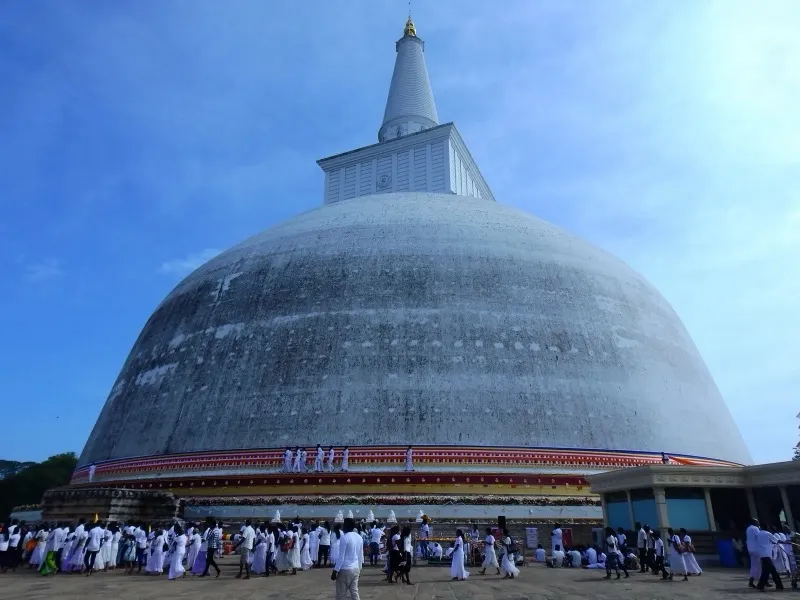
Temple etiquette in Sri Lanka: the rules and the reasons behind them
Shoes and hat off, shoulders and knees covered, never pose with your back to a Buddha. Sri Lanka's temple rules, and why each one matters (October 2026).
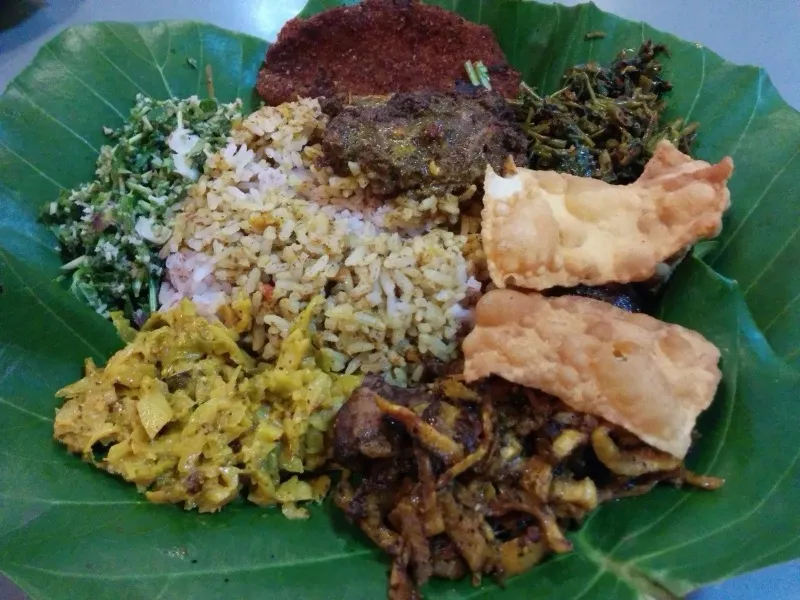
Sri Lankan food: what to order, and what it is
Start with rice and curry at lunch, then hoppers or kottu in the evening. What each Sri Lankan dish is, how hot it is, and what to ask before you order.
Ten mistakes first-time visitors make in Sri Lanka
Skipping the ETA, planning a Kandy to Ella train that is not running, the wrong season, and seven more mistakes to avoid on a first trip (Oct 2026).
More guides in Planning · Culture and etiquette