Tea country: how a leaf becomes Ceylon tea, and visiting a factory
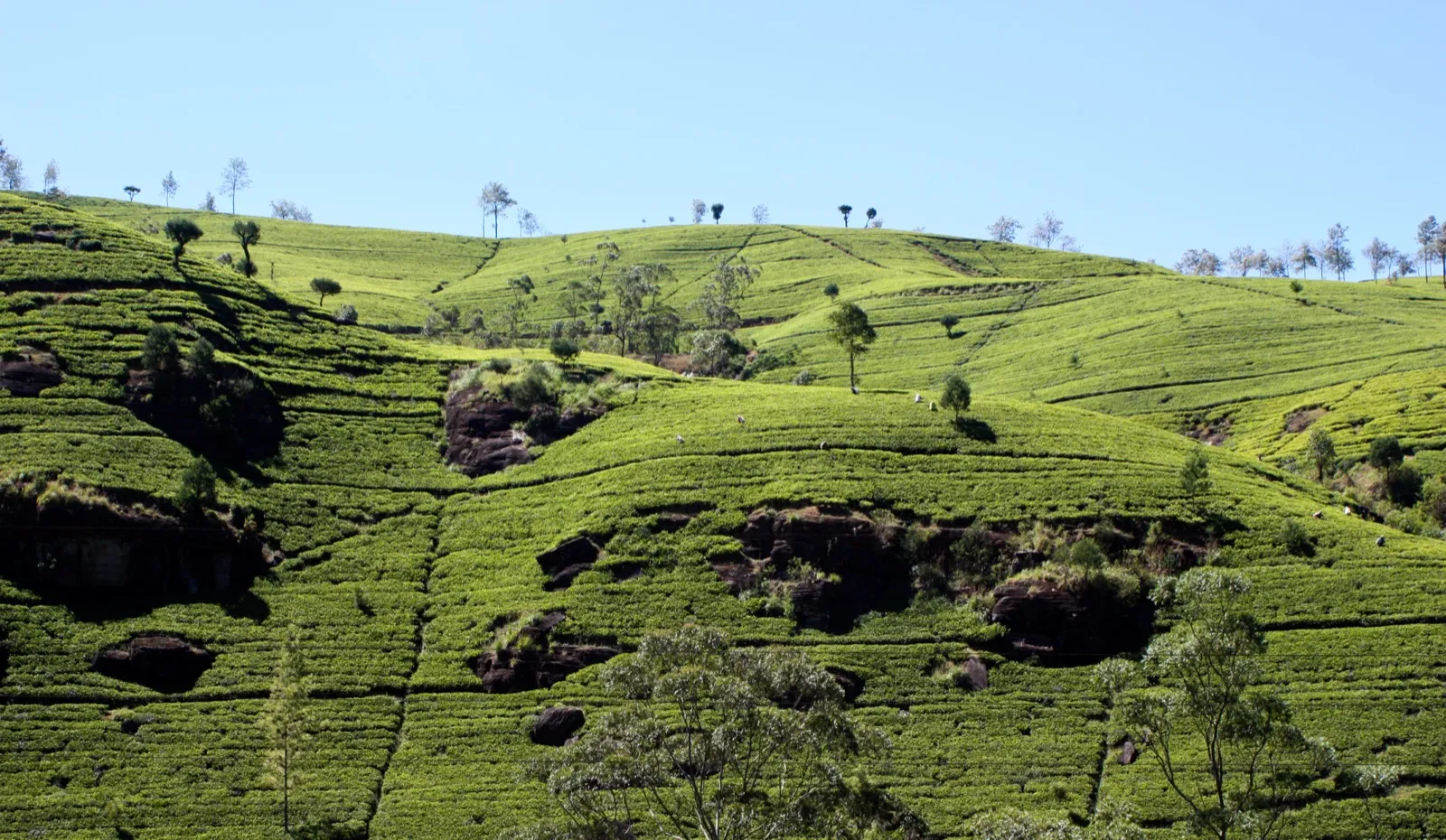
Around Nuwara Eliya, some tea factories welcome visitors: a tour usually shows the withering, rolling, drying and sorting rooms, and often ends with a cup of tea. Tours may be free or paid, and factories do not process at every hour, so call ahead. Pedro Estate, just outside town, runs a tea centre. Ask before photographing pluckers.
This guide explains how the leaf becomes tea, how tea came to the hills, who does the work, and how to visit a factory well.
Can you visit a tea factory near Nuwara Eliya?
Some tea factories in the hills welcome visitors. A tour usually shows the withering, rolling, drying and sorting rooms, and often ends with a cup of tea and a shop. Prices vary: some tours are free, others charge a fee, so ask when you arrive. Call ahead if you can, because factories do not process tea at every hour.
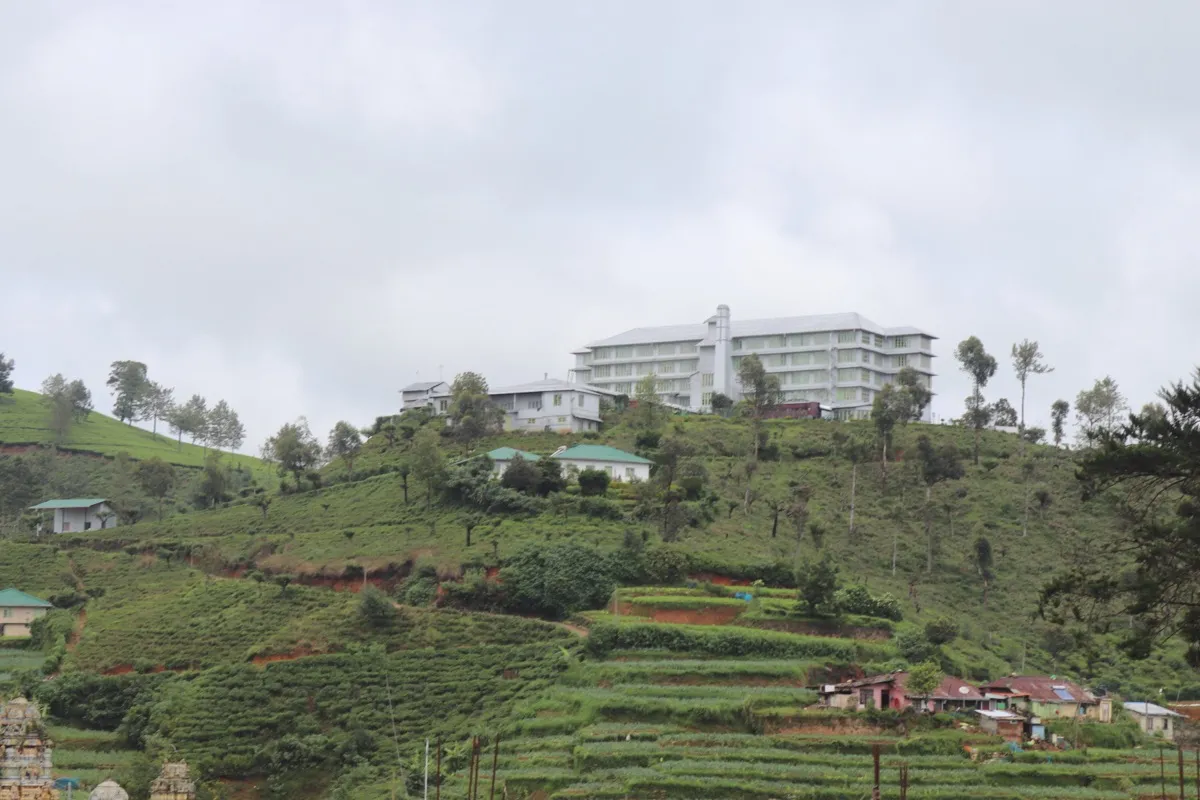
A few places, as checked in October 2026:
- Pedro Estate, just outside Nuwara Eliya, belongs to Kelani Valley Plantations, which runs a tea centre and shop there. Its factory dates from 1884, so it is one of the older working factories in the district.
- Bluefield Tea Gardens, at Ramboda on the road from Kandy, offers tours of its estate and factory with tea tasting during the day, and asks visitors to call ahead.
- The Sri Lanka Tea Board's sales centre on Nanu Oya Road in Nuwara Eliya is open every day from 8 a.m. to 5.30 p.m., where you can taste and buy many brands. It is a shop, not a factory.
Elsewhere in the hills:
- The Ceylon Tea Museum at Hantane, near Kandy, is in an old tea factory. Its listed ticket for foreign adults is 1,000 rupees, and it is closed on Mondays.
- Uva Halpewatte, near Ella, lists a guided factory tour with tasting for 3,000 rupees.
We have no arrangement with any of these places.
How did tea come to Sri Lanka?
Ceylon tea is tea grown in Sri Lanka; Ceylon is the island's old name. In 1867 a Scottish planter, James Taylor, started a tea field on Loolecondera estate in the hills near Kandy.
At the time the hills were coffee country. In 1869 a leaf disease, coffee rust, appeared on the coffee estates. Over the next ten to twenty years it destroyed them, and planters turned to tea. By the late 1880s almost all the coffee land had been turned over to tea.
By the end of the 1890s, tea had overtaken coffee in every way, and Ceylon became "the country where the tea comes from". By the 1960s it was the world's biggest tea exporter.
Tea is still one of Sri Lanka's biggest exports. In 2025 the country exported about 257 million kilograms of tea, earning about 1.5 billion US dollars, a little more than in 2024. The UN's food agency, the FAO, counted Sri Lanka as the world's second-largest exporter of black tea in 2022.
What are Sri Lanka's tea regions?
The Sri Lanka Tea Board recognises seven tea-growing regions: Nuwara Eliya, Uda Pussellawa, Dimbula, Uva, Kandy, Sabaragamuwa and Ruhuna. Each gives its tea a different character, and a tea can carry a region's name only if it was grown and made there.
The Tea Board sorts Ceylon tea by height. Tea grown above 1,200 metres is high grown, 600 to 1,200 metres is mid grown, and below 600 metres is low grown. Nuwara Eliya is the highest region. Kandy is mid grown, and Ruhuna and Sabaragamuwa are low grown. Most Ceylon tea is actually low grown: about 61 percent in 2024.
Nuwara Eliya tea is the lightest of the Ceylon teas: a pale, golden cup with a delicate, fragrant taste. It is best drunk without milk, or with very little.
Why is Nuwara Eliya called a hill station?
Nuwara Eliya, at about 1,900 metres, has an average temperature of about 16 degrees, and nights can be cold from December to February.
Nuwara Eliya grew up as a British hill station. An English explorer found the empty plateau in 1818, and Governor Edward Barnes built a house there that is now the Grand Hotel. The hunter and explorer Samuel Baker came in 1847 and set up an English farming settlement in 1848. By the tea era it had become, in the Tea Board's words, a town "self-consciously English in character". For a walk on the plateau beyond the town, see Horton Plains and World's End.
How is Ceylon tea made?
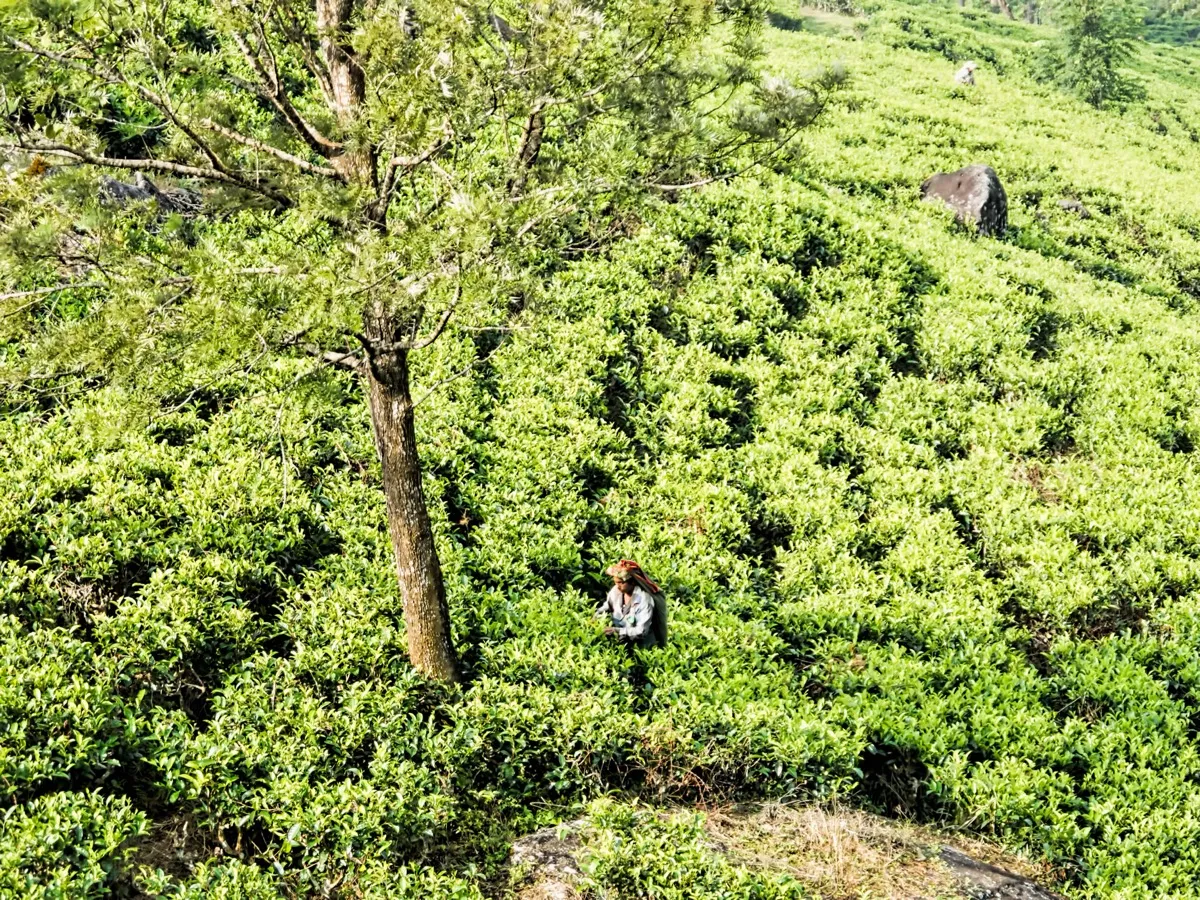
Tea is picked by hand. Pluckers take only the top of each shoot, two leaves and a bud. Most pluckers are women. A skilled plucker can pick up to about 20 kilograms of leaf in a day.
In the factory:
- Weighing. The leaf is weighed when it arrives.
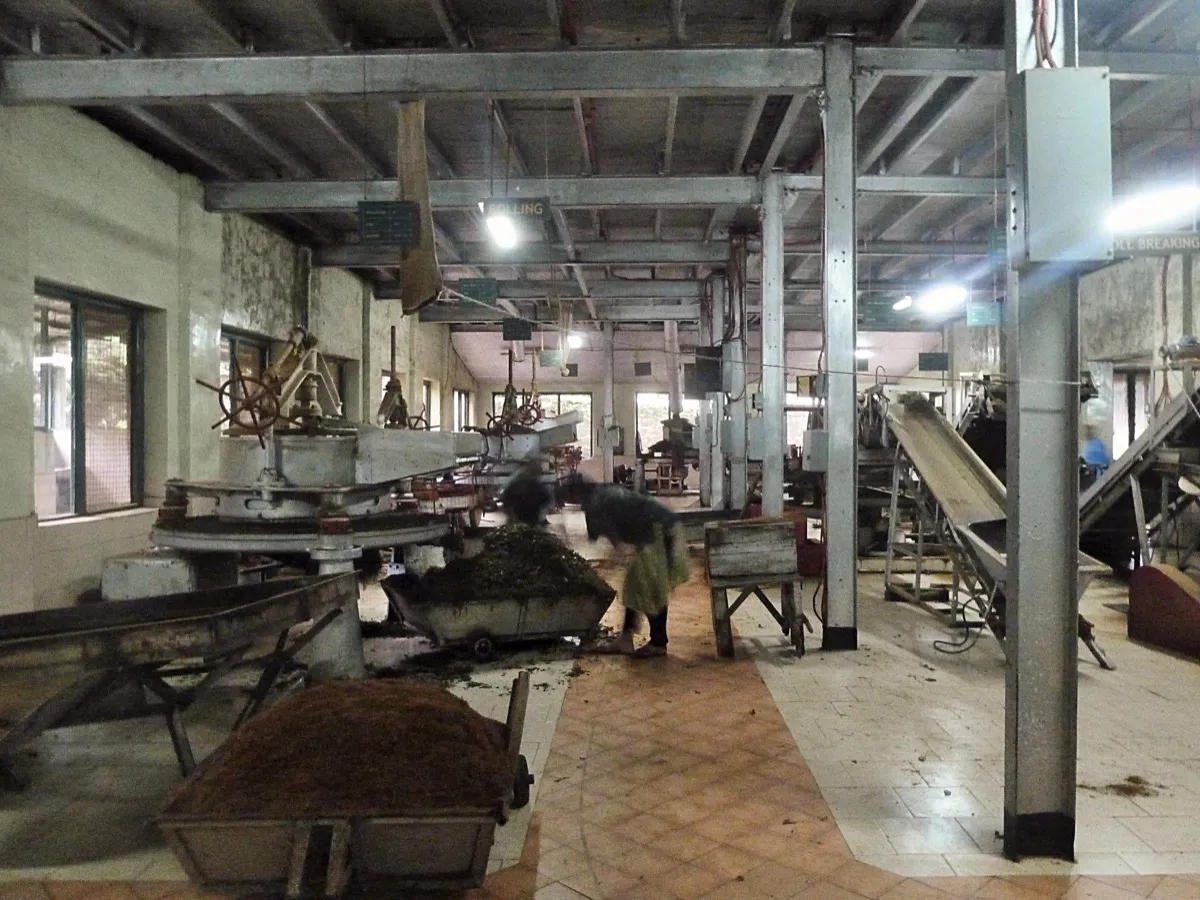
- Withering. It is spread on long troughs to wither for about 18 to 24 hours while warm air dries it.
- Rolling. Rolling machines then break the leaf so its juices meet the air.
- Oxidation. The broken leaf is left to oxidise, which turns it a coppery brown. Tea makers often call this "fermentation", though it is oxidation.
- Drying. Hot air then dries it at about 100 degrees Celsius, which makes black tea.
- Sorting. Finally, sieves sort the tea by size into grades.
What is the difference between orthodox and CTC tea?
Most Ceylon tea is made the traditional "orthodox" way, in which the leaf is rolled. In 2024 about nine tenths of Sri Lanka's tea was orthodox. A smaller share, about one tenth, is made by CTC machines, which crush, tear and curl the leaf into small grains for tea bags and strong, quick brews.
What do tea grades like BOP and OP mean?
Tea grades describe the size of the leaf, not its quality or flavour. OP, or Orange Pekoe, is a large whole-leaf grade. BOP, Broken Orange Pekoe, is the main broken grade, and it brews faster. Dust is the smallest grade, used where a quick, strong cup is wanted.
Look for the Lion logo on a pack. It belongs to the Sri Lanka Tea Board, and it means the tea is 100 percent pure Ceylon tea, packed in Sri Lanka.
Who picks Sri Lanka's tea?
Most of the people who pick and make the tea are Malaiyaha, or hill-country, Tamils. Their ancestors were brought from South India by the British from the early nineteenth century, first for the coffee estates and then for tea, until the 1930s. In 2023 the community marked 200 years in the hill country. Today they are about three in a hundred Sri Lankans, and half the people of Nuwara Eliya district.
After independence, a 1948 law left most hill-country Tamils without citizenship, and a 1949 law took away their vote. Agreements with India in 1964 and 1974 sent hundreds of thousands to India. Laws in 1986 and 1988 gave citizenship to many who stayed, and in 2003 the Grant of Citizenship to Persons of Indian Origin Act gave it to the rest. The UN refugee agency said the 2003 law effectively solved their statelessness.
Pay is set by the day. In 2021 the daily wage rose to 1,000 rupees. In 2024 a gazette ordered 1,700 rupees, but it was withdrawn after a Supreme Court interim order, and the wage was fixed at 1,350 rupees. Since February 2026 it has been 1,750 rupees a day: 1,550 rupees basic pay from the companies, plus a 200-rupee attendance allowance paid by the government (checked October 2026).
Life on the estates is still hard. A UN expert who visited in 2021 reported poor housing and hard working conditions, and said the community still faces discrimination because of its descent.
Can you photograph tea pluckers?
The tea pluckers you see on the hillsides are at work. Ask before you take a photo, and accept "no". Some pluckers expect a small payment for posing, so decide before you lift the camera.
How do you order tea in Sri Lanka?
In local places, tea usually comes with milk and sugar already added. "Plain tea" means black tea, but normally still sweet, so ask for "plain tea, no sugar". See Sri Lankan food: what to order.
How do you get to Nuwara Eliya?
Nuwara Eliya has no station of its own on the Main Line. Its station is Nanu Oya. As of October 2026, after Cyclone Ditwah, trains run from Nanu Oya to Ella and Badulla, but not yet from Kandy. Check Sri Lanka Railways before you travel. See Kandy to Ella by train.
Before you visit tea country
- A factory visit planned, with a call ahead.
- Nuwara Eliya tea tasted without milk.
- A warm layer for the evenings.
- Permission asked before any photo of a plucker.
- The Lion logo checked on any tea you buy.
- "Plain tea, no sugar" ready for the café.
Questions people ask
Can you visit a tea factory in Nuwara Eliya?
Yes. Some tea factories in the hills welcome visitors, and a tour usually shows the withering, rolling, drying and sorting rooms, often ending with a cup of tea. Some tours are free and others charge a fee, so call ahead.
How is black tea made?
The leaf is withered for about 18 to 24 hours, rolled, left to oxidise, dried with hot air at about 100 degrees Celsius, and sorted by size into grades.
Why does Nuwara Eliya tea taste different?
Nuwara Eliya is the highest tea region, and its tea is the lightest of the Ceylon teas: a pale, golden cup with a delicate, fragrant taste, best drunk without milk.
What does the Lion logo on tea mean?
It belongs to the Sri Lanka Tea Board, and it means the tea is 100 percent pure Ceylon tea, packed in Sri Lanka.
How much are tea pluckers paid?
Since February 2026, the daily wage has been 1,750 rupees: 1,550 rupees basic pay from the companies, plus a 200-rupee attendance allowance paid by the government (checked October 2026).
Coming soon: Sri Lanka Before You Land, our pre-trip ebook, explains the history behind the landscapes on your route. A free guide, Your First Week in Sri Lanka, will cover the first days on the ground.
Sources (45)
Every fact in this guide was checked against these sources on 3 October 2026. Official and primary sources come first. How we research.
- FAO Intergovernmental Group on Tea, CCP:TE/24/2, Jan 2024 (2022 data) · openknowledge.fao.org
- SLR Passenger Ticket Rates, Nanuoya · railway.gov.lk
- Sri Lanka Railways notice (Sinhala): Badulla-Nanu Oya services from 2026-06-20 · railway.gov.lk
- Sri Lanka Railways, History (says 'coffee blight of 1871', conflicts) · railway.gov.lk
- Sri Lanka Tourism Promotion Bureau, Travel Tips: photography (official) · srilanka.travel
- Sri Lanka Tea Board, Annual Report 2024 (dated 31 Mar 2026), Key Highlights p.9 and Industry Overview pp.42-43 · srilankateaboard.lk
- Sri Lanka Tea Board, Ceylon Tea GI specification (uploaded Nov 2024) · srilankateaboard.lk
- Sri Lanka Tea Board, Fine Ceylon Tea: Manufacturing · srilankateaboard.lk
- Sri Lanka Tea Board, History of Ceylon Tea: 'A plantation economy' · srilankateaboard.lk
- Sri Lanka Tea Board, History of Ceylon Tea: 'Independence and after' · srilankateaboard.lk
- Sri Lanka Tea Board, History of Ceylon Tea: 'Tea saves the day' · srilankateaboard.lk
- Sri Lanka Tea Board, Lion Logo: Symbol of Quality · srilankateaboard.lk
- Sri Lanka Tea Board, Tea Growing Regions · srilankateaboard.lk
- Sri Lanka Tea Board, Tea Growing Regions: Nuwara Eliya · srilankateaboard.lk
- Sri Lanka Tea Board, Tea Sales Centre, Nuwara Eliya · srilankateaboard.lk
- DCS Statistical Abstract 2024, Table 1.3 - Monthly air temperature by station · statistics.gov.lk
- Department of Census and Statistics, Census of Population and Housing 2024, final report · statistics.gov.lk
- UNHCR Sri Lanka, 'Statelessness in Sri Lanka' (archived 23 Oct 2009) · archive.ph
- Bluefield Tea Gardens, Tea experiences (official) · bluefieldtea.com
- Ceylon Tea Museum, Hantane, The Museum (official; undated) · ceylonteamuseum.com
- UN Special Rapporteur on contemporary forms of slavery (T. Obokata), Visit to Sri Lanka, A/HRC/51/26/Add.1, 6 Jul 2022 · documents.un.org
- Samuel W. Baker, Eight Years' Wanderings in Ceylon (1855), Project Gutenberg #2036 · gutenberg.org
- Halpe Tea, Uva Halpewatte tours (official, page 2026) · halpetea.com
- Kelani Valley Plantations PLC, About us (Pedro Estate tea boutique) · kvpl.com
- Kelani Valley Plantations PLC, Pedro Estate page ('Established Date: 1889') · kvpl.com
- Sri Lanka Tea Board, Pure Ceylon Tea, 'Production & Detailed Process' · pureceylontea.com
- Sri Lanka Tea Board, Pure Ceylon Tea, 'Story of Ceylon Tea' timeline · pureceylontea.com
- Sri Lanka Tea Board, Pure Ceylon Tea, 'Tea Diversity' (regions; types and grades) · pureceylontea.com
- Amnesty International, 27 May 2026, report on Malaiyaha Tamil workers in private tea estates (Galle and Matara) · amnesty.org
- Michael Meyler, A Dictionary of Sri Lankan English (Colombo, 2007) · archive.org
- British Society for Plant Pathology, 'Coffee leaf rust in Ceylon' (teaching sheet) · bspp.org.uk
- Colombo Times, 2 Oct 2026, Kandy still suspended; Hatton-Nanu Oya under repair · colombotimes.net
- Daily Mirror, 1 Mar 2021, Wages Board approves Rs 1, 000 · dailymirror.lk
- Daily Mirror, 1 Sep 2025, estate workers and the wage delay (union account of Rs 1, 350 from Sep 2024) · dailymirror.lk
- Daily Mirror, 3 Nov 2023, 'Naam 200' (200 years of Indian-origin Tamils in the hill country) · dailymirror.lk
- Daily Mirror, 30 Jan 2026, agreement signed: Rs 1, 550 basic + Rs 200 attendance allowance · dailymirror.lk
- Daily Mirror, 31 Jul 2024, gazette withdrawn after Supreme Court interim order · dailymirror.lk
- Daily Mirror, 7 Nov 2025, Budget 2026: Rs 1, 750 from January 2026 · dailymirror.lk
- EconomyNext, 22 Jan 2026, tea exports 2025 · economynext.com
- Verite Research / Institute on Statelessness and Inclusion, 'Hill Country Tamils of Sri Lanka: Towards Meaningful Citizenship' (Aug 2019) · files.institutesi.org
- Daily Mirror, 26 Jan 2026, 'Tea industry overview January-December 2025' (archived copy on historyofceylontea.com) · historyofceylontea.com
- The Island, 25 Feb 2026, COPF on the Rs 200 allowance (MoU, no gazette) · island.lk
- The Island, 5 May 2024, wage gazette (Rs 1, 350 + Rs 350) · island.lk
- Seat61, Train travel in Sri Lanka · seat61.com
- University of Exeter, 'Taking Tea' project: Sri Lanka · takingtea.exeter.ac.uk
Related guides
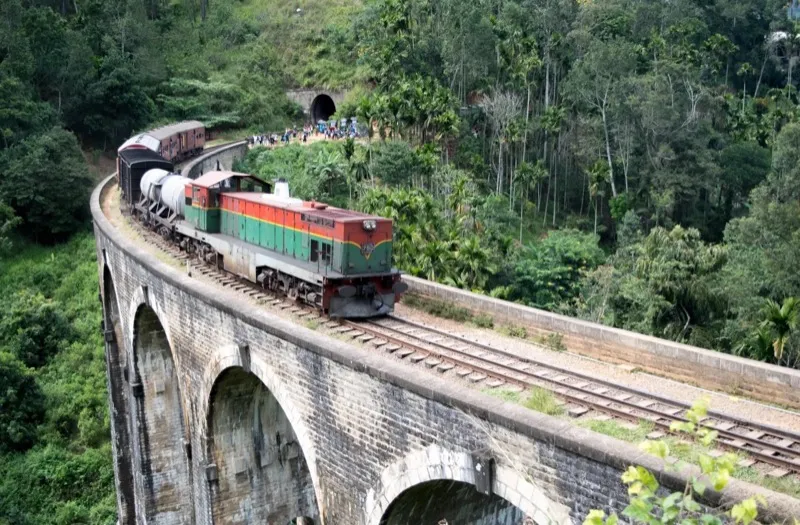
Kandy to Ella by train: booking, classes and the 2026 closure
No train runs Kandy to Ella as of October 2026. Go by road to Nanu Oya and ride the open section. How booking, classes and fares work on this line.
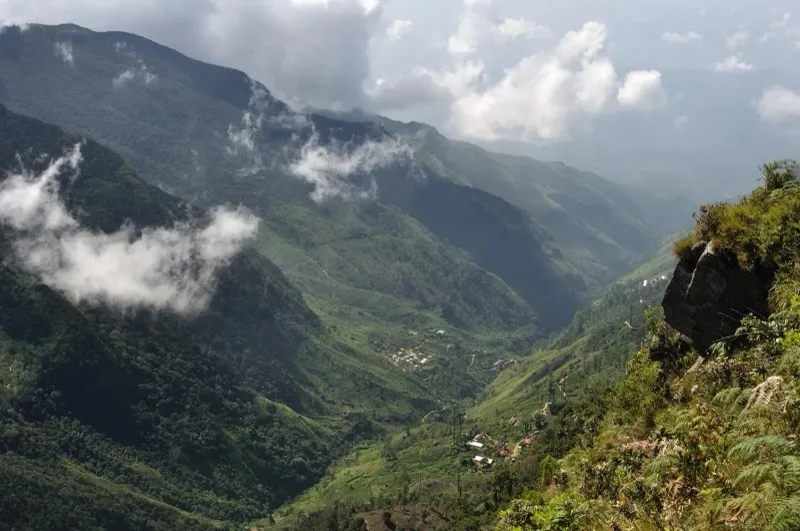
Horton Plains and World's End: timing the walk before the cloud
Be at the gate when it opens at 6 a.m.: Sri Lanka Tourism advises 6 to 10 a.m., before the clouds roll in. The loop, fees and safety (Oct 2026).
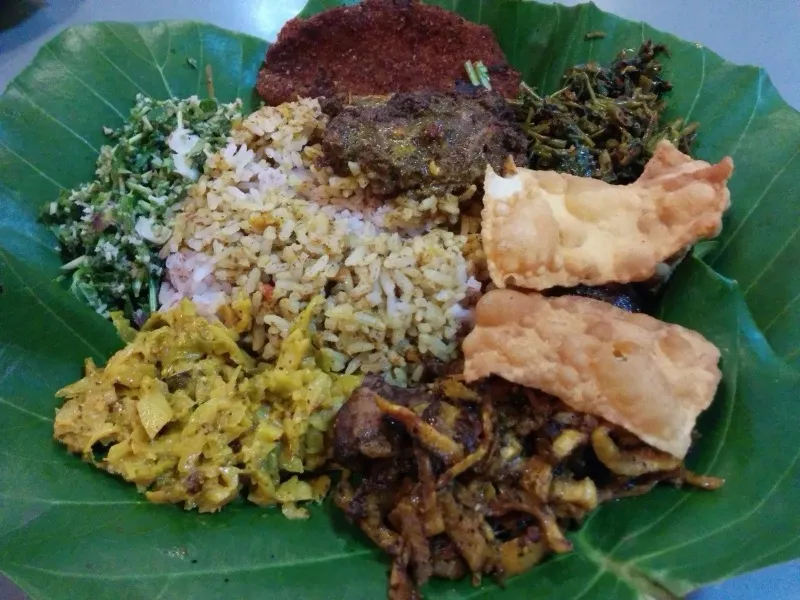
Sri Lankan food: what to order, and what it is
Start with rice and curry at lunch, then hoppers or kottu in the evening. What each Sri Lankan dish is, how hot it is, and what to ask before you order.
More guides in Kandy and the hills