What to wear and pack for Sri Lanka
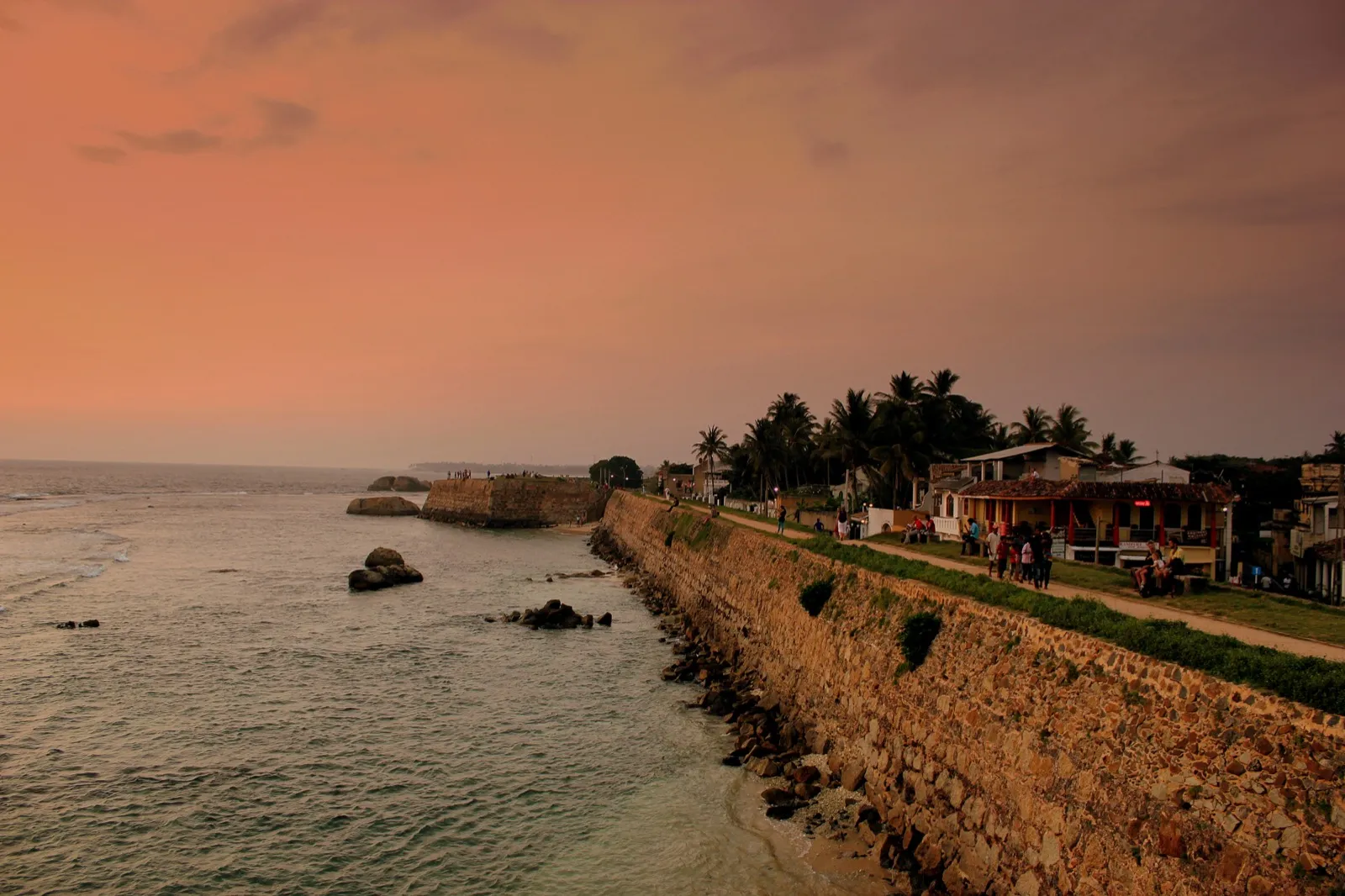
In Sri Lanka, wear light, loose clothes for the heat, and pack at least one outfit that covers your shoulders and knees for temples. The coast averages about 27 to 28 degrees Celsius all year, but January nights in Nuwara Eliya average about 9 degrees, so bring a fleece. Bring a Type G plug adapter and insect repellent.
This guide covers temple dress, the weather by region, beachwear, plugs, and the few things worth leaving at home.
What should you wear at temples in Sri Lanka?
At a Buddhist temple, cover your shoulders and your knees, and take off your shoes and your hat. That means no shorts and no sleeveless tops. The rule is the same for men and women. Our guide to temple etiquette explains the rest.
At the Temple of the Tooth in Kandy, staff do not let in anyone wearing shorts, a sleeveless top or revealing clothes. The temple says suitable clothing can be obtained at the entrances, but it does not say whether there is a charge. You hand in your shoes, and any large bags, at a booth and get a token (temple guidelines, as checked October 2026). See the Temple of the Tooth dress code.
Do you have to wear white at a temple?
Many Sri Lankan Buddhists wear white to the temple, especially on full-moon (Poya) days, and many pilgrims climb Adam's Peak in white. Visitors do not have to wear white; no temple rule we found asks for it.
What about shoes and socks?
You will take your shoes off at every temple, often many times a day, so shoes or sandals that slip on and off easily make life simpler. The stone and sand around a temple can be very hot in the middle of the day. Many visitors keep socks on, and this is usually accepted, but there is no official rule either way; where exactly shoes come off varies, so watch what local people do.
Can you wear clothes or tattoos showing the Buddha?
If you have a visible tattoo of the Buddha, cover it with a sleeve or a dressing from before you land, and keep it covered at temples. The UK government warns that a visible Buddha tattoo can get you refused entry to Sri Lanka or deported. In 2014 a British nurse with a Buddha tattoo on her arm was arrested at Colombo airport and deported; Sri Lanka's Supreme Court later ruled that her rights had been violated (checked October 2026).
Leave clothes printed with the Buddha at home, including swimwear. In 2017 police detained and questioned an Indian tourist over a Buddha print on her dress; she was released after signing a statement and apologising. Canada warns that clothing and jewellery associated with Buddhism can lead to a fine, arrest or deportation. More in the rules on Buddha images.
What is the weather like, and what clothes does it need?
The lowlands and coast. The lowlands, including the coast, are hot all year: the average temperature is about 27 to 28 degrees Celsius and changes little from month to month. In the north, north-centre and east, daytime highs average 33 to 35 degrees in the warmest months. It is humid too, about 70 percent in the day and 90 percent or more at night. Pack light, loose clothes that cover your shoulders and knees.
The hill country. The hill country is much cooler. Nuwara Eliya, at about 1,900 metres, averages about 16 degrees Celsius. In January the average night-time low is about 9 degrees, and there is ground frost on a few days in January and February. Pack a warm layer, such as a fleece or a light jumper, for evenings and early mornings in the hills. See Nuwara Eliya and tea country.
Horton Plains. Horton Plains, higher still, is cold at dawn, when most people start the walk to World's End. The average temperature over the year is only about 13 to 15 degrees Celsius, and in January and February nights can drop below freezing, with ground frost at dawn. Bring a warm layer and a rain jacket. See Horton Plains and World's End.
Adam's Peak. If you climb Adam's Peak (Sri Pada), you climb through the night, and it is cold and windy on top before dawn, even after the climb has made you sweat. Bring a warm layer, a hat and dry socks, and put them on as soon as you stop. Shoes come off at the summit temple, where the stone is freezing before dawn; many people keep socks on. The top is a working temple, so keep shoulders and knees covered. See climbing Adam's Peak.
Do you need rain gear?
Sri Lanka has two monsoons that hit opposite sides of the island. From May to September the Southwest monsoon brings rain to the west coast, the south coast around Galle and the western hill country, while the east coast is the drier side. From December to February the Northeast monsoon brings rain to the north and east, while the west and south coasts are at their driest from January to March. October and November are the wettest months for the island as a whole.
Pack a light rain jacket or a small umbrella whatever the month if you are going to the hills. Monsoon rain can fall at any time of day or night, and between the monsoons, in March and April and in October and November, storms usually come in the afternoon or evening. The hill country gets rain from both monsoons and is wet in most months; around Nuwara Eliya only January to March are fairly dry. Our guide to the best time to visit goes month by month.
What can you wear on the beach?
Swimwear, including bikinis, is fine on the beach and at the pool. Away from the beach, cover up: in towns and villages, clothes that cover the shoulders and knees draw less attention, and the Canadian government advises visitors to dress conservatively.
Nude and topless sunbathing are not allowed anywhere in Sri Lanka, including on tourist beaches (UK government travel advice, September 2026).
What plug type does Sri Lanka use?
Sri Lanka's electricity is 230 volts, 50 hertz. The national standard socket is Type G, the British-style plug with three rectangular pins. Many older buildings still have round-pin sockets, Type D (5 amps) and the larger Type M (15 amps), which may stay in use until 2038. Bring a Type G adapter, and a round-pin one too if you want to be safe in older guesthouses (checked October 2026).
Sri Lanka's electricity regulator banned the sale of universal sockets and multi-socket adapters from August 2018, so bring the adapter you need from home rather than planning to buy one there.
What else should you pack?
- Insect repellent. Pack insect repellent and use it day and night. Dengue fever is common in Sri Lanka and is spread by mosquitoes that bite mainly in the daytime. UK travel health advice recommends a repellent with 50 percent DEET, and loose clothing with long sleeves and long trousers. If you use sunscreen too, put the sunscreen on first and the repellent on top. Sri Lanka has been certified malaria-free by the World Health Organization since 2016, and UK travel health advice says there is no risk of malaria there. You still need repellent, because of dengue. See health in Sri Lanka.
- Sun protection. The sun is strong all year this close to the equator. UK travel health advice is to use a broad-spectrum sunscreen of at least SPF 30 with a high UVA rating, reapply it at least every two hours and after swimming, keep out of the sun from 11 a.m. to 3 p.m. where you can, and wear a wide-brimmed hat and sunglasses.
- Your medicines. You can bring your own medicines for personal use without permission, up to what you need for your stay or 90 days, whichever is less. Keep them in their original packaging, or labelled with the name and strength, and carry your prescription or medical records. Sri Lanka's medicines regulator says medicines given by injection into a muscle or a vein, and medicines on its Schedule III list, are not permitted; if you need either, contact the regulator before you travel (checked October 2026).
- Reusable bags and your passport. Carry food and water in reusable bags or boxes: polythene is banned inside Horton Plains National Park, and the Temple of the Tooth asks visitors not to bring polythene or plastic. Bring your passport to national parks, because visitors must give an identity document number at the entrance.
What should you leave at home?
- A drone, unless you have approval. Do not pack a drone expecting to fly it freely. Visitors must apply for flying approval through the Civil Aviation Authority of Sri Lanka's online drone portal before flying, and the Ministry of Defence also lists a security clearance. Many areas, including zones around airports and archaeological sites, need extra permission or do not allow drones (checked October 2026).
- A vape. Leave your vape at home. A 2016 Sri Lankan regulation bans importing and selling e-cigarettes, and tobacco-control researchers report that it is applied to all e-cigarettes, not only those containing tobacco (checked October 2026).
- Anything printed with the Buddha.
Questions people ask
What plug type is used in Sri Lanka?
The national standard is Type G, the British-style plug with three rectangular pins, at 230 volts and 50 hertz. Many older buildings still have round-pin Type D and Type M sockets, so a round-pin adapter is useful too (checked October 2026).
What should women wear in Sri Lanka?
Light, loose clothes that cover the shoulders and knees are required at temples and draw less attention in towns; the rule is the same for men and women. Swimwear, including bikinis, is fine on the beach and at the pool, but cover up away from it.
Can I wear shorts in Sri Lanka?
Yes, on the beach and in resort areas. Not at temples: cover your shoulders and knees, which means no shorts and no sleeveless tops.
What should I pack for Sri Lanka?
Light, loose clothes, one outfit that covers shoulders and knees, a warm layer for the hills, a light rain jacket, slip-on shoes, insect repellent, sunscreen, your medicines in their original packaging, and a Type G plug adapter.
Do I need warm clothes for Sri Lanka?
Only for the hills. The coast averages about 27 to 28 degrees Celsius all year, but Nuwara Eliya's average January low is about 9 degrees, and Horton Plains and the top of Adam's Peak are cold before dawn.
Sources (52)
Every fact in this guide was checked against these sources on 5 October 2026. Official and primary sources come first. How we research.
- Auswaertiges Amt, Sri Lanka Reise- und Sicherheitshinweise (Stand 03.10.2026) · auswaertiges-amt.de
- Central Cultural Fund, 'Permission for filming & photographs' (guidelines effective November 2013) · ccf.gov.lk
- UK FCDO travel advice, Sri Lanka: Health · gov.uk
- UK FCDO travel advice, Sri Lanka: Safety and security · gov.uk
- National Medicines Regulatory Authority, 'Bringing Personal Medicines into Sri Lanka', Instruction for travelers · nmra.gov.lk
- PUCSL, Plug and Socket (introduction of standards), undated · pucsl.gov.lk
- PUCSL, Single national standard for plugs and socket outlets in Sri Lanka for non-industrial applications · pucsl.gov.lk
- Sri Dalada Maligawa official 'Daily Service' (Theva) page · sridaladamaligawa.lk
- Sri Dalada Maligawa official site, FAQ / entrance guidelines · sridaladamaligawa.lk
- Sri Lanka Tourism Promotion Bureau (official), Horton Plains page · srilanka.travel
- DCS Statistical Abstract 2024, Table 1.3 - Monthly air temperature by station, 1961-1990 average and 2018-2023 · statistics.gov.lk
- DCS Statistical Abstract 2024, Table 1.6 - Monthly rainfall by station, 1961-1990 average and 2018-2023 · statistics.gov.lk
- Department of Census and Statistics - Statistical Abstract 2024, Chapter 1 (Area and Climate) · statistics.gov.lk
- Government of Canada, Sri Lanka travel advice, Laws and culture · travel.gc.ca
- Central Highlands of Sri Lanka, World Heritage nomination dossier (State Party, 2009) · whc.unesco.org
- WHO South-East Asia, WHO certifies Sri Lanka malaria-free (5 September 2016) · who.int
- WHO fact sheet 'Dengue and severe dengue' (21 Aug 2025) · who.int
- Gazette Extraordinary No. 1982/33 of 1 Sep 2016, Regulations on Prohibited Tobacco Products under the NATA Act No. 27 of 2006 (scan hosted by tobaccocontrollaws.org) · assets.tobaccocontrollaws.org
- CAASL Implementing Standard SLCAIS 053, 'Requirements for the Operation of Unmanned Aircraft Systems', UAS-IS-2025, 2nd edition, issued 01 March 2025 · caa.lk
- Civil Aviation Authority of Sri Lanka, Drones page · caa.lk
- Distribution Code of Sri Lanka, Public Utilities Commission of Sri Lanka, July 2012 (PDF hosted by CEB), clause 6.5.1 · ceb.lk
- Ministry of Defence Sri Lanka, 'UAV / drone operation' service page · defence.lk
- IEC · iec.ch
- CAASL Drone Flight Approval Portal (zone map and online application) · portal.caa.lk
- Supreme Court of Sri Lanka, SC/FR 245/2019, Abdul Raheem Masaheena v. Attorney-General, judgment of Kodagoda J, argued and decided 30 Jul 2025 · supremecourt.lk
- Department of Meteorology Sri Lanka - Climate of Sri Lanka · web.archive.org
- Gazette Extraordinary No. 2292/11 of 8 Aug 2022, wildlife visitor regulations under the FFPO · web.archive.org
- IEC World Plugs, Plug Type D page (Wayback capture 12 Nov 2020; the IEC has since retired World Plugs) · web.archive.org
- IEC World Plugs, Plug Type M page (Wayback capture 11 Nov 2020) · web.archive.org
- Same FAQ, Wayback capture 7 Sept 2025 ('free of charge' wording) · web.archive.org
- Ada Derana, 'British woman arrested over Buddha tattoo to be compensated', 15 Nov 2017 · adaderana.lk
- Al Jazeera, 'Sri Lanka expels tourist with Buddha tattoo', 24 Apr 2014 · aljazeera.com
- Al Jazeera, 'Sri Lanka to expel tourist with Buddha tattoo', 23 Apr 2014 · aljazeera.com
- Green, M.J.B. (1990) IUCN Directory of South Asian Protected Areas, pp. 216-218, Horton Plains National Park · archive.org
- Sunday Observer (Sri Lanka), 21 Apr 2002, 'Horton Plains: Nature's pristine glory' · archives.sundayobserver.lk
- Daily Mirror (Sri Lanka), 'Public decency laws outlaw nudity in Sri Lanka', 18 Jul 2025 · dailymirror.lk
- Daily FT, 'Ordeal of British lady with Buddha tattoo: SC awards Rs. 600, 000 as compensation', 16 Nov 2017 · ft.lk
- Lonely Planet, Things to know before traveling to Sri Lanka · lonelyplanet.com
- BBC News, Sri Lanka orders seizure of 'Buddha Bar' music and Buddha-image bikinis, 10 Jun 2004 · news.bbc.co.uk
- Rough Guides, Customs and etiquette in Sri Lanka · roughguides.com
- Rough Guides, Sri Lanka: customs and etiquette · roughguides.com
- L. A. de Silva, Buddhism: Beliefs and Practices in Sri Lanka (1974), pp. 176-179, reprinted on sripada.org · sripada.org
- Sunday Times feature 'Perils on the Peak' (reprinted on sripada.org) · sripada.org
- sripada.org, 'It's a pilgrimage, not a joyride' (pacing, warm clothes) · sripada.org
- Sunday Times (Sri Lanka), 'A day at the temple', 23 May 2010 · sundaytimes.lk
- The Hindu (Meera Srinivasan, Colombo), 'Indian girl held in Sri Lanka for Buddha image on dress', 18 Jul 2017 · thehindu.com
- Campaign for Tobacco-Free Kids, Tobacco Control Laws: Sri Lanka e-cigarettes, main policies (updated 11 Feb 2024) · tobaccocontrollaws.org
- TravelHealthPro (UK NaTHNaC), Sri Lanka country page · travelhealthpro.org.uk
- TravelHealthPro factsheet, Insect and tick bite avoidance (updated 13 August 2026) · travelhealthpro.org.uk
- TravelHealthPro factsheet, Sun protection (updated 18 August 2026) · travelhealthpro.org.uk
- Daily News (Sri Lanka), 6 Mar 2009, 'Horton Plains - Memorable link 'tween smiles and tears' (archived; live link 403) · web.archive.org
- International Water Management Institute, Sri Lanka Wetlands Database: Horton Plains National Park (archived 2010) · web.archive.org
Related guides
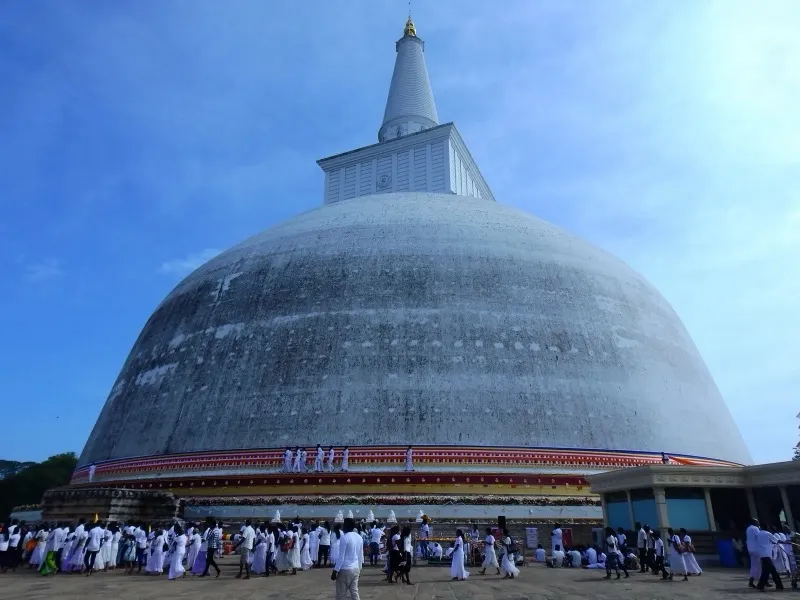
Temple etiquette in Sri Lanka: the rules and the reasons behind them
Shoes and hat off, shoulders and knees covered, never pose with your back to a Buddha. Sri Lanka's temple rules, and why each one matters (October 2026).
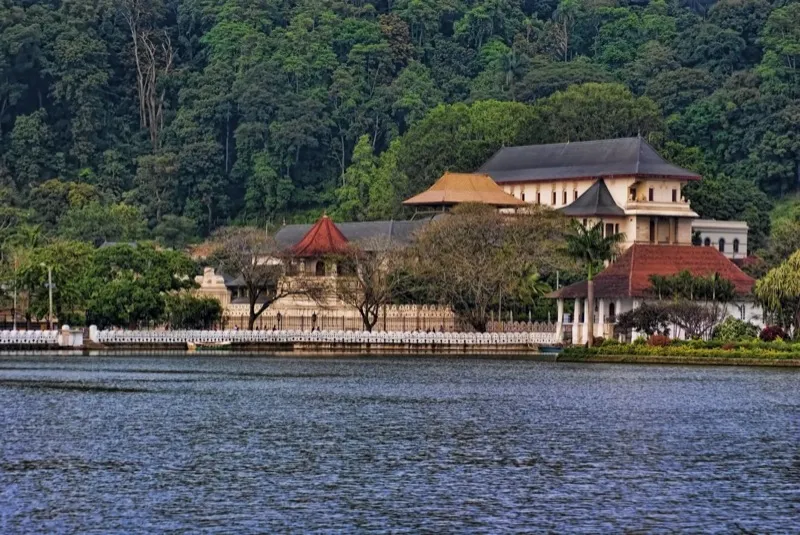
What to wear at the Temple of the Tooth, and why
Cover shoulders and legs, no shorts or sleeveless tops, hat off, shoes left at the booth. The Temple of the Tooth dress code, explained (October 2026).
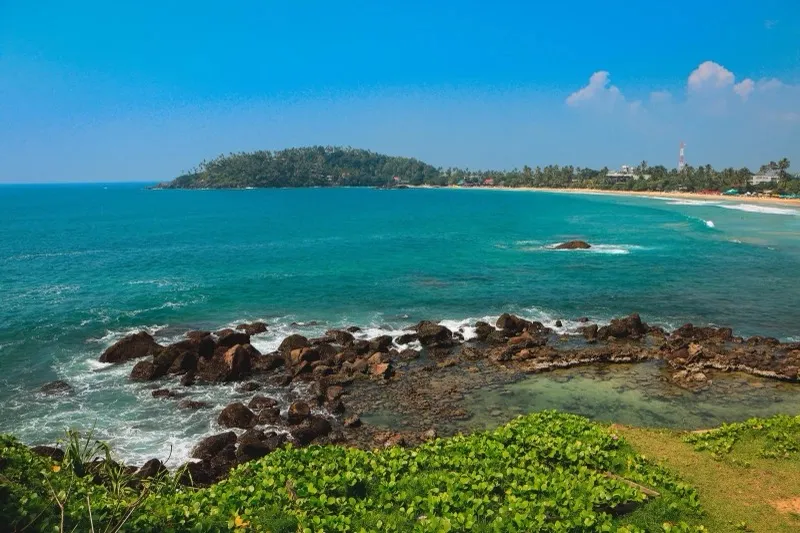
When to visit Sri Lanka: the two monsoons, explained
For the classic loop, January to March is driest. The east coast is best April to September. How the two monsoons decide your route, month by month.
More guides in Planning · Culture and etiquette