Which safari in Sri Lanka? A one-screen chooser by goal and month
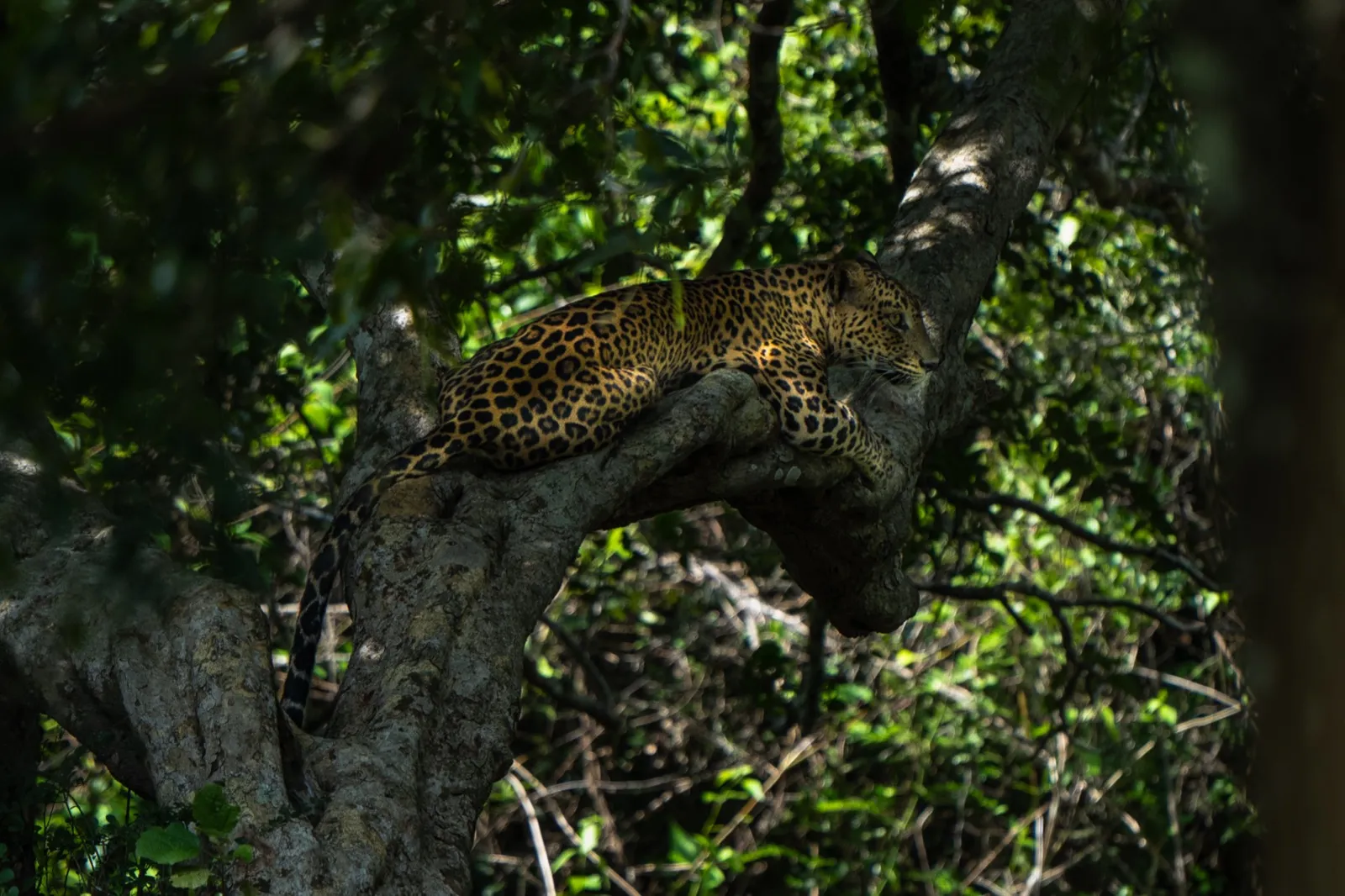
For leopards, choose Yala Block I or the quieter Wilpattu. For elephants, Udawalawe works in any month, and Minneriya hosts the Gathering in roughly June to October. For birds, choose Bundala or Kumana. Whales: Mirissa, about November to April. Parks open 6 a.m. to 6 p.m.; most cost 25 or 20 US dollars per foreign adult (2022 fee table).
This page is a chooser. It gives the short answer for each goal and month, then sends you to the full guide for each park.
Which park is best for which animal?
- Leopards: Yala Block I, or Wilpattu if you want fewer jeeps. See when to see leopards in Yala.
- Elephants, any month: Udawalawe. See Udawalawe.
- Elephants in large numbers: Minneriya and Kaudulla, in the dry season. See the Gathering at Minneriya.
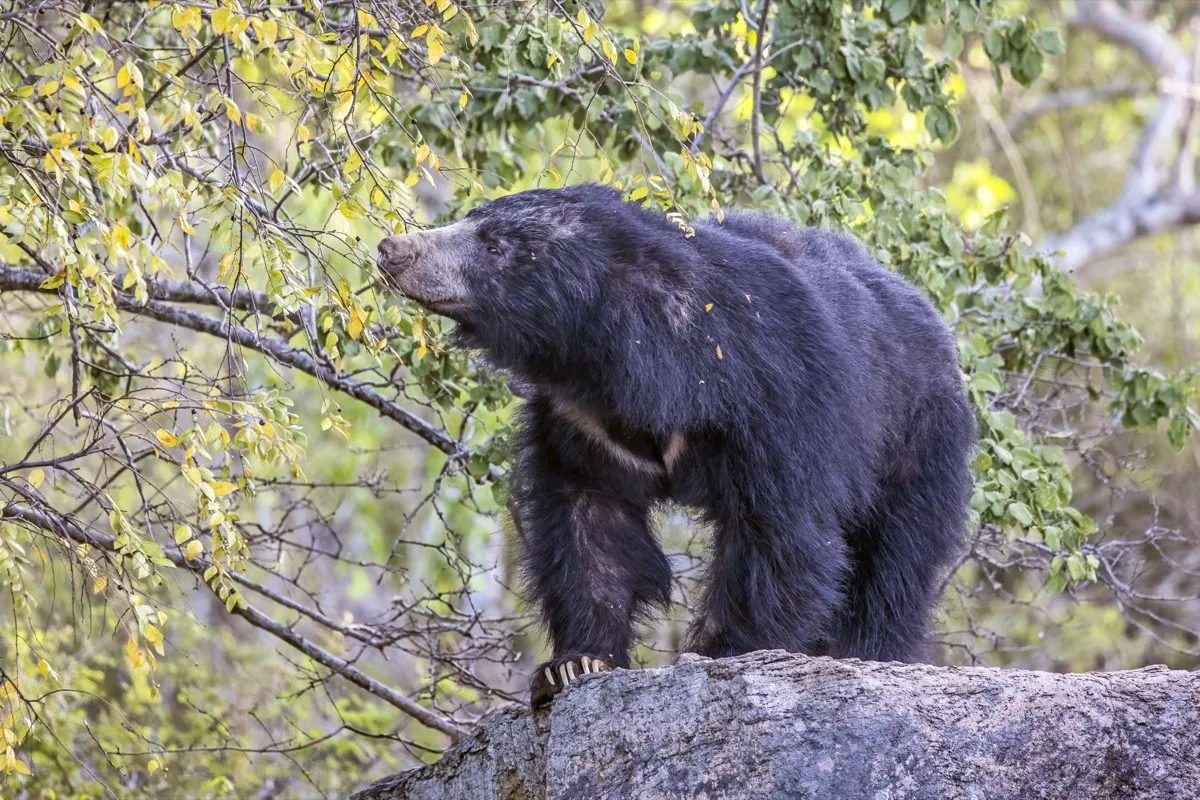
- Sloth bears: Wilpattu or Yala, best around May to July.
- Water birds: Bundala or Kumana.
- Turtles: a nesting watch on a protected beach; see turtle hatcheries.
- Birds found only in Sri Lanka: Sinharaja and the hill-country forests, including Horton Plains.
- Whales: Mirissa, about November to April. See whale watching from Mirissa.
Which park in which month?
A rough guide by month, not a promise:
- January to March: clearest mornings at Horton Plains, and the heart of the Mirissa whale season (November to April).
- May to September: the dry season in Yala and Wilpattu, when animals gather at water.
- May to July: palu fruit, the best chance of a sloth bear.
- About June to October: the elephant Gathering at Minneriya and Kaudulla.
- Udawalawe: elephants all year.
- Mid-September to mid-October 2026: Yala Blocks I and II closed.
- October and November: the wettest months across the island.
Our guide to when to visit Sri Lanka explains the two monsoons behind these months.
How busy is each park?
In 2024, Yala had about 647,000 visitors, Horton Plains about 349,000, Udawalawe about 276,000, Minneriya about 154,000 and Wilpattu about 130,000. Quieter parks had far fewer: Kaudulla about 44,000, Kumana about 36,000 and Bundala about 15,000. Whale watching at Mirissa recorded about 120,000 visitors.
Leopards: Yala or Wilpattu?
Yala. Studies in Yala Block I have found some of the highest leopard densities recorded in Sri Lanka, and scientists say the leopards here are unusually easy to see, partly because they are used to vehicles. Crowding is a known problem in Block I: dozens of jeeps can gather at one leopard.
Wilpattu. Wilpattu also has a healthy leopard population. Camera-trap studies in its interior estimated about 10 and about 18 adult leopards per 100 square kilometres, similar to Yala's Block I. Wilpattu is in the dry zone, with about 1,000 millimetres of rain a year. Most rain falls from mid-October to December. The long dry season runs from about May to mid-October, when the villus, natural lakes, shrink and animals gather around the water that is left.
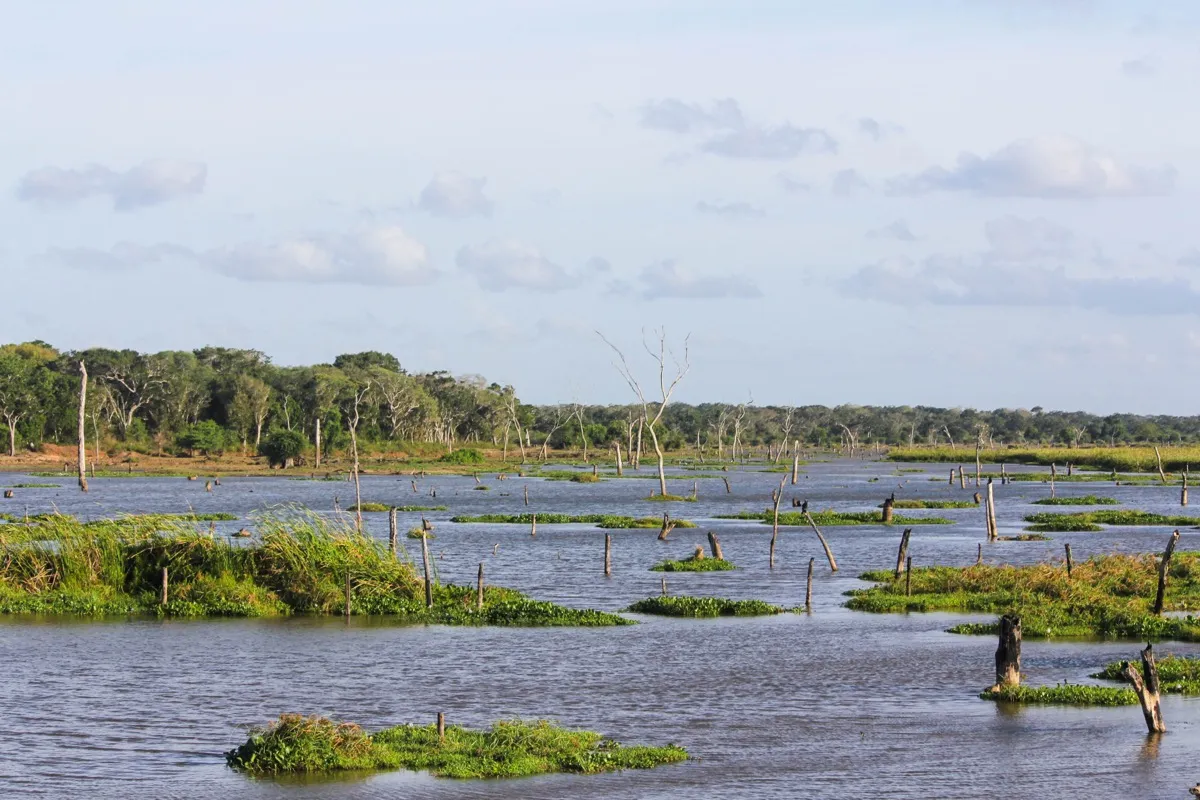
In both parks, leopards are most active at dusk and at night, and the parks open only in daylight, from 6 a.m. to 6 p.m. So the first hours after the gates open and the last hours before they close usually give the best chance. No safari can promise a leopard. Booking two or more drives raises your chances.
Elephants: Udawalawe or Minneriya?
Udawalawe is one of the most dependable places in Sri Lanka to see wild elephants. Researchers who work with the wildlife department write that herds and bulls can easily be seen there at any time of day, in any month.
Minneriya is for the Gathering. It happens in the dry season. Sri Lanka Tourism gives May to October as the time to see it; elephant researchers say June to October, and numbers usually peak around late August and September. The timing and the size of the herds depend on each year's rain and water levels. The herds move between Minneriya, Kaudulla National Park to the north, and the Hurulu forest near Habarana, so drivers in Habarana usually know which park has the herds that week.
In 2026 the Gathering season brought heavy traffic. In August, a park official told the Sunday Times that usually more than 600 safari jeeps entered Minneriya, most of them between 1 and 4 p.m. To avoid the queue, go in the morning or before the afternoon rush.
Where can you see sloth bears?
Wilpattu is one of the best places in Sri Lanka to see a sloth bear, though they are shy and sightings are never certain. Sloth bears also live in Yala. The chance is best when palu trees are fruiting, usually around May to July.
Where should birdwatchers go?
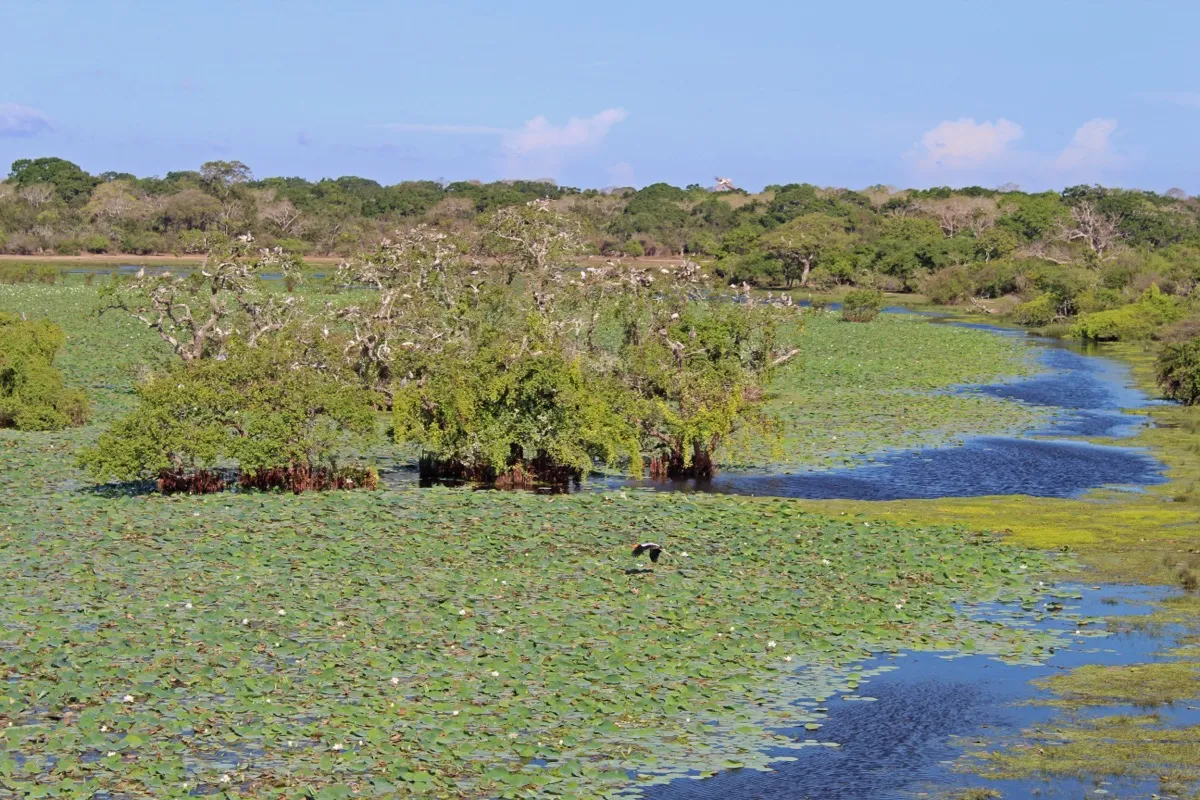
- Bundala is the bird park of the south coast: shallow lagoons where thousands of migrant shorebirds spend the northern winter, sometimes with flocks of greater flamingos. In 1990 it became Sri Lanka's first wetland of international importance under the Ramsar Convention.
- Kumana is best known for its birds. Large water birds nest in the mangrove swamp of the Kumana villu, and migrant waders visit its lagoons. It was first protected as a bird sanctuary in 1938 and has been a Ramsar wetland since 2010.
- Birds found only in Sri Lanka: the island has 35 bird species found nowhere else in the world, according to the Ceylon Bird Club's 2026 list. Many live in Sinharaja Forest Reserve, a rainforest in the south-west and a UNESCO World Heritage Site, and in the hill-country forests of Horton Plains.
What about whales?
Most whale-watching trips from Mirissa run from November to April; every source includes December to March. Sightings have fallen in recent years: researchers reported very few blue whale sightings in Sri Lankan waters in 2024, including only three off Mirissa. See whale watching from Mirissa.
How far is each park from the nearest town?
Estimates, checked October 2026:
- Yala: the Palatupana entrance is about 15 km from Tissamaharama, roughly 30 to 45 minutes.
- Udawalawe: about 100 km from Ella (2.5 to 3.5 hours) and about 80 km from Tissamaharama (1.75 to 2.5 hours).
- Minneriya: about 9 km from Habarana (15 to 30 minutes) and about 20 km from Sigiriya village (30 to 45 minutes).
- Wilpattu: the Hunuwilagama entrance is about 40 km from Anuradhapura, roughly 1 to 1.25 hours.
- Horton Plains: about 30 km from Nuwara Eliya, about 45 minutes to 1.25 hours.
- Kumana: on the south-east coast, south of Arugam Bay, the usual base.
- Bundala: about 16 km east of Hambantota, close to the road to Tissamaharama and Yala.
How much does a safari cost?
The national park fees in force were set by Government Gazette 2292/11, published on 8 August 2022, and have applied since 2 September 2022. As checked in October 2026, this was the latest official fee table we could confirm.
- Top band (Yala, Udawalawe, Minneriya, Kaudulla, Wilpattu, Horton Plains): a foreign adult pays 25 US dollars in the tourist season, or 20 dollars at other times; a child aged 6 to 12 pays 15 or 10 dollars.
- Cheaper band (Kumana, Bundala): 12 US dollars for a foreign adult and 6 for a child, all year.
- Added in every park: a service charge and a vehicle fee, then taxes, so the final price is higher. Jeep hire is separate.
How does a safari work?
Sri Lanka's national parks are managed by the Department of Wildlife Conservation. You enter in a safari jeep, which is usually run by a local owner and must be registered with the Department. In many parks, a tracker from the Department rides in the jeep. You need a park permit for each visit; your jeep operator usually buys it at the gate, or it can be booked online through the wildlife department's e-permit service. Most national parks are open from 6 in the morning to 6 in the evening.
How do you choose a responsible safari?
You must stay inside your vehicle except at marked stopping points. Do not feed animals. Safari vehicles must stay on the marked routes and must not go faster than 20 km/h, the legal limit inside a national park. Animals always have right of way.
Ask your driver not to race to sightings and not to block an animal's path. Ask them to keep a calm distance and switch off the engine while you watch. Choose an operator whose driver holds a wildlife department licence.
Do not ride an elephant, or feed, bathe or touch elephants anywhere on your trip.
What most visitors miss
- The busiest park is not the only leopard park. Wilpattu has about one-fifth of Yala's visitors.
- Udawalawe works in any month for elephants.
- Two parks cost about half. Kumana and Bundala are in the cheaper fee band.
- Yala can close for part of September and October.
- The rules are the same everywhere: 20 km/h, stay in the jeep, no feeding.
Before you choose
- Your main goal: leopards, elephants, birds or whales.
- Your month, checked against the list above.
- Your base town, and the drive to the gate.
- The 2022 fees plus service charge, vehicle fee and taxes; jeep hire separate.
- Two drives if a leopard matters to you.
- A driver who will not race or crowd animals.
Questions people ask
What is the best national park in Sri Lanka for a safari?
It depends on what you want to see. For leopards, Yala Block I or Wilpattu. For elephants in any month, Udawalawe. For the elephant Gathering, Minneriya in the dry season. For water birds, Bundala or Kumana.
Yala or Udawalawe?
Yala is the main leopard park; Udawalawe is one of the most dependable places to see wild elephants, in any month.
Is Wilpattu better than Yala?
Wilpattu has about one-fifth of Yala's visitors and a similar leopard density in camera-trap studies, so it is quieter. Yala's leopards are unusually easy to see, partly because they are used to vehicles.
How much does a safari in Sri Lanka cost?
Under the 2022 fee table, a foreign adult pays 25 or 20 US dollars at the top-band parks and 12 dollars at Kumana and Bundala, plus a service charge, a vehicle fee and taxes. Jeep hire is separate.
What time do Sri Lankan national parks open?
Most open from 6 in the morning to 6 in the evening (checked October 2026). The first and last hours usually give the best chance of seeing leopards.
Coming soon: Sri Lanka Before You Land, our pre-trip ebook, explains how to watch Sri Lanka's wildlife without harming it. A free guide, Your First Week in Sri Lanka, will cover the first days on the ground.
Sources (74)
Every fact in this guide was checked against these sources on 3 October 2026. Official and primary sources come first. How we research.
- DWC notice 'Revision of Fees - Visitor Services' (1 Sep 2022), citing Gazette 2292/11 · dwc.gov.lk
- DWC, National Parks · dwc.gov.lk
- DWC Wildlife Park Permits Reservation eService · dwc.lankagate.gov.lk
- Fauna and Flora Protection (Amendment) Act No. 22 of 2009 (Ministry of Environment copy) · env.gov.lk
- Fauna and Flora Protection Ordinance (consolidated), FAOLEX copy · faolex.fao.org
- Sea Mammals (Observation, Regulation and Control) Regulations, No. 1 of 2012 - Gazette Extraordinary No. 1774/27, 6 Sep 2012 (FAOLEX copy of the gazette) · faolex.fao.org
- NOAA Fisheries, MMPA Import Provisions comparability finding - Sri Lanka final report (2026) · fisheries.noaa.gov
- Anderson et al. (2012) Seasonal distribution, movements and taxonomic status of blue whales in the northern Indian Ocean, JCRM 12(2) · journal.iwc.int
- Anderson et al. 2012, J. Cetacean Res. Manage. 12(2):203-218, blue whales off Sri Lanka (Trincomalee sightings peak Feb-Apr; scarce late Apr-Nov) · journal.iwc.int
- Department of Wildlife Conservation, Performance Report 2024 (tabled in Parliament), tables 2.3.6-2.3.7 · parliament.lk
- Ramsar Information Sheet, Bundala (site 487), compiled by the Department of Wildlife Conservation, 17 May 1991 · rsis.ramsar.org
- Ramsar Information Sheet, Wilpattu Ramsar Wetland Cluster, site no. 2095 (designated 02/02/2013), submitted by Sri Lanka · rsis.ramsar.org
- Ramsar Sites Information Service, Bundala (site 487) · rsis.ramsar.org
- SLTDA, Guideline for Vehicle Safari Tour Operations (2024) · sltda.gov.lk
- SLTDA, Guideline for Whale and Dolphin Watching - Water Based Adventure Tourism Activities (PDF created 2 May 2023) · sltda.gov.lk
- Sri Lanka Tourism Promotion Bureau (official), Horton Plains page · srilanka.travel
- Sri Lanka Tourism Promotion Bureau (official), Minneriya National Park page · srilanka.travel
- Department of Census and Statistics, Statistical Abstract 2024, Chapter 1 'Area and Climate' · statistics.gov.lk
- UNESCO Man and the Biosphere, Hurulu Biosphere Reserve · unesco.org
- Sri Lanka Navy Whale Watching - cruise schedule and charges · whalewatching.navy.lk
- Sri Lanka Navy Whale Watching - home page · whalewatching.navy.lk
- IUCN/ICOMOS evaluation of the Central Highlands of Sri Lanka (May 2010) · whc.unesco.org
- UNESCO World Heritage Centre, Sinharaja Forest Reserve · whc.unesco.org
- Fernando, Jayewardene, Prasad (DWC), Hendavitharana (DWC) & Pastorini, 'Current Status of Asian Elephants in Sri Lanka', Gajah 35 (2011) 93-103 · asesg.org
- Randage, Alling, Currier & Heywood 2014, Review of the Sri Lanka blue whale, J. Cetacean Res. Manage. 14:43-49 · biospherefoundation.org
- Ceylon Bird Club, Sri Lanka bird list ver. 3 (2022) · ceylonbirdclub.org
- Ceylon Bird Club, bird-name list 3rd ed., July 2026 · ceylonbirdclub.org
- AviList v2025b · doi.org
- Green, Schmidt-Burbach et al., Frontiers in Ethology (2025) · doi.org
- Kittle, Watson & Samaranayake 2021, Journal of Zoology 314:31-42 · doi.org
- Liyanage et al. (2023) Seasonal Occurrence of the Indian Ocean Blue Whale off South Coast of Sri Lanka, JMSE · doi.org
- Kittle & Watson, PLOS ONE (published 9 Sep 2026), 'Same place, different time...', Table 3, Table 5 and Discussion · journals.plos.org
- PLOS ONE 2026 Table 3 (leopard SECR densities) · journals.plos.org
- Raja & the Whales (Mirissa operator) - trip page: season, departure, duration, rates, sighting odds · rajaandthewhales.com
- Gazette Extraordinary No. 2292/11 of 8 Aug 2022, wildlife visitor regulations under the FFPO · web.archive.org
- Kittle & Watson, 'The Sri Lankan leopard in Yala National Park: a research summary', WWCT, May 2012 · wwct.org
- IWC Whale Watching Handbook - Sri Lanka country profile · wwhandbook.iwc.int
- Ada Derana, 14 Sep 2026, 'Blocks 1 & 2 of Yala National Park temporarily closed from today' · adaderana.lk
- Ada Derana, 25 Oct 2022, 'Vehicles and individuals involved in reckless driving at Yala blacklisted' · adaderana.lk
- Ada Derana, 26 Aug 2026, Yala Blocks 1 & 2 temporarily closed 14 Sep-15 Oct · adaderana.lk
- Green, M.J.B. (1990) IUCN Directory of South Asian Protected Areas, pp. 216-218, Horton Plains National Park · archive.org
- Conservation Strategy Fund, Getting the Price Right (Mar 2025), tables from DWC fee gazettes · csf-asia.org
- Daily Mirror (Sri Lanka), 29 Dec 2023, 'Only certified, trained safari jeep drivers allowed into Yala National Park from Jan.1' · dailymirror.lk
- Hiru News, 20 Nov 2025, 'No more safari jeeps for Yala, says Wildlife Department' · hirunews.lk
- IUCN Marine Mammal Protected Areas Task Force - South West to Eastern Sri Lanka IMMA factsheet (2022) · marinemammalhabitat.org
- Mongabay short, May 2026, 'Overtourism threatens Sri Lanka's leopards' · news.mongabay.com
- Mongabay, 12 Sep 2024, census method · news.mongabay.com
- Mongabay, 17 Apr 2026, 'In Sri Lanka, animals pay the price for overcrowding and speeding jeeps' · news.mongabay.com
- Mongabay, 30 Apr 2025, Blue whale decline in Sri Lanka tied to climate and human activity · news.mongabay.com
- Mongabay, 5 May 2025, 'Kumana ... emerges as leopard stronghold' · news.mongabay.com
- Mongabay, Malaka Rodrigo, 23 Jul 2020, 'Twins highlight world's largest Asian elephant gathering in Sri Lanka' · news.mongabay.com
- Mongabay, March 2025, sloth bear deaths in Wilpattu · news.mongabay.com
- Newswire, 10 Jun 2026, minister announces 2024 survey result · newswire.lk
- Newswire, 14 Sep 2026, DWC announcement · newswire.lk
- Newswire, 17 Aug 2026, 'Govt moves to strengthen wildlife conservation and tourism management' (Ministry of Environment, after Deputy Minister's tour of Minneriya, Kaudulla and Hurulu) · newswire.lk
- OpenStreetMap Nominatim geocoder (ETH and park locations) · nominatim.openstreetmap.org
- OSRM route on OpenStreetMap data, Anuradhapura city to 'Wilpattu National Park Main Entrance', Hunuwilagama · router.project-osrm.org
- OSRM route on OpenStreetMap data, Habarana town to 'Minneriya National Park Entrance' gate node · router.project-osrm.org
- OSRM route on OpenStreetMap data, Sigiriya village to 'Minneriya National Park Entrance' gate node · router.project-osrm.org
- OSRM route on OpenStreetMap data, Tissamaharama town to 'Yala National Park Entrance, Palatupana' · router.project-osrm.org
- OSRM routing engine on OpenStreetMap data (queried 2026-10-03) · router.project-osrm.org
- Andrew Kittle, 'Tracking the Lankan Leopard', Sunday Times (Sri Lanka), 10 May 2009 · sundaytimes.lk
- Sunday Times 2005 (Tree Society) on palu · sundaytimes.lk
- Sunday Times, 14 May 2023, Yala Block 3 · sundaytimes.lk
- Sunday Times, 5 Jan 2014, jeeps and trackers in Yala · sundaytimes.lk
- The Sunday Times (Sri Lanka), Dilushi Wijesinghe, 16 Aug 2026, 'Minneriya elephant joy soiled by ticketing hassles and massive vehicle jam' · sundaytimes.lk
- The Morning, 19 Nov 2025, 'Wildlife dept. rejects new Safari jeeps for overcrowded Yala national park' · themorning.lk
- Daily News (Sri Lanka), 6 Mar 2009, 'Horton Plains - Memorable link 'tween smiles and tears' (archived; live link 403) · web.archive.org
- IWMI Sri Lanka Wetlands Database - Ruhuna (Yala) National Park profile (archived 2011) · web.archive.org
- IWMI Sri Lanka Wetlands Database - Wetland Cluster within Bundala National Park · web.archive.org
- IWMI Sri Lanka Wetlands Database - Yala East (Kumana) National Park profile (archived 2011) · web.archive.org
- IWMI Sri Lanka Wetlands Database, Kaudulla profile (2006; archived 2011) · web.archive.org
- IWMI Sri Lanka Wetlands Database, Minneriya reservoir profile (2006; archived 2011) · web.archive.org
- World Animal Protection, 'Taken for a Ride' (2017) · worldanimalprotection.org
Related guides
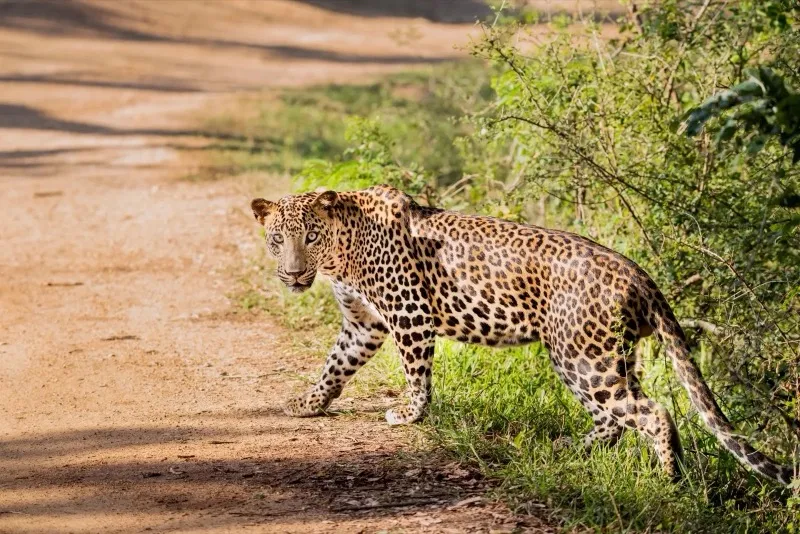
When to see leopards in Yala, and how to choose a responsible safari
Leopards are seen in Yala all year. Best odds: the first and last hours of the day, in the drier May to September months. Fees, rules and ethical choices.
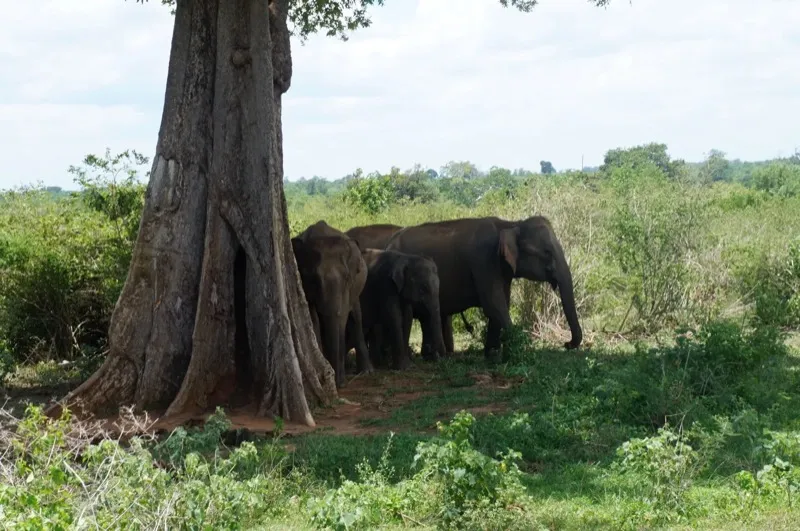
Udawalawe: elephants in the wild, and the transit home
One of the most reliable places to see wild elephants, in any month. The safari, the Elephant Transit Home, and how to watch responsibly (Oct 2026).
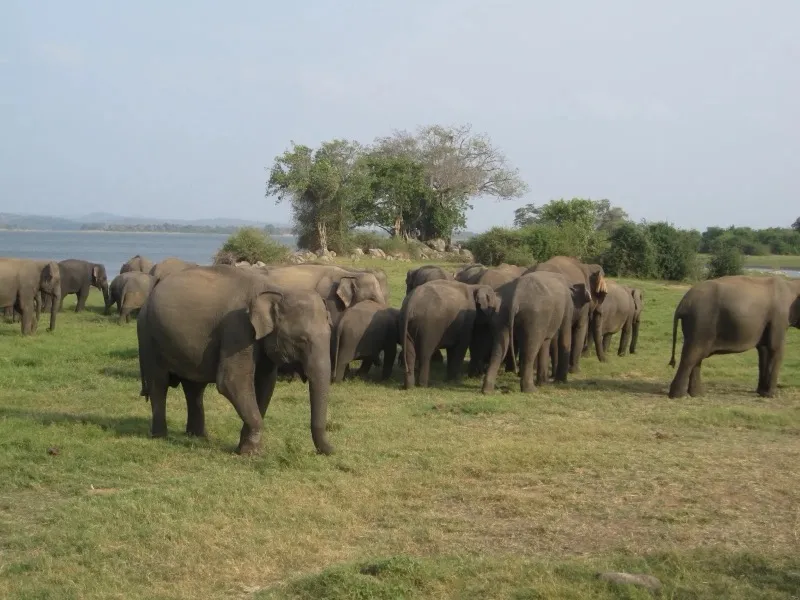
The Gathering at Minneriya: when and why the elephants come
From about June to October, hundreds of elephants gather on the drying Minneriya and Kaudulla reservoirs. When to go, why they come, and how to watch well.
More guides in Wildlife